


The new policy not only simplifies procedures, increases transparency and predictability, but also builds trust and encourages voluntary compliance from taxpayers, moving towards a modern, fair, and sustainable financial system.
According to Ms. Le Thi Chinh, the Ministry of Finance has issued the "Scheme for Transforming the Model and Methods of Tax Management for Household Businesses When Eliminating Flat-Tax Payments" along with Decision No. 3389/QD-BTC, with the main goal of officially eliminating flat-tax payments from January 1, 2026. This is a significant turning point towards modernizing tax management, creating a fair and transparent business environment, encouraging voluntary compliance, and aligning with the development orientation of the private economy.
Ms. Le Thi Chinh believes that the current tax declaration method offers many benefits in three aspects: it is simpler, more transparent, and easier to predict. Regarding simplicity, business households only need to calculate taxes using the formula: actual revenue multiplied by the tax rate according to their industry and field of activity. This clear and easy-to-understand calculation method helps taxpayers proactively declare their taxes, reducing the cost of fulfilling their tax obligations. Revenue data is determined based on actual figures rather than fixed estimates, ensuring fairness among business households. The application of technology and electronic tax services also helps taxpayers declare and pay taxes online quickly, saving time and costs.
In terms of transparency, the declaration method overcomes the limitations of lump-sum tax as all data is recorded and verified through electronic invoices and sales software, building trust between taxpayers and tax authorities. This is crucial as the tax rate accurately reflects the scale of each business; small businesses pay less, while large businesses pay the corresponding amount, ensuring fairness and transparency among businesses.
In terms of forecasting capabilities, the declaration method allows business households to regularly monitor revenue, expenses, profits, and losses directly on the electronic system. This enables them to plan their finances, calculate tax obligations in advance, and adjust their scale of operations to suit actual circumstances. When data is digitized and interconnected, tax authorities shift from a "management-inspection" role to a "support-service" role, contributing to the formation of a culture of voluntary compliance.
In fact, during the first nine months of 2025, more than 18,500 business households nationwide switched from lump-sum tax to declaration-based tax, and nearly 2,530 households transitioned to the corporate model. Notably, 98% of declaration-based households have implemented electronic tax filing and payment; and more than 133,000 business households have registered to use electronic invoices generated from cash registers. These figures demonstrate the confidence and proactiveness of taxpayers in the transition process.
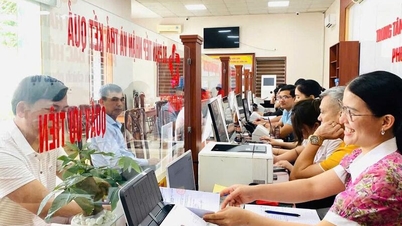
To help business households feel secure in their conversion, the Tax Department has been implementing synchronous solutions according to the Project of the Ministry of Finance, in the spirit of accompanying taxpayers. The tax sector focuses on perfecting institutions and policies, ensuring transparency, fairness and ease of implementation; simplifying administrative procedures, developing smart electronic tax services; innovating propaganda, guiding people to implement in an easy-to-understand and easy-to-do manner. Legal regulations on tax management, personal income tax and guiding documents are being reviewed and revised synchronously to ensure a clear and simple legal framework, providing the best support for business households when switching to the declaration method.
According to Ms. Le Thi Chinh, the shift from the lump-sum tax method to the declaration method is not only a change in tax calculation but also a change in management thinking and trust between the people and the tax authorities. When taxpayers understand the tax calculation mechanism and see fairness and transparency, they will voluntarily fulfill their obligations to the State. Digital technology plays a crucial role in facilitating and promoting voluntary compliance, as with just one electronic tax account, business households can declare and pay taxes anytime, anywhere, quickly and transparently.
“The tax sector is committed to accompanying taxpayers throughout the transformation process. When given the right conditions and recognized for their role, household businesses will become a dynamic, competitive, and sustainably developing economic force, making a positive contribution to the socio-economic development of the country,” Ms. Le Thi Chinh affirmed.
Source: https://baotintuc.vn/kinh-te/chuyen-tu-thue-khoan-sang-ke-khai-buoc-ngoat-minh-bach-va-cong-bang-20251027130134565.htm
![[Photo] Closing Ceremony of the 10th Session of the 15th National Assembly](/_next/image?url=https%3A%2F%2Fvphoto.vietnam.vn%2Fthumb%2F1200x675%2Fvietnam%2Fresource%2FIMAGE%2F2025%2F12%2F11%2F1765448959967_image-1437-jpg.webp&w=3840&q=75)
![[Photo] Prime Minister Pham Minh Chinh holds a phone call with the CEO of Russia's Rosatom Corporation.](/_next/image?url=https%3A%2F%2Fvphoto.vietnam.vn%2Fthumb%2F1200x675%2Fvietnam%2Fresource%2FIMAGE%2F2025%2F12%2F11%2F1765464552365_dsc-5295-jpg.webp&w=3840&q=75)












































![[OFFICIAL] MISA GROUP ANNOUNCES ITS PIONEERING BRAND POSITIONING IN BUILDING AGENTIC AI FOR BUSINESSES, HOUSEHOLDS, AND THE GOVERNMENT](https://vphoto.vietnam.vn/thumb/402x226/vietnam/resource/IMAGE/2025/12/11/1765444754256_agentic-ai_postfb-scaled.png)






































Comment (0)