

Nestled amidst the tranquil Hau River, Con Son Island (Binh Thuy Ward, Can Tho City) has stood out as a unique highlight on the Mekong Delta tourism map for the past decade.
Without luxurious resorts or grandiose man-made structures, Con Son Island attracts tourists with its rustic charm, hospitality, and community-based tourism model, where each local resident is a tourism ambassador.
From a spontaneous idea, the people of Con Son Island have together "woven" an impressive 10-year journey, transforming everyday livelihoods into unique experiences, widely spreading the beauty of the riverside garden culture to domestic and international tourists.
From something ordinary to a "specialty"
The journey to Con Son Island is a return to the simplest and most authentic things in life.
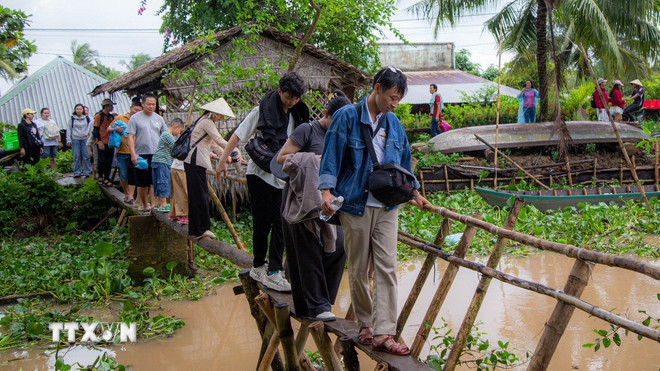
Visitors to Con Son Island only need a few minutes by boat from Co Bac pier to enter the lush green space of orchards laden with fruit, where each house is a delightful stopover, and each farmer is an enthusiastic guide.
It is this strong community-based model, prioritizing the common good, that has transformed ordinary daily activities like baking, gardening, and fish farming on rafts into unique and attractive tourism products, strongly spreading the image of a generous and hospitable Mekong Delta.
The path to tourism for the people of Con Son Island naturally blossomed from their lives and keen minds when a group of students came here to make a video clip with the theme "A Day as a Farmer" in 2014.
Footage capturing scenes of fruit picking and the making of simple, traditional cakes has surprised the people of Con Son Island, making them realize that their familiar daily activities are precisely the unique attractions that city dwellers are always looking for.
In 2015, the idea of community-based tourism was officially launched. Initially, only 7 families bravely participated, discussing, giving feedback, and independently shaping the first steps.
The people formed a cooperative called the "Intergenerational Self-Help Club," chaired by Ms. Phan Kim Ngan (commonly known as Bay Muon).
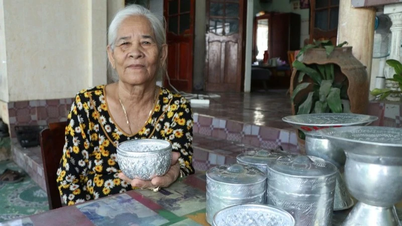
Ms. Bay Muon, now the Director of Con Son Agricultural Tourism Cooperative, recalls: "The initial period was extremely difficult."
With few customers and a lack of experience, many team members were discouraged and wanted to give up. We had to encourage each other, persevere, treat customers with sincerity, and gradually things would get better."
The turning point came in 2016, when a member of the group's "flying snakehead fish" model gained media attention and was widely publicized.
That same year, Mrs. Bay Muon's rolled pancake dish won a Silver Medal at the Southern Vietnam Traditional Cake Festival, bringing her unexpected fame. These two "boosts" led to an increasing number of tourists visiting Con Son Island.
To operate professionally and systematically, in 2022, the cooperative group developed into the "Con Son Agricultural Tourism Cooperative."
To date, the cooperative has become a strong common home for 230 members and collaborators, including 20 official members and 130 on-site guides, who share benefits, experiences, and responsibilities together.
The core element that sets Con Son apart and contributes to its success is its spirit of community cohesion. Instead of competing, the people here choose to cooperate.
Each family, with its own strengths, becomes an indispensable link in the chain. Families with orchards welcome visitors, those with baking experience open baking workshops, and those with fish farms become destinations for exploring the waterways.
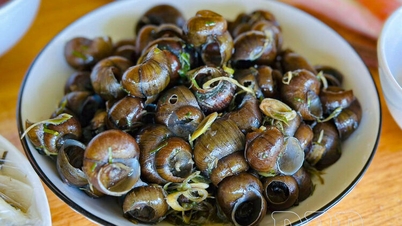
The most vivid example of this spirit of cooperation is the "flying menu." When tourists order a meal, each dish is prepared by a different restaurant on the islet: Phuong My restaurant makes fish sauce hotpot, Song Khanh restaurant fries elephant ear fish, Cong Minh restaurant grills snakehead fish, and so on. Once the dishes are ready, someone will drive around collecting each item and delivering them to the tourist's dining spot.
The sight of carts carrying baskets of hot food weaving through the village roads has become a distinctive feature, a testament to the unique "shared benefit" model of Con Son Island.
Lisa Pfabigan, an 18-year-old tourist from Austria, couldn't hide her delight: "The 'flying menu' experience was amazing. The local specialties are very appealing and unique. The people are especially enthusiastic and friendly. I felt their connection through each carefully prepared dish."
Local identity, a journey that touches the hearts of travelers.
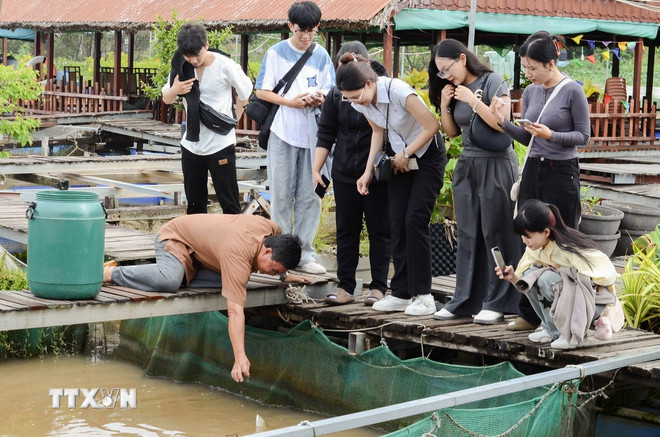
Con Son Island offers a rich series of experiences steeped in the unique culture of the riverine region. The first destination is often the fish farm of Mr. Ly Van Bon (Bay Bon). This is not only a place for raising commercial fish but also a "living museum" of endemic fish species of the Mekong River, with many rare species such as giant catfish, spotted catfish, and oil catfish...
Mr. Bay Bon shared: "I want to preserve these precious native fish species of the Hau River for future generations to know about. Tourists coming here not only see the fish, but also learn more about fish farming on the river and the importance of protecting the ecosystem."
Here, visitors can witness a spectacular display of basketfish hunting by shooting water jets up to 1 meter high, causing prey to fall with near-perfect accuracy, experience a koi fish foot massage, or even touch giant catfish weighing tens of kilograms.
Mr. Didien Longueville and his wife, Dominique (Belgian tourists), commented: “Son Island is a very beautiful place with a diverse and rich ecosystem, reflecting the unique characteristics of the Mekong River region. We are truly impressed with how the locals preserve and showcase their natural values.”
Leaving the fish farm, visitors arrive at Cong Minh's garden, where they can try their hand at making traditional Vietnamese cakes with guidance from Mrs. Bay Muon. With over 40 years of experience making more than 50 types of Southern Vietnamese cakes, she is considered an "artisan" of Con Son Island.
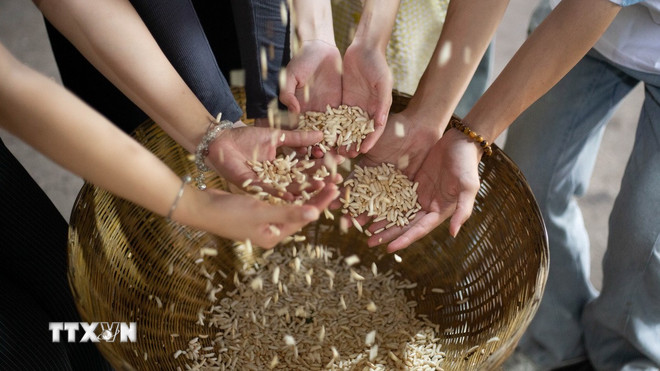
Visitors will be kindly shown by the owner how to make their own crispy rice puffs using locally sourced ingredients. Another unforgettable experience is witnessing the traditional "popping" process. A loud "boom" echoes from the cast iron pipe, and from within the white smoke, the rice grains burst into crispy, fragrant puffs.
Ms. Pham Phuong Ly (24 years old, from Thanh Hoa province) said that this was the first time she had truly experienced the Mekong Delta, with its gentle people and intimate, unscripted experiences. What left the deepest impression was the sincerity and hospitality of the locals.
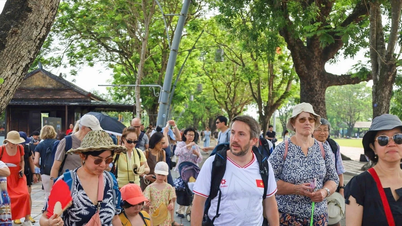
The sustained development of tourism on Con Son Island is clearly demonstrated by impressive figures. While Con Son Island welcomed 43,000 visitors in 2024, this number has already reached 28,000 in the first six months of 2025, with 7,000 visitors in June alone.
Regarding international tourists, in the first six months of 2025 alone, Con Son Island welcomed 4,800 international visitors, almost equaling the total for the whole of 2024 (5,200 visitors). This is a well-deserved reward for the tireless efforts of the local community.
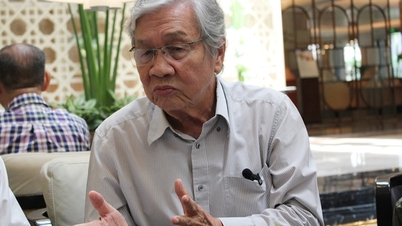
Speaking to a reporter from the Vietnam News Agency, Dr. Tran Huu Hiep, Vice President of the Mekong Delta Tourism Association, emphasized that the success of community-based tourism in Con Son is a vivid example showing that when communities clearly recognize the value of their natural resources and local culture, and know how to tell that story through authentic and creative experiences, they can create unique and sustainable tourism products.
"The people of Con Son Island, Can Tho, don't chase after copied models, but choose to 'start from the roots.' The community here has relied on the river landscape, garden produce, and folk cuisine as a foundation, then infused it with a spirit of hospitality and unity," he said.
Based on the story of Con Son Island, Dr. Tran Huu Hiep argues that the lesson for other localities in the Mekong Delta, if they want to escape the "monochromatic" look, is that they must start by identifying their unique identity, reorganizing community resources, and connecting with the regional and national tourism map to create appeal for international tourists.
Linking tour routes and destinations, sharing markets, and complementing products will help destinations avoid destructive competition and instead enhance each other's value.
In particular, community-based tourism models need to be placed within the context of green transformation trends. Tourism should not be about "maximizing exploitation" but about preserving the ecosystem, reducing the carbon footprint, prioritizing renewable materials and energy, and limiting plastic waste. When each locality discovers and nurtures its own "story" in a green and interconnected way, tourism in the Mekong Delta will become a vibrant tapestry, rich in experiences and sustainable, with the strength to compete in the long term.
After a decade, Con Son Island is more than just a tourist destination. It has become a symbol of the success of the community-based economic model, a vivid testament to the fact that when farmers work together, they not only prosper on their land but also preserve and spread the cultural beauty of the Southern region that has been maintained for generations.
Source: https://www.vietnamplus.vn/con-son-noi-ban-sac-dia-phuong-cham-toi-trai-tim-du-khach-post1053902.vnp

![[Photo] First session of the 14th Congress of the Vietnam Trade Union](https://vphoto.vietnam.vn/thumb/1200x675/vietnam/resource/IMAGE/2026/06/03/1780465947883_ndo_br_img-3852-jpg.webp)
![[Photo] General Secretary and President To Lam presides over a meeting with the Central Organizing Committee.](https://vphoto.vietnam.vn/thumb/1200x675/vietnam/resource/IMAGE/2026/06/03/1780482764658_a1-bnd-4741-3342-jpg.webp)
![[Photo] Secretary of the National Assembly Party Committee, Chairman of the National Assembly presides over the meeting of the Standing Committee and Executive Committee of the National Assembly Party Committee.](https://vphoto.vietnam.vn/thumb/1200x675/vietnam/resource/IMAGE/2026/06/03/1780480353201_ndo_br_bnd-2585-jpg.webp)




























![[Video] Sunset at Lap An Lagoon – Where the sun sets over the fishing nets](https://vphoto.vietnam.vn/thumb/1200x675/vietnam/resource/IMAGE/2026/05/31/1780192137701_beach-landscape-sea-water-nature-grass-745871-pxhere-com.jpeg)
























Comment (0)