

The framework is called Tsinghua University's Guiding Principles for the Application of Artificial Intelligence in Education , and the five core principles outlined are: responsibility, integrity, data privacy, discretion, and fairness.
The principles require transparency in the use of AI and prohibit any form of academic fraud. The school also prohibits the use of sensitive or unauthorized data when training or operating AI models.
Faculty are tasked with determining the appropriate scope of AI use for each course, explaining the rules to students, and reviewing AI-generated materials.
In return, students are encouraged to view AI as a limited support tool but are strictly prohibited from mechanically copying or interpreting AI-generated texts, programming codes, or outputs as their own independent work.
For graduate students, the school asserts that AI cannot replace the intellectual work that students must do themselves. Using AI for the purpose of writing for others, plagiarism, fabrication or other forms of violation is strictly prohibited.
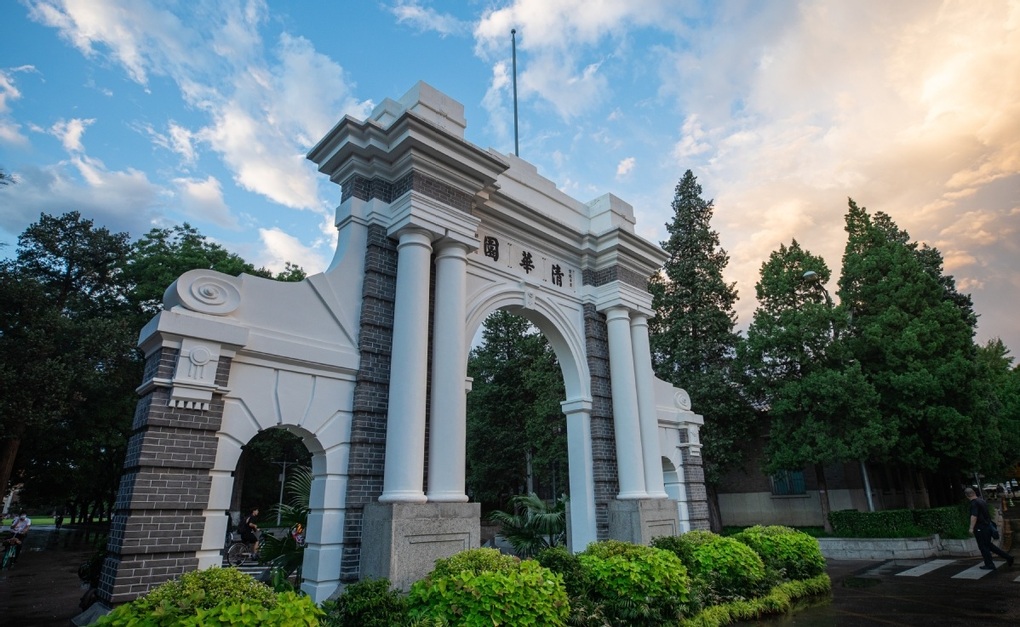
Tsinghua University (Photo: tsinghua.edu.cn).
The framework also sets “red lines” for misconduct while giving the “green light” for testing to be conducted in a meaningful and responsible manner.
The development of this set of guidelines was led by Professor Li Manli from Tsinghua University of Education. The team surveyed 70 AI in education guidelines from 25 universities around the world and interviewed more than 100 students and lecturers.
Wang Shuaiguo, director of the school’s Online Education Center and the main drafter, described the guidelines as a “living system” that can evolve with technology. In that, the guidelines are not intended to restrict innovation but to create development in parallel with technological advances.
Kieu Yen
Source: https://dantri.com.vn/giao-duc/dai-hoc-thanh-hoa-chinh-thuc-cam-sinh-vien-dung-ai-de-dao-van-20251202225558980.htm


![[Photo] Parade to celebrate the 50th anniversary of Laos' National Day](/_next/image?url=https%3A%2F%2Fvphoto.vietnam.vn%2Fthumb%2F1200x675%2Fvietnam%2Fresource%2FIMAGE%2F2025%2F12%2F02%2F1764691918289_ndo_br_0-jpg.webp&w=3840&q=75)












![[Photo] Worshiping the Tuyet Son statue - a nearly 400-year-old treasure at Keo Pagoda](/_next/image?url=https%3A%2F%2Fvphoto.vietnam.vn%2Fthumb%2F1200x675%2Fvietnam%2Fresource%2FIMAGE%2F2025%2F12%2F02%2F1764679323086_ndo_br_tempimageomw0hi-4884-jpg.webp&w=3840&q=75)








































Comment (0)