

Kinhtedothi - In 1944, at the young age of 23, General Nguyen Quyet was entrusted by the Party and President Ho Chi Minh with the important responsibility of holding the position of Secretary of the Hanoi City Party Committee.
He was also the one who made the historic decision: to launch the uprising in Hanoi on August 19, 1945, overthrowing the puppet regime and establishing a revolutionary government using local forces...
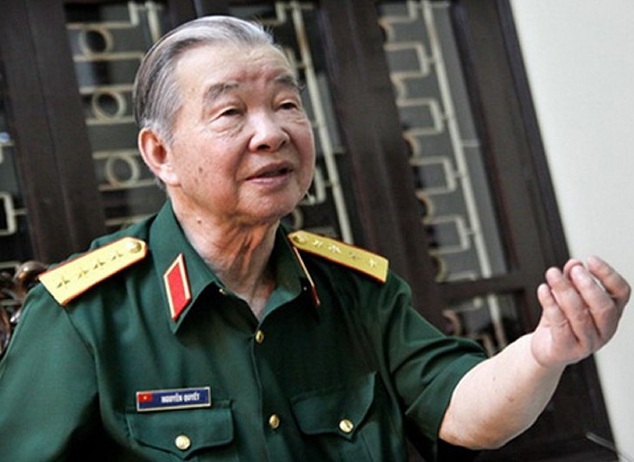
A historic decision for the capital city.
General Nguyen Quyet, whose real name was Nguyen Tien Van (born August 20, 1922), was from Chinh Nghia commune, Kim Dong district, Hung Yen province. In 1937, at the age of 15, he left his hometown for Hanoi to find work and make a living. He applied for a job at Duoc Tue Newspaper, a Buddhist propaganda newspaper of the Northern Buddhist Center. His main job was as a secretary and newspaper distributor. This allowed him to interact with many people from different walks of life and social classes, especially workers and laborers in the city, thus understanding the suffering and humiliation of a people who had lost their country, as well as the crimes of the colonialists and their collaborators.
To commemorate International Labor Day on May 1, 1938, the Indochinese Communist Party organized a large rally at the Hanoi Exhibition Hall with the participation of tens of thousands of people, but it was later suppressed by the French colonial authorities. He was forced to return to his hometown due to being monitored by secret agents. It was during this return that he met Comrade Nguyen Van Tich (also known as Tao) - a communist party member and cadre of the Inter-provincial Committee B (comprising the provinces of Thai Binh , Hung Yen, Hai Duong, Kien An...) and was assigned the task of mobilizing the masses to build an anti-imperialist movement in Kim Dong district.
In a short time, he mobilized many people to join the movement. Because of his positive contributions, in 1940, at the age of 18, he was admitted to the Indochinese Communist Party and assigned to be the Secretary of the Anti-Imperialist Youth in Kim Dong district. From then on, he officially became a communist fighter, dedicating his life to serving the revolutionary cause of the Party.
In 1943, he was appointed to the Hanoi Party Committee, playing a crucial role in mobilizing the masses and building revolutionary forces. Together with his comrades, he actively but cautiously established many new bases in and around Hanoi, and diligently worked to develop the Party.
In the summer of 1944, General Nguyen Quyet was summoned by the Central Committee of the Party to attend a nearly month-long military training course in Thai Nguyen province to prepare for the uprising. Upon returning to Hanoi, he was assigned by the City Party Committee to oversee military affairs. However, only a few months later, he was appointed Secretary of the Hanoi City Party Committee, replacing Comrade Le Quang Dao, who had been exposed and subsequently reassigned by the Central Committee to another position.
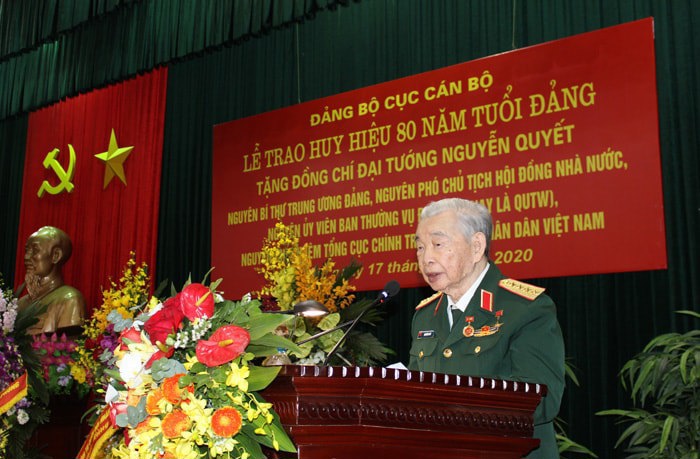
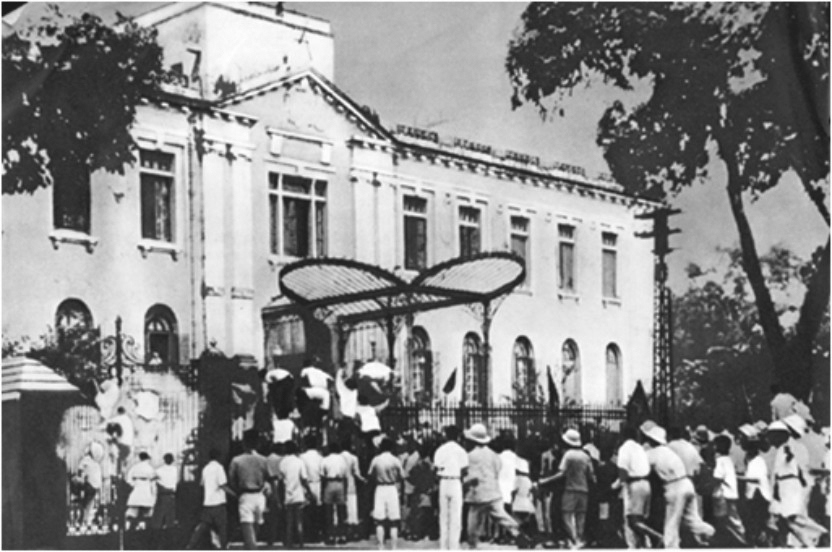
Having only been in office for a few months, on the night of August 17, 1945, under the chairmanship of Secretary Nguyen Quyet, the Hanoi City Party Committee met and made a historic decision: Using local forces, Hanoi would launch an uprising on August 19, 1945. Seizing the opportunity, understanding the enemy's strength and the revolutionary situation, Hanoi's uprising proceeded according to plan, achieving a complete victory, serving as a beacon of light for other localities to rise up in revolt.
This event went down in the history of the Vietnamese revolution as a lesson in courageous, creative, resolute, timely, and thorough action in accordance with the Party and President Ho Chi Minh's directive to "use our own strength to liberate ourselves." Placed in the context of 1945, Hanoi – a strategic location and the nerve center of the French army – the successful uprising in Hanoi was decisive for the success of the August Revolution. Later, Comrade Truong Chinh highly praised Secretary Nguyen Quyet and the Hanoi City Party Committee as "wise" and "shrewd."
A lifetime dedicated to the revolution.
As researchers have noted, the complete victory of the uprising to seize power in Hanoi proved that the collective leadership of the City Party Committee made a completely correct decision. This decision also helped the uprising to seize power in Hanoi achieve a complete, bloodless victory, becoming a great source of inspiration and encouragement for localities nationwide, especially large cities like Hue and Saigon.
After completing the construction and consolidation of 5 main battalions in Hanoi and 2 detachments in neighboring provinces, General Nguyen Quyet requested the Central Committee to assign him to fight in the South. From 1946 to 1950, General Nguyen Quyet held many important positions such as Political Commissar of Regiment 108, in charge of the Quang Nam - Da Nang front, the main battlefield of Military Region 5. His resounding victories at Hai Van Pass, Go Ca, the destruction of Nui Lo outpost, and the Thu Bon stronghold struck fear into the enemy.
During the 1953-1954 Winter-Spring campaign, General Nguyen Quyet was one of three campaign commanders assigned to directly counter the Atlantic campaign, an unprecedented large-scale campaign by the French colonialists aimed at "erasing" the free zone of Military Region 5.
Having dedicated almost his entire life to the revolution and the Party, wholeheartedly serving the country and the people with exceptionally outstanding achievements, General Nguyen Quyet was awarded the Gold Star Order, the Ho Chi Minh Order, and many other prestigious awards by the Party and the State.
In August 2024, Hanoi city leaders visited and congratulated General Nguyen Quyet. The then 102-year-old general shared his recollections of the revolutionary autumn 79 years ago, when Hanoi rose up to seize power under the leadership of the Party and President Ho Chi Minh. According to General Nguyen Quyet, the success of the August Revolution of 1945, as President Ho Chi Minh taught, was a revolution with profound humanistic values, full of creativity, initiative, confidence, and uniqueness, not following any pre-existing model.
Seventy years after liberation, witnessing the ever-growing development of Hanoi, General Nguyen Quyet expressed his belief and hope that today's generations of Hanoians will continuously cultivate and improve themselves, so that they may better understand, love, and be proud of the glorious history of the capital; remain steadfast and confident in the Party's guidelines and leadership. From there, they will contribute their efforts and intellect to further develop the capital and the country.
General Nguyen Quyet
(Nguyen Tien Van)
(Born in 1922)
Place of origin: Chinh Nghia commune, Kim Dong district, Hung Yen province
Joined the revolution: 1939
Enlisted: August 1945
Member of the Communist Party of Vietnam: since 1940
Highest rank: General (1990)
Work experience
1942: Member of the Party Committee of Hung Yen province;
1943 - 1945: Member of the Party Committee, Secretary of the Hanoi City Party Committee, Military Member in the Hanoi Uprising Committee, Political Member of the Hanoi Military Committee, Political Commissar of the 2nd Detachment of the National Guard;
1946: Political Commissar of Detachment 1 (the main detachment of the Southern Resistance Committee), Head of the Political Department, Political Commissar, Secretary of the Party Committee of Division 31;
1947 - 1952: Political Commissar of the Quang Nam - Da Nang Front; Military Commissioner in the Quang Nam - Da Nang Inter-provincial Resistance Committee; Political Commissar of Regiment 108 and Regiment 803;
1953 - 1955: Head of Political Affairs of Military Region 5; Deputy Political Commissar, Political Commissar of Division 305;
1955 - 1963: Acting Political Commissar and then Political Commissar of the Left Bank Military Region;
1964 - 1968: Deputy Political Commissar, Political Commissar of Military Region 3; Political Commissar of the Left Bank Military Region; Deputy Political Commissar of the Tri-Thien Military Region and concurrently Political Commissar of Front B8 (Tri-Thien Military Region);
1969 - 1976: Political Commissar of the Left Bank Military Region, Military Academy, Military Region 3;
1977 - 1980: Political Commissar and Commander of Military Region 3;
1981 - 1986: Commander, Party Secretary of Military Region 3;
April 1986 - 1987: Deputy Head of the General Political Department;
1987 - 1991: Head of the General Political Department; Standing Member of the Central Military Party Committee (now the Central Military Commission);
1992: Vice Chairman of the State Council;
Member of the Central Executive Committee of the Communist Party of Vietnam, 4th - 6th terms (Member of the Secretariat, 6th term);
Member of the National Assembly in the 4th, 7th, and 8th terms.
A prestigious award
- Gold Star Medal (2007);
- Ho Chi Minh Order;
- First-class Military Merit Order;
- First-class Order of Military Merit;
- First-class Victory Medal...
( Source: Ministry of National Defence's Electronic Information Portal)
Source: https://kinhtedothi.vn/dai-tuong-nguyen-quyet-vi-bi-thu-thanh-uy-quyet-doan-ban-linh-sang-tao.html

![[Photo] Prime Minister Pham Minh Chinh holds a phone call with the CEO of Russia's Rosatom Corporation.](/_next/image?url=https%3A%2F%2Fvphoto.vietnam.vn%2Fthumb%2F1200x675%2Fvietnam%2Fresource%2FIMAGE%2F2025%2F12%2F11%2F1765464552365_dsc-5295-jpg.webp&w=3840&q=75)



![[Photo] Closing Ceremony of the 10th Session of the 15th National Assembly](/_next/image?url=https%3A%2F%2Fvphoto.vietnam.vn%2Fthumb%2F1200x675%2Fvietnam%2Fresource%2FIMAGE%2F2025%2F12%2F11%2F1765448959967_image-1437-jpg.webp&w=3840&q=75)

































![[OFFICIAL] MISA GROUP ANNOUNCES ITS PIONEERING BRAND POSITIONING IN BUILDING AGENTIC AI FOR BUSINESSES, HOUSEHOLDS, AND THE GOVERNMENT](https://vphoto.vietnam.vn/thumb/402x226/vietnam/resource/IMAGE/2025/12/11/1765444754256_agentic-ai_postfb-scaled.png)



































Comment (0)