

Currently pricing carbon credits at $20.
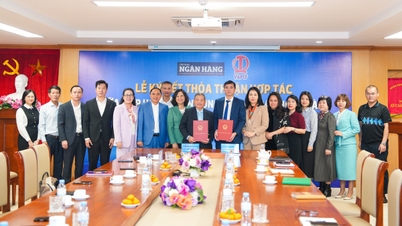
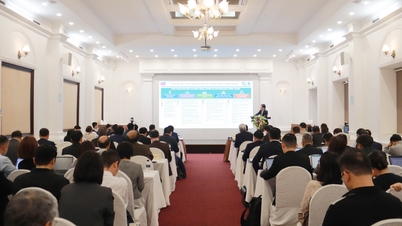
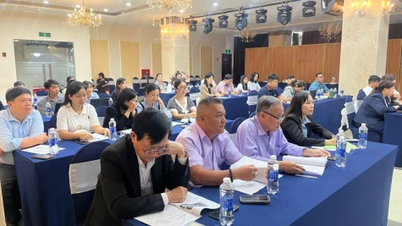
At the seminar "Carbon Credits and Human Resources for the Carbon Credit Market" on the morning of August 16th, Mr. Le Hoang The - Director of VOS Harvest Microbial Agriculture and Forestry Company Limited - argued that people need to change their thinking about carbon (CO2), and should consider it a "friend," a sustainable and long-term source of income.
According to him, carbon is the element that is intrinsically linked to and forms life on Earth. Starting with the carbon synthesis of green plants, the expert said that carbon exists in many forms, either within plants or underground before being released into the atmosphere.
"Carbon doesn't disappear, it just transforms from one form to another," Mr. The emphasized, adding that the current challenge is to turn this into income, contributing to the stability of people's lives and livelihoods.
Professor Vo Xuan Vinh, Director of the Institute for Business Research, assessed that Vietnam's agricultural sector has a great advantage in participating in domestic and international carbon markets. In recent years, the agricultural sector has been a leader in selling carbon credits.
He cited the example that in 2023, Vietnam successfully "sold" 10.3 million forest carbon credits through the World Bank for the first time at a price of 5 USD/ton, earning 51.5 million USD (approximately 1,250 billion VND).
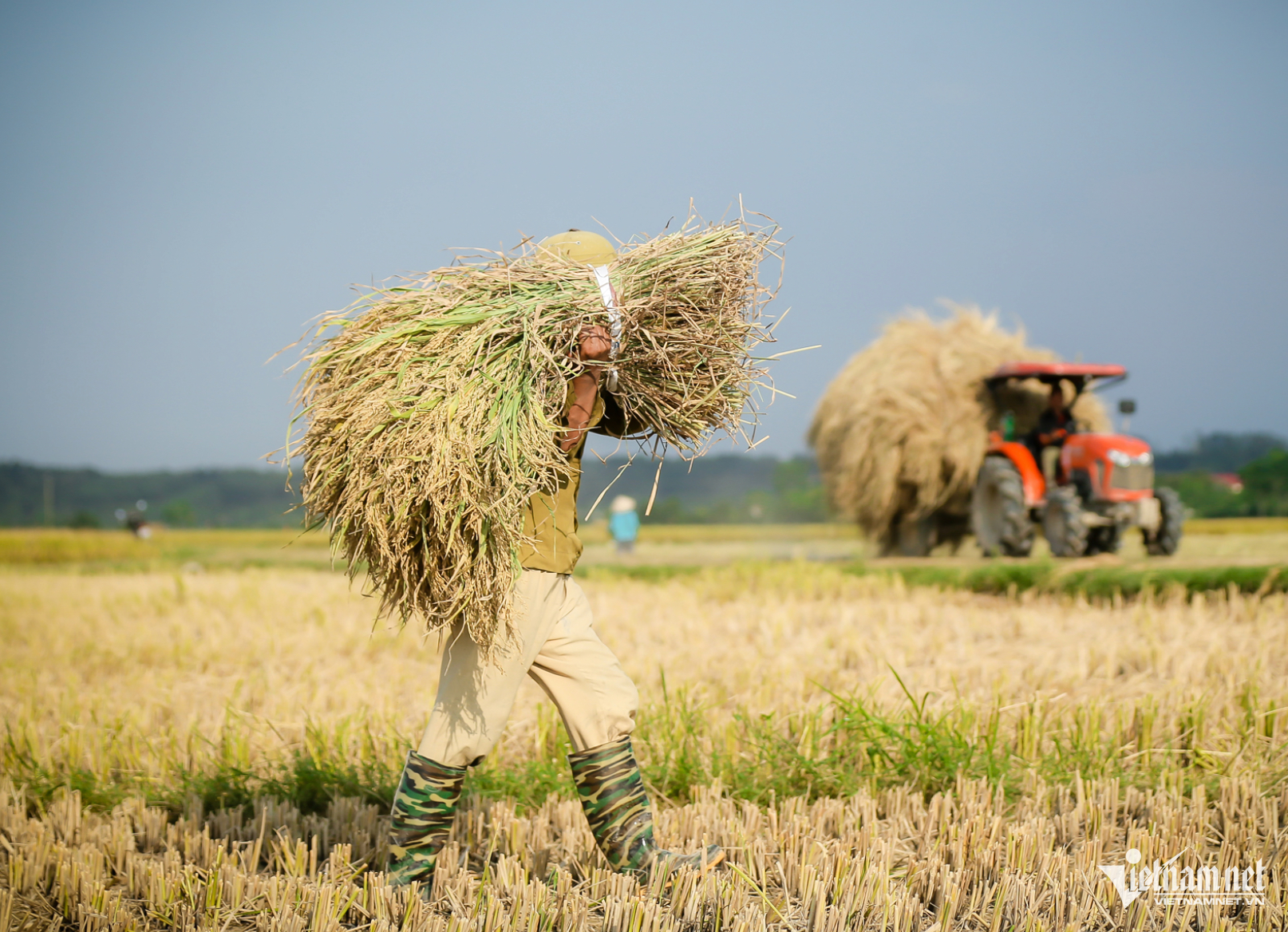
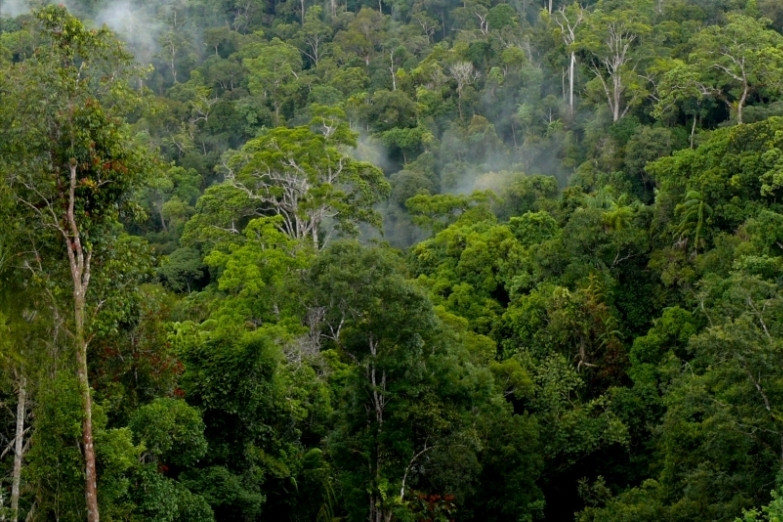
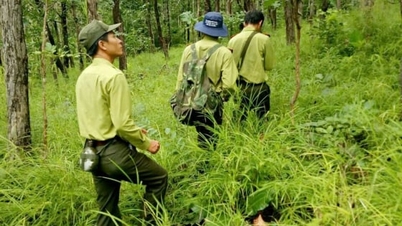
Therefore, he hopes Vietnam will actively participate in the global market, aiming to sell an additional 5 million credits this year and next year, bringing the total amount of carbon sold to 25 million credits. Accordingly, forest carbon sequestration and storage services will be one of Vietnam's advantages in the coming period.
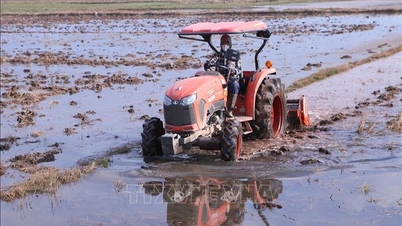
Dr. Tran Minh Hai, Vice Rector of the School of Public Policy and Agricultural Development in the Mekong Delta, said: The Department of Crop Production (Ministry of Agriculture and Rural Development) is collaborating with the Institute of Agricultural Environment to develop a plan to establish and improve the Measurement, Reporting, and Verification (MRV) system, moving towards selling rice carbon credits.
The Ministry of Agriculture and Rural Development is also collaborating with the Transitional Carbon Finance Fund (TCAF) to price carbon credits at $20 per credit. If farmers fully comply with the procedures, they can reduce emissions by 30%, equivalent to a reduction of 2 carbon credits, resulting in an economic benefit of VND 960,000.
However, he also noted that the biggest economic benefit of the project lies not only in the sale of carbon credits but also in reducing input costs through more efficient production processes. In addition, building a brand for low-emission rice and reorganizing production on a large scale also brings significant added value.
"But if we don't earn carbon credits, we'll lose money, not make a profit," Mr. Hai said. However, he also warned that it's crucial not to participate in the carbon market for rice production at all costs. Instead, focus should be placed on implementing proper and sustainable production processes, ensuring long-term benefits for both farmers and the agricultural economy.
"We need personnel who can implement and manage new production processes, understand and effectively apply technical measures to optimize carbon absorption and reduce carbon emissions in agriculture," he affirmed. Because, in the rice sector, personnel need skills in record keeping, production logkeeping, and carbon footprint tracking. In addition, they need to know how to collect pesticide waste, measure water levels, and monitor storage facilities and rice drying ovens...
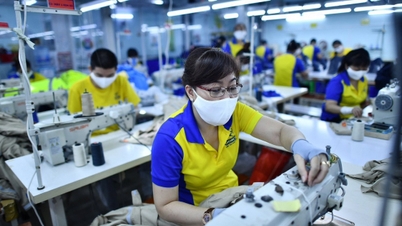
Human resources are needed to participate in the carbon credit market.
Dr. Tran Dai Nghia, Head of the Economic, Financial and Environmental Resources Committee, stated that in order to sell carbon credits on a voluntary basis, each country must generate a surplus of carbon exceeding its NDC – the voluntary commitment of each country.
However, a crucial issue in participating in the carbon credit market is the ability to price carbon. Internationally, there are three pricing systems, but in Vietnam, only two can be used: the quota trading system and the carbon credit mechanism.
Vietnam primarily participates in the voluntary carbon market. This is the easiest form of participation, but it has a time limit for evaluation. If the deadline is exceeded, the system will automatically reset the carbon credits to zero. Regarding the mandatory market, Vietnam is currently unable to participate.
Vietnam is expected to pilot the establishment of a carbon credit exchange in 2025. Therefore, Dr. Le Hoang The believes that the urgent need now is to train a professional force of brokers to participate in carbon trading.
Based on that, he suggested that businesses wishing to participate in the carbon credit market should prepare a workforce with the knowledge to handle carbon inventory, declaration, and related issues.
Professor Vo Xuan Vinh added, "To achieve green development, people must be at the center." To transform and participate in the carbon market, the involvement of many stakeholders and strategies ranging from diplomacy and climate change to technology are needed.
Based on this, it is necessary to train and upgrade the skills of human resources and experts to systematically carry out the steps from measurement and reporting to assessment. At the same time, agencies and units need to promote and raise public awareness.
In addition to training programs, training and research institutes also need to strive to participate in international training networks on carbon credits, with the goal of sharing with the Government in implementing policies, commitments, and roadmaps for green growth, Mr. Vinh said.
Source: https://vietnamnet.vn/dang-dinh-gia-tin-chi-carbon-voi-muc-gia-20-usd-2312433.html








































![[OFFICIAL] MISA GROUP ANNOUNCES ITS PIONEERING BRAND POSITIONING IN BUILDING AGENTIC AI FOR BUSINESSES, HOUSEHOLDS, AND THE GOVERNMENT](https://vphoto.vietnam.vn/thumb/402x226/vietnam/resource/IMAGE/2025/12/11/1765444754256_agentic-ai_postfb-scaled.png)












































Comment (0)