

Identifying the reality
According to the Trade Promotion Agency, with its high degree of economic openness, Vietnam is facing a crucial opportunity to increase its market share. In recent years, exports have consistently been a bright spot for the Vietnamese economy, contributing significantly to GDP growth, creating jobs, and affirming the country's position on the world trade map. The product structure has shifted positively towards processed and manufactured goods, showing that businesses have invested systematically in building Vietnamese brands in the international market. In particular, total import and export turnover reached approximately US$762 billion in the first 10 months of 2025, with a trade surplus of nearly US$20 billion, and is expected to exceed US$950 billion for the whole year.
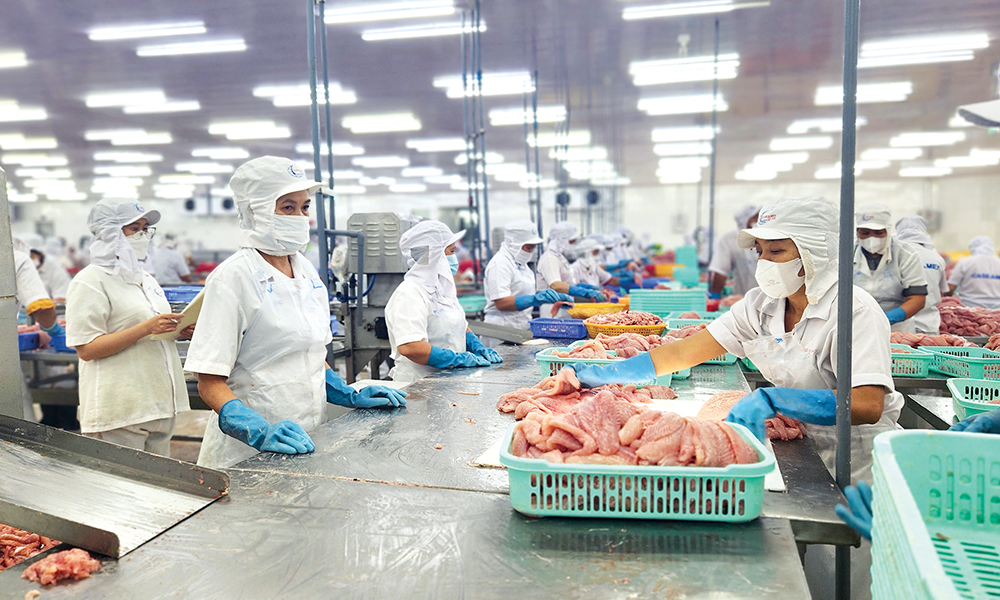
Exporting agricultural and aquatic products is one of the strengths of Vietnamese businesses. In the photo: Processing pangasius for export at Can Tho Seafood Import-Export Joint Stock Company (Caseamex).
Despite achievements, Vietnam's exports still face challenges such as low domestic added value; weak linkages between domestic and FDI enterprises; an inconsistent trade promotion network lacking mechanisms for data sharing and effectiveness evaluation. Many potential markets such as the United States, the EU, Japan, and the Middle East-Africa have not been effectively exploited. Furthermore, in the context of a volatile world , increasing protectionist trends, and the urgent need for green and digital transformation, trade promotion activities require a new phase of development. This involves a more modern, professional trade promotion ecosystem that integrates all domestic and international resources.
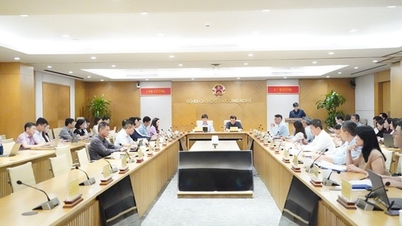
At the recent Vietnam Export Promotion Forum 2025, themed “Go Global - Conquering International Markets,” Mr. Vu Ba Phu, Director of the Trade Promotion Department, stated: “The forum is an opportunity for the Ministry of Industry and Trade and the business community to review the current situation, identify challenges, and determine new opportunities, especially to propose policy recommendations to serve sustainable export development in the coming years. The forum's theme, “Go Global - Conquering International Markets,” reflects Vietnam's strong determination to support businesses in reaching out to the world with new thinking, models, and approaches that align with the transformation trends of international trade, especially digital transformation and sustainable development.”
Take stronger action.
To maintain and leverage competitive advantages, export products must be of high quality, consistently adhere to a green development strategy, embrace digital transformation, and invest heavily in R&D. According to Mr. Nguyen Quoc Khanh, Director of Research and Development at Vinamilk, green transformation is not just an expense, but an investment in the future. If Vietnamese products can overcome the green barriers of demanding markets, they will enter a higher-value segment. However, the challenges of green transformation lie in the investment costs, technological improvements, and upgrades to machinery and equipment to meet standards. Furthermore, training personnel and developing management systems to meet green transformation requirements is a long-term and sustained process. Despite the difficulties, this is the path that businesses need to follow to achieve genuine green transformation and produce products that convince consumers.
With nearly 30 years of business experience and brand building, Ms. Doan Thi Bich Ngoc, General Director of Canifa, shared: Understanding the global value chain helps the company continuously optimize its products and adapt to each fluctuating cycle. Three key pillars help the company expand into international markets: trade promotion and sales; tax and origin policies; and capital support for sustainable development. Besides exports, Canifa maintains its domestic market with over 100 million people. This is a market with great potential, and also a competitive destination for numerous international brands, creating pressure for innovation but also opening up opportunities for development. Ms. Doan Thi Bich Ngoc suggested the need for a professional trade fair and exhibition system linked to brand identity; simplification of tax and origin policies; and a capital support program for the development of sustainable raw materials such as banana fiber, hemp fiber, or eco-friendly materials.
The Ministry of Industry and Trade is finalizing the National Trade Promotion Plan for the period 2026-2030 with five main strategic directions: trade promotion by industry clusters; promoting green transformation and sustainable standards in exports; forming a digital trade promotion ecosystem where data becomes a core asset; building a national export identity, unifying the image of Vietnamese goods in the international market, linked to the Vietnam Value National Brand program and implementing the “Go Global” program.
Specifically regarding the "Go Global" program, Mr. Tran Huy Hoan, from the Planning, Finance and Enterprise Management Department of the Ministry of Industry and Trade, added: "Go Global" is not a game for large enterprises alone; the state must create an ecosystem, and businesses must take the plunge. The "Go Global" program has been submitted to the Prime Minister for consideration and approval, with three strategic directions: expanding the concept of export not only to goods but also to services; adding the pillar of overseas investment; and increasing Vietnam's "footprint" on the world map, not only through goods but also through people, culture, finance, education, etc.
Text and photos: MY THANH
Source: https://baocantho.com.vn/de-hang-hoa-viet-vung-tin-go-global--a194883.html



![[Photo] Prime Minister Pham Minh Chinh receives the Chinese Ambassador to Vietnam](https://vphoto.vietnam.vn/thumb/1200x675/vietnam/resource/IMAGE/2026/04/05/1775397481797_ndo_br_dsc-5512-jpg.webp)



![[Infographic] Cross-exchange rates for determining taxable value from April 2-8](https://vphoto.vietnam.vn/thumb/402x226/vietnam/resource/IMAGE/2026/04/02/1775098913315_w1024q85fauto20260402094804.jpeg)

























































Comment (0)