

The 2024-2025 period marks a tectonic shift in the Comprehensive Strategic Cooperative Partnership between Vietnam and China. Shaped by the Joint Statement and the atmosphere towards the 75th anniversary of the establishment of diplomatic relations (1950-2025), higher education cooperation has gone beyond the framework of traditional cultural exchanges to become a diplomatic pillar and a substantial economic driving force. In particular, the two countries' declaration of 2025 as the "Vietnam-China Humanitarian Exchange Year" and commitment to building a "Community of Shared Future" have raised urgent requirements for upgrading the scale and quality of training cooperation.
In that context, the 6th Red River Basin University Rectors Forum is not only an annual event but has become a “red address” to concretize state-level commitments. Member universities no longer operate individually but have joined together in two specialized subcommittees (Social Sciences & Humanities and STEM), strongly shifting from superficial exchange activities to high-quality human resource training projects directly serving the Kunming - Lao Cai - Hanoi - Hai Phong economic corridor.

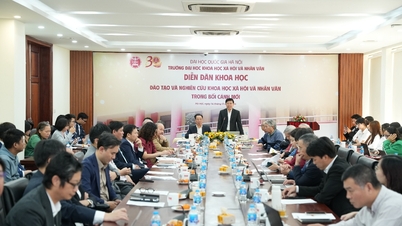
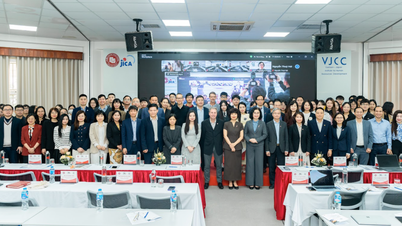
University leaders attend the 6th Red River Basin University Rectors' Forum
In recent times, member universities of the Forum have organized many cooperation activities in many fields. In the field of Social Sciences and Humanities between universities in the past two years, there has been a fundamental change in quality, moving from a purely language training model to interdisciplinary training and providing scientific arguments for policy making.
Standing out in this picture is the persistence and development of Vietnamese language training at the University of Social Sciences and Humanities, Vietnam National University, Hanoi (VNU-USSH). The school has always maintained its position as the leading trusted address for students from Yunnan province. Statistics show a steady growth: if in the 2023-2024 school year, the school received 131 students, then in the 2024-2025 school year, this number increased to 140 students. Of which, Hong Ha Academy always leads in the number of students sent (increased from 60 to 90 students), followed by traditional partner schools such as Yunnan University of Finance and Economics and Yunnan University of Nationalities. Notably, 2025 recorded the new participation of students from Yunnan University, showing that the school's training reputation is increasingly spreading. Not only stopping at the university level, the cooperation also goes into in-depth research with the reception of 04 PhD students, 02 PhD interns and 08 graduate students, creating a vibrant Vietnamese-Chinese academic community right in Hanoi.
Chinese universities are also revolutionizing language training to solve the problem of “good at language but weak in profession”. Yunnan University has pioneered the implementation of the “One Body, Two Wings, Three Fusion” master’s training model in 2024. This model closely combines academic language research and practical teaching skills, helping 42 masters of the school pass rigorous exams to do internships abroad with an impressive employment rate of over 95%. Similarly, Yunnan Normal University has also affirmed its position by becoming the first international doctoral training center for Chinese Education in the region, opening up opportunities to improve the qualifications of Vietnamese Chinese language teachers.
In addition to training, the role of universities as “Think Tanks” is also clearly demonstrated. Kunming Academy, through the Free Trade Research Institute, has closely linked research activities with border economic practices. As of 2025, this unit has published 43 policy advisory reports, in which many proposals on railway and e-commerce connections have received attention from leaders at all levels. The implementation of training programs “Vietnamese + E-commerce” or the proposal of a mechanism to support Vietnamese students to start businesses in the Yunnan Free Trade Zone are vivid evidence of the educational mindset serving the economic development of border areas.
In the field of natural sciences and technology (STEM), member schools have taken full advantage of their specialized strengths to establish highly applicable training and research links.
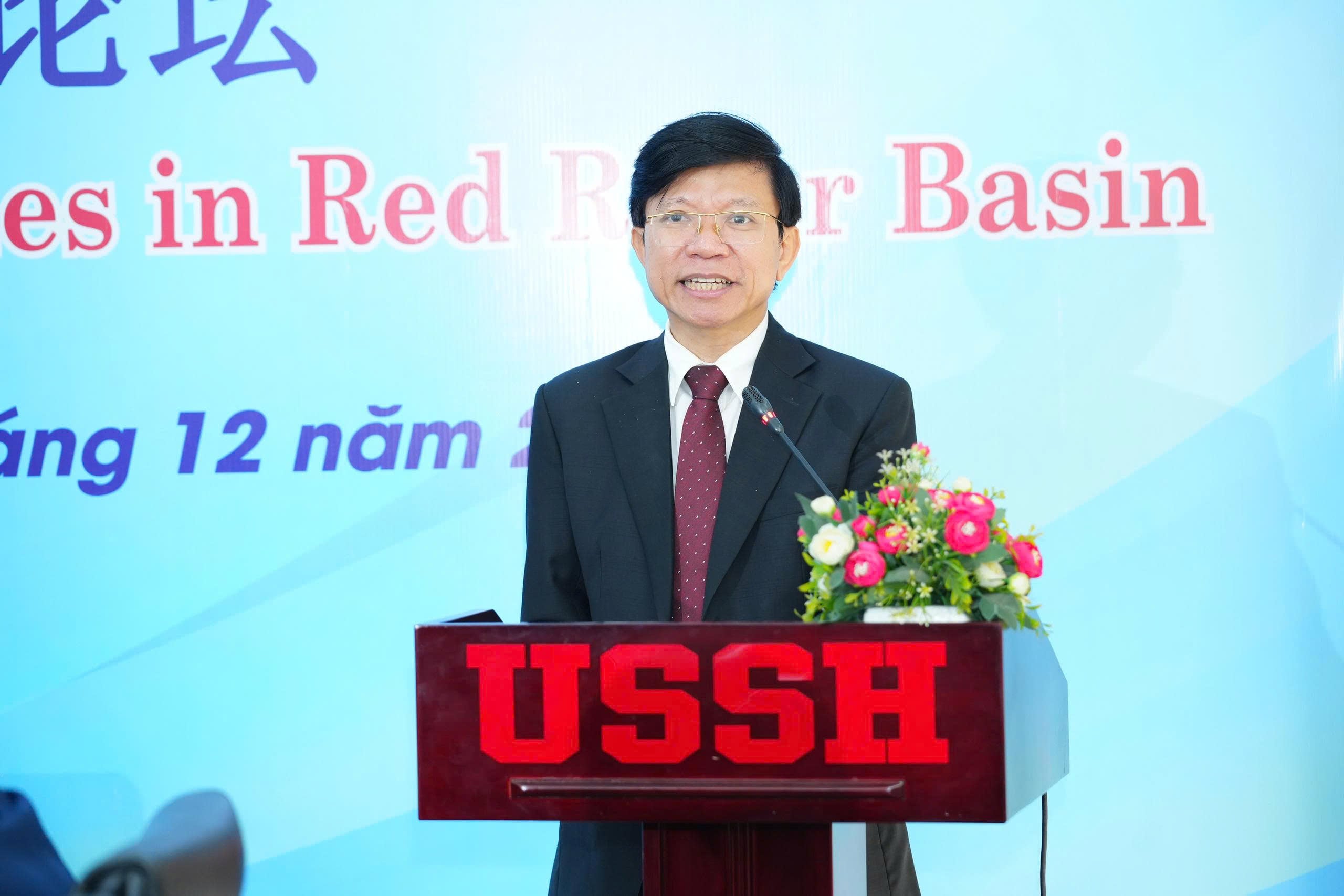
Prof. Dr. Hoang Anh Tuan - Rector of the University of Social Sciences and Humanities delivered the opening speech of the Forum
In the field of agriculture and forestry, Southwest Forestry University and Vietnam Forestry University have raised their cooperation to a strategic level with the inauguration of the “National Biomass Materials International Research Cooperation Center - Vietnam Center” in 2025. Short-term training programs (3-6 months) that Southwest Forestry University offers to Vietnamese students, or sending experts to Vietnam to support macadamia planting techniques and medicinal plant investigation, show the shift from theoretical training to transfer of sustainable farming techniques, directly benefiting farmers and the forestry sector of the two countries.
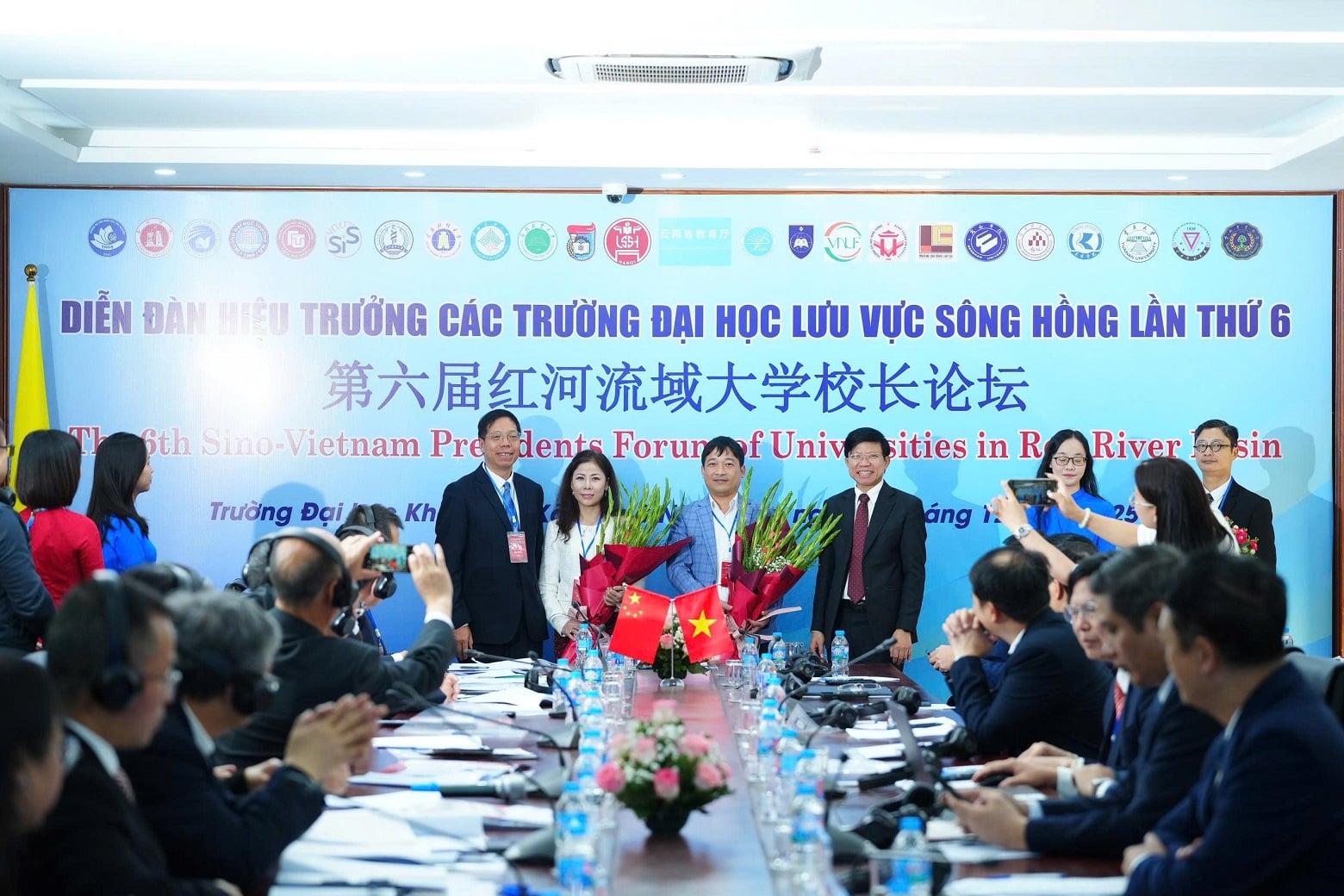
The forum admitted two new members from Vietnam.
In the field of engineering and industry, Kunming Polytechnic University and Wenshan Academy are playing a leading role in training human resources for key industries. Kunming Polytechnic University focuses on the strategy of “Dai Huu Sac” (Ferrous Metallurgy) and “Dai Sinh Vit” (Biomedicine), attracting excellent Vietnamese students through specialized scholarships in new materials and AI. Meanwhile, Wenshan Academy chooses a more pragmatic direction, closely linked to local characteristics such as the aluminum industry and Panax notoginseng. Training practical engineers for smart aluminum factories or deep processing of medicinal herbs is the preparation of human resources for the cooperation projects on mining and high-tech agriculture being implemented in the Ha Giang - Wenshan border area.
Following the success of previous sessions, the 6th Forum continues to affirm its role as a prestigious academic space, promoting higher education connections between Vietnam and China.
The key activities of the 6th Forum focus on summarizing the cooperation period 2024-2025; strengthening trust, promoting more frequent student-lecturer-staff exchanges; expanding the member network and discussing cooperation orientations 2026-2027. The new term (2026-2027) will be chaired by Wenshan Academy (China) to organize the Forum, leading the cooperation between member universities of the Forum.
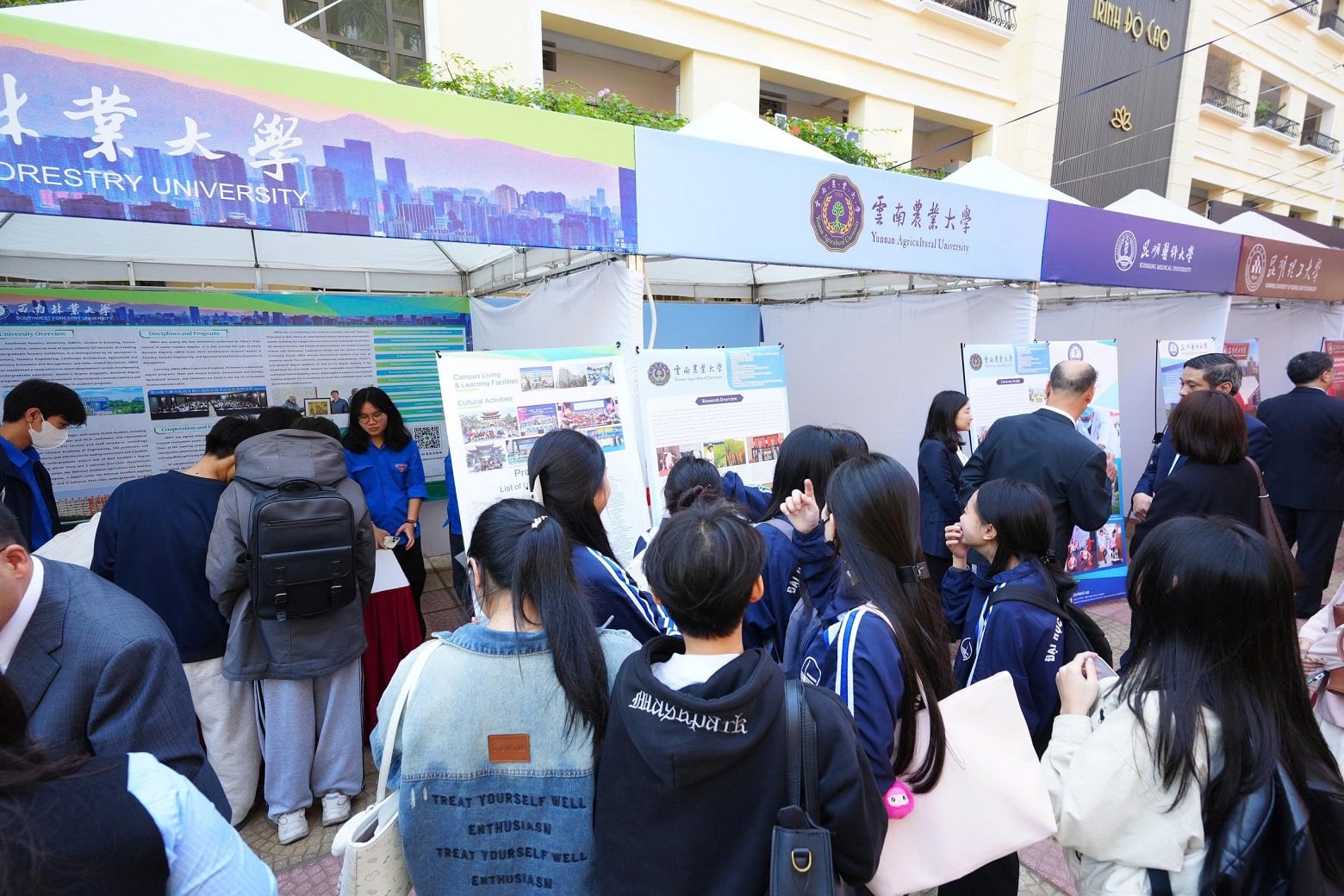
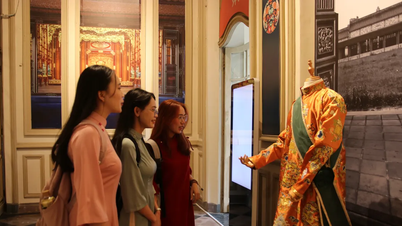
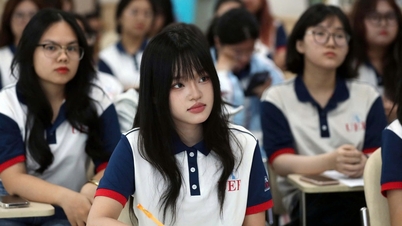
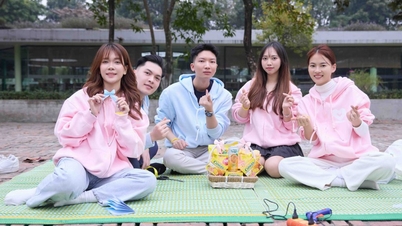
The exhibition and educational exchange activities of universities in the Red River basin attracted the attention of Vietnamese and Chinese students .
The highlight of the program is the exhibition and educational exchange of universities in the Red River basin, taking place at the University of Social Sciences and Humanities, introducing the academic space of nearly 30 universities in Vietnam and China. The event opens up opportunities to seek exchange programs and research cooperation, especially in the fields of social sciences and humanities, natural sciences, engineering and technology.
PV


![[Photo] General Secretary To Lam receives the Director of the Academy of Public Administration and National Economy under the President of the Russian Federation](/_next/image?url=https%3A%2F%2Fvphoto.vietnam.vn%2Fthumb%2F1200x675%2Fvietnam%2Fresource%2FIMAGE%2F2025%2F12%2F08%2F1765200203892_a1-bnd-0933-4198-jpg.webp&w=3840&q=75)









































































Comment (0)