

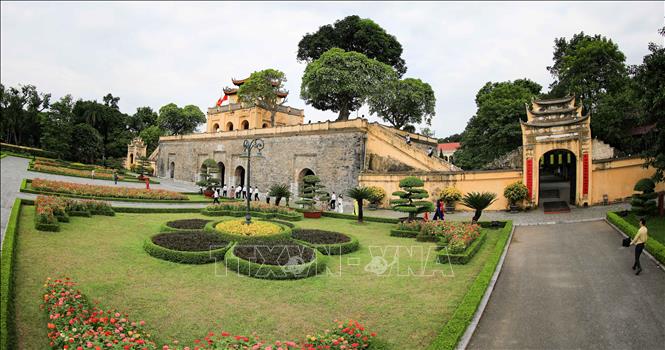
Thang Long Imperial Citadel. Photo: VNA
Hanoi not only serves as the political and cultural center of the country, but it is also a "living museum" with nearly 6,000 cultural and historical relics. Among them, the Thang Long Imperial Citadel complex has been recognized as a World Heritage Site by the United Nations Educational, Scientific and Cultural Organization (UNESCO). Therefore, applying modern technology to the exploitation, preservation, and promotion of heritage values is becoming the "key" for the capital city to break through and shape its image as a smart and sustainable tourist city.
Digital technology and green transformation: Two strategic pillars
According to Mr. Nguyen Quyet Tam ( tourism digital transformation expert, member of the VINASA Government Digital Committee, Chairman of the Board of Directors of VietISO Joint Stock Company), digital transformation and green transformation are becoming two inseparable strategic pillars in the orientation of smart tourism development. For Hanoi - a heritage destination with great appeal and increasing operational pressure, this is not just a trend but an inevitable path to sustainable development and breakthroughs.
Mr. Nguyen Quyet Tam emphasized that e-ticketing is one of the key solutions, offering a "double benefit" by supporting green transformation through reduced paper usage and resource optimization, while also enhancing the tourist experience through online booking, visitor flow control, and instant interaction. The goal is that by 2030, 80-90% of destinations in Hanoi will adopt e-ticketing and online booking/schedule scheduling. This demonstrates the city's strong commitment to realizing a comprehensive digital transformation roadmap for the tourism industry.
To achieve this goal, Hanoi needs to build an interconnected e-ticket ecosystem, develop a centralized data platform, standardize business processes, invest in technological infrastructure, and promote green consumption among tourists.
Over the years, many destinations in Hanoi have begun to implement electronic tickets, integrating QR codes, smart control gates, and online payments, such as the Temple of Literature - National University, Thang Long Imperial Citadel, Hoa Lo Prison historical site, and Duong Lam Ancient Village… These applications help to make the process more transparent, reduce congestion, and enhance the civilized and convenient experience for tourists.
Hai Ba Trung Ward has implemented a pilot model of applying information technology in the dissemination and promotion of historical relics at Lien Phai Pagoda. To date, the locality has successfully deployed QR codes at more than 28 historical relic sites in the area to serve tourists. Visiting Lien Phai Pagoda for the first time, Mr. Nguyen Minh Thang (Cau Giay Ward) shared that the digitized information is convenient. With just a smartphone, locals and tourists can scan the QR code to obtain information and images about the historical relic of Lien Phai Pagoda. Thanks to this, exploring and learning about the relic has become easier and more enjoyable.
According to the Management Boards of the historical sites, since applying technology to promotion, the number of visitors to the sites has increased. Specifically: At Thang Long Imperial Citadel, 3D mapping technology and interactive software are being implemented in the exhibitions. Digitizing exhibition spaces and artifacts in 360-degree and 3D formats, along with virtual tours, allows viewers to use smart devices to learn about the site, creating an attractive appeal for visitors. The application of modern digital technology has helped tourists connect and interact better with the heritage site, thereby significantly enhancing the visiting experience.
Beyond improving management efficiency, technological applications also open up new avenues for Hanoi to integrate heritage preservation with digital economic development and promote the image of the capital city to the international community.
Temple of Literature - National University: A pioneering beacon of light.
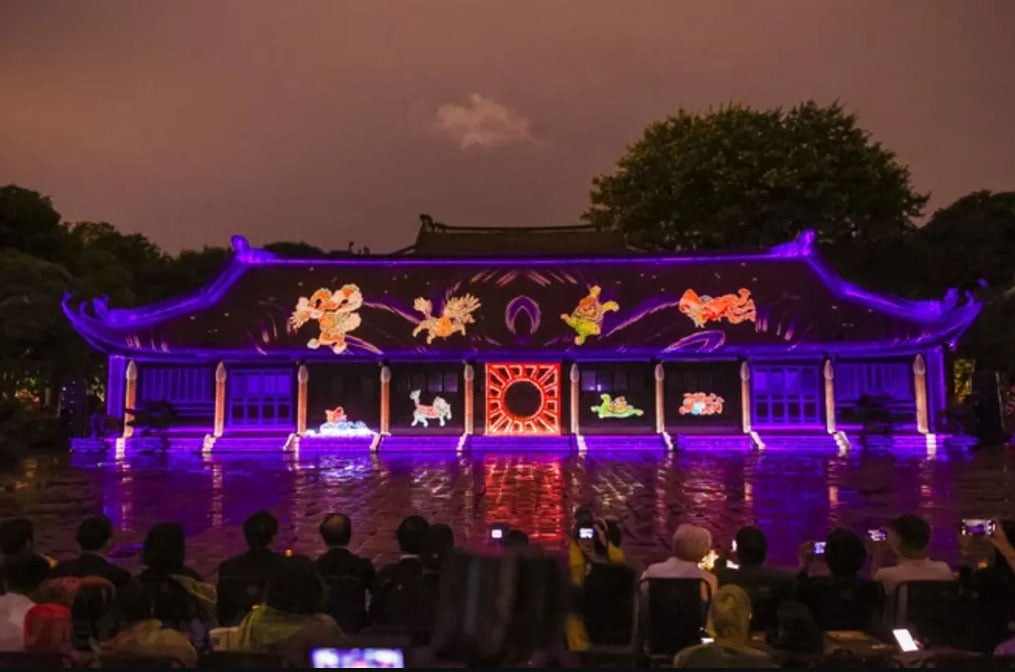
Art space and 3D mapping tell the story of Vietnamese universities at Thai Hoc courtyard, Van Mieu - Quoc Tu Giam historical site. Photo: Dinh Thuan/TTXVN.
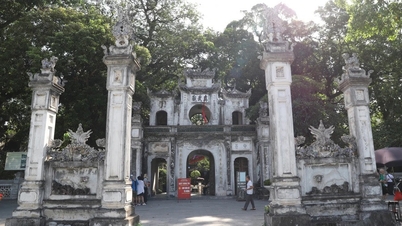
As the largest and oldest Confucian architectural complex in Vietnam, the Temple of Literature - National University welcomes approximately 2.5 million visitors annually. Recognizing the importance of digital transformation, the Temple of Literature - National University Cultural and Scientific Activities Center has proactively embraced digital transformation and applied technology in its conservation and visitor services. Since 2023, the site has officially implemented online electronic ticketing for group tours, using QR codes for entry. Previously, during peak seasons, tens of thousands of visitors would queue for paper tickets, causing congestion. The adoption of electronic tickets has resolved this issue, saving time and creating a positive first impression.
Ms. Nguyen Lien Huong, Deputy Director of the Cultural and Scientific Activities Center of Van Mieu - Quoc Tu Giám, emphasized: "Applying technology not only improves the quality of services but also contributes to preserving the sacredness of the relics, while expanding the space for experiencing modern technology."
The results after two years of implementation show that the electronic ticketing system has helped increase management efficiency, financial transparency, fraud prevention, operational efficiency, and revenue from supplementary digital services. At the same time, the site has more opportunities to develop innovative tourism products such as night tours, automated guided tours, and e-books about the Doctor's Stele…
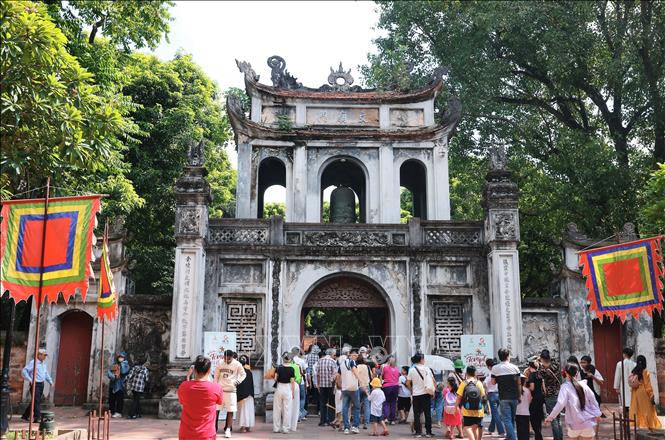
Visitors at the Van Mieu - Quoc Tu Giam National Special Monument. Photo: Hoang Hieu/TTXVN
Heritage - the foundation for the development of the cultural industry.
To further enhance the effectiveness of technology, experts suggest that Hanoi needs to upgrade its network infrastructure and equipment, establish a temporary offline mode for the ticket printing system; improve ticket design, integrate bilingual Vietnamese-English information and souvenir elements. The city should strengthen multilingual guidance and communication, deploy ticket sales applications via fanpages, websites, or mobile apps; provide specialized personnel training, and build a regular maintenance process to ensure the system's stable operation. Simultaneously, developing digital tourism platforms that integrate data, coordinate services, and monitor environmental impacts will open new avenues, bringing Hanoi closer to its goal of becoming a leading smart and sustainable tourism city in the region.
Hanoi currently leads the country in the number of cultural heritage sites. This enormous wealth of heritage, when combined with digital technology, will become a significant resource for developing the cultural industry and driving a strong breakthrough in the capital's tourism. The digitization of heritage goes beyond mere storage and preservation; it also facilitates the creation of high-quality digital cultural products suitable for modern audiences. This will allow heritage to be widely disseminated, increasing its economic value and affirming Hanoi's position on the global tourism map.
Based on the experience at the Temple of Literature - National University and many other destinations, it can be affirmed that applying technology to the development of tourism in Hanoi is an inevitable trend, not diminishing traditional values but rather increasing the depth of the experience and enhancing accessibility to heritage.
With the determination of the government, the support of businesses and the community, Hanoi has the potential to realize its goal of becoming one of the leading smart and sustainable tourism centers in the region, where heritage is preserved, honored, and promoted in a new context.
Source: https://baoangiang.com.vn/doi-moi-dien-mao-du-lich-bang-cong-nghe-hien-dai-va-di-san-a460855.html

![[Photo] Prime Minister Pham Minh Chinh holds a phone call with the CEO of Russia's Rosatom Corporation.](/_next/image?url=https%3A%2F%2Fvphoto.vietnam.vn%2Fthumb%2F1200x675%2Fvietnam%2Fresource%2FIMAGE%2F2025%2F12%2F11%2F1765464552365_dsc-5295-jpg.webp&w=3840&q=75)


![[Photo] Closing Ceremony of the 10th Session of the 15th National Assembly](/_next/image?url=https%3A%2F%2Fvphoto.vietnam.vn%2Fthumb%2F1200x675%2Fvietnam%2Fresource%2FIMAGE%2F2025%2F12%2F11%2F1765448959967_image-1437-jpg.webp&w=3840&q=75)




































![[OFFICIAL] MISA GROUP ANNOUNCES ITS PIONEERING BRAND POSITIONING IN BUILDING AGENTIC AI FOR BUSINESSES, HOUSEHOLDS, AND THE GOVERNMENT](https://vphoto.vietnam.vn/thumb/402x226/vietnam/resource/IMAGE/2025/12/11/1765444754256_agentic-ai_postfb-scaled.png)











































Comment (0)