

Accordingly, seven market participants borrowed nearly VND 13,669 billion from the State Bank of Vietnam through the OMO channel, with a 7-day term and an interest rate of 4.25% per annum, a decrease of 0.25% per annum compared to the previous session.
Notably, this is the first time this year that the State Bank of Vietnam (SBV) has reduced the OMO interest rate. The last time the SBV reduced the OMO interest rate was at the end of 2023, followed by two increases in April and May 2024, each increase being 0.25% per year.
In addition, the State Bank of Vietnam also issued VND 3,250 billion worth of 14-day treasury bills in the August 5th session. The winning bid interest rate was 4.25% per annum, a decrease of 0.25% per annum compared to the previous session.
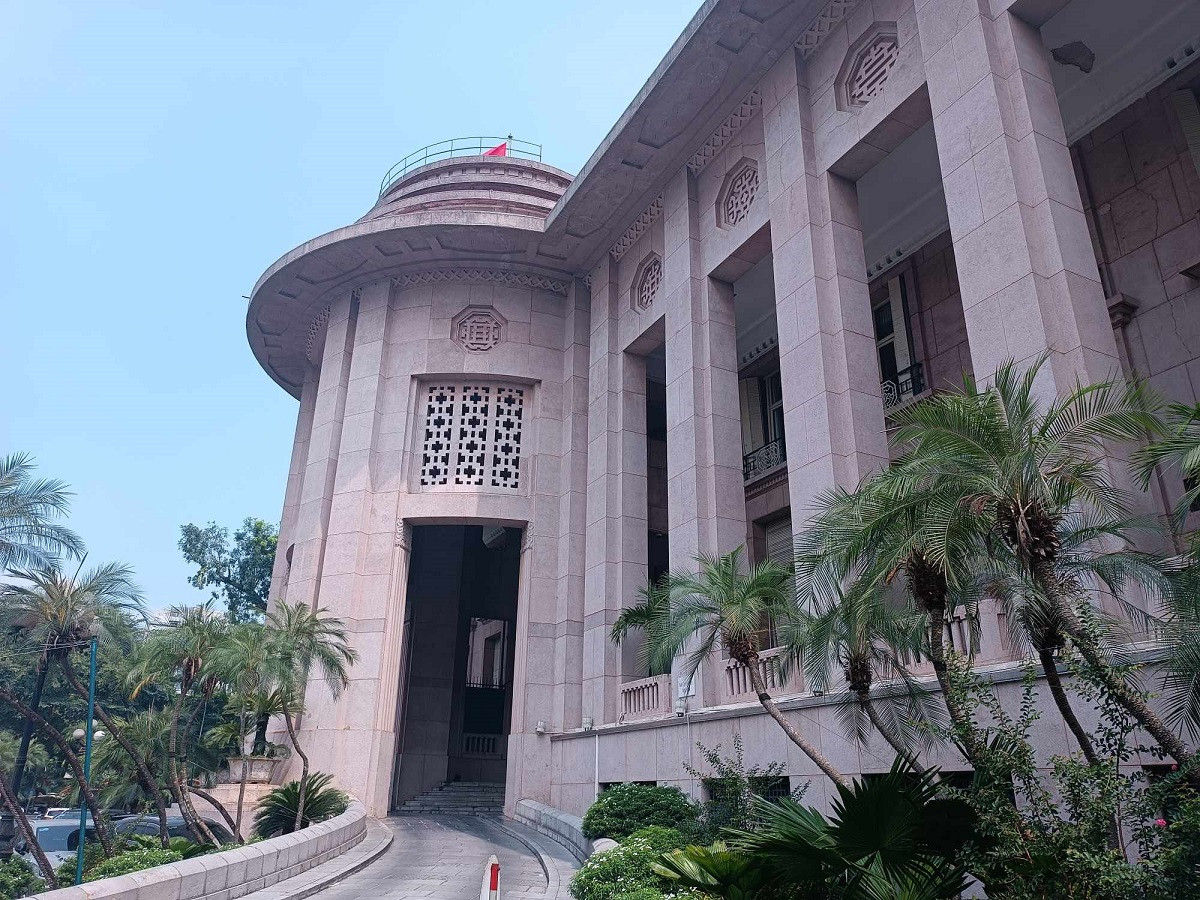
The State Bank of Vietnam's simultaneous use of treasury bills and open market operations (OMO) serves a dual objective: ensuring liquidity for the banking system to maintain low interest rates in the interbank market, while simultaneously reducing pressure on the exchange rate by narrowing the USD-VND interest rate spread in the interbank market.
According to Deputy Governor of the State Bank of Vietnam, Dao Minh Tu, the State Bank's monetary policy management must ensure two most important objectives: contributing to inflation control and macroeconomic stability; and focusing resources on economic growth.
To accomplish those two key tasks, the State Bank of Vietnam's (SBV) approach is to manage interest rates flexibly. Therefore, the use of SBV's monetary policy tools such as refinancing, reserve requirements, open market lending, interbank market interest rate regulation, etc., must always be flexible.
Since June 2023, the policy interest rate has remained stable. However, the Deputy Governor stated that the State Bank of Vietnam (SBV) is constantly analyzing and assessing whether or not to change the policy interest rate, and how to change it to suit the overall economy; while simultaneously ensuring inflation control and supporting economic growth.
In addition, the money supply and withdrawal remain balanced, and lending interest rates remain stable. The State Bank of Vietnam requires commercial banks to reduce lending interest rates based on reduced operating costs, using their own resources to continue restoring the economy through supporting business development.
According to Mr. Tú, the exchange rate is a major and very complex issue in the management process, being a complex interplay of macroeconomic relationships, including interest rates, the money supply in the economy, and the impact of exchange rate policies of other countries.
In the first six months of 2024, the VND/USD exchange rate continued to remain stable. The VND depreciated by approximately 4.4% since the beginning of the year, while some major economies saw their domestic currencies depreciate by over 10%.
"We cannot fix the exchange rate in the context of a volatile global economy, so the solution is to create harmony between exports and imports, simultaneously addressing exchange rate policy with interest rate policy; ensuring inflation control and the supply and demand of foreign currency," the Deputy Governor said.

Source: https://vietnamnet.vn/dong-thai-moi-cua-ngan-hang-nha-nuoc-ve-lai-suat-2308906.html


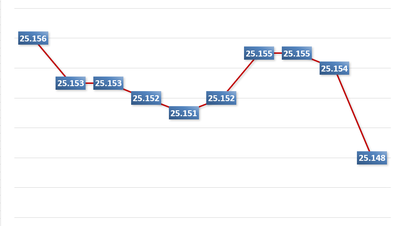

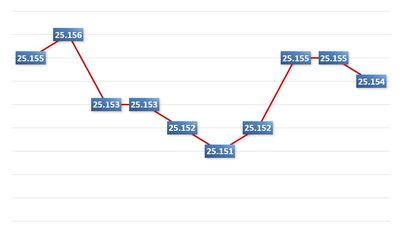
![[Infographic] Cross-exchange rates for determining taxable value from December 11-17](https://vphoto.vietnam.vn/thumb/402x226/vietnam/resource/IMAGE/2025/12/11/1765413245543_infographic-ty-gia-tinh-cheo-de-xac-dinh-tri-gia-tinh-thue-tu-11-1712-20251211021920.jpeg)
































































Comment (0)