

Draft amendments to the Electricity Law: Offshore gas and wind power projects remain uncertain.
Vietnam has ambitious plans to develop new energy sources; however, the lack of a solid legal framework poses a risk to national energy security.
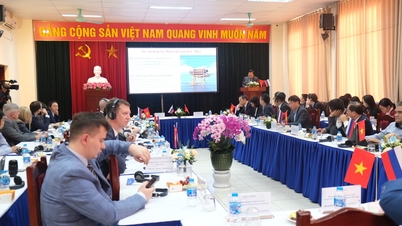
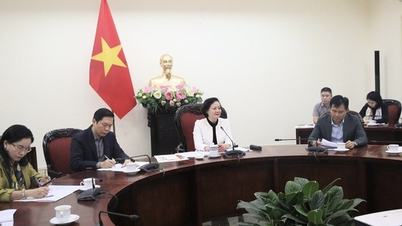
On October 16th, the Vietnam Petroleum Association organized a seminar on the amended Electricity Law: Legal gaps that need to be filled and supplemented in accordance with the spirit of Resolution 55-NQ/TW and Conclusion 76-KL/TW.
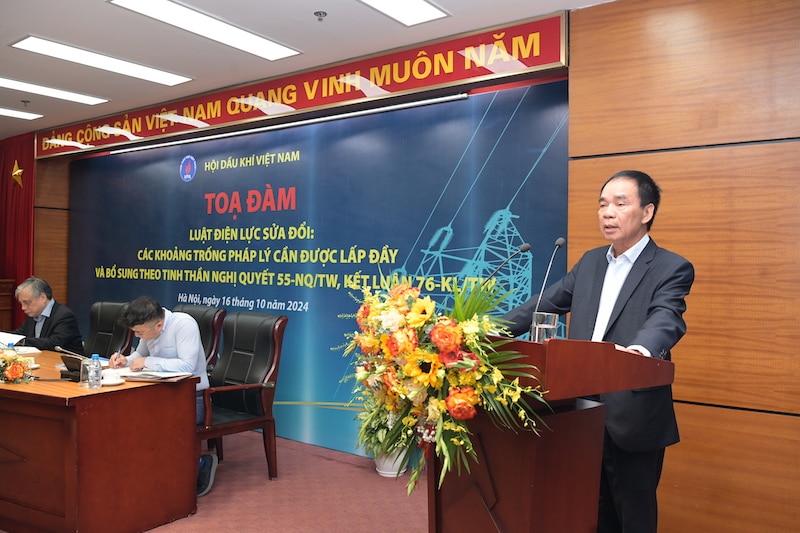 |
| Mr. Nguyen Quoc Thap, Chairman of the Vietnam Petroleum Association, commented that, through research, synthesis, and comparison with orientations and policies, the Vietnam Petroleum Association has found that the realization of power projects from domestically extracted gas and imported LNG, as well as offshore wind power, still faces difficulties and obstacles, posing a risk of not developing power sources as planned. |
According to Dr. Nguyen Quoc Thap, Chairman of the Vietnam Petroleum Association, fully institutionalizing the contents of Resolution No. 55-NQ/TW, Conclusion No. 76-KL/TW, and the Party's guidelines and policies into the Electricity Law will encourage and facilitate the participation of domestic and foreign organizations and individuals in electricity activities in Vietnam; promote investment in the energy sector in general and the electricity sector in particular to meet the needs of socio-economic development.
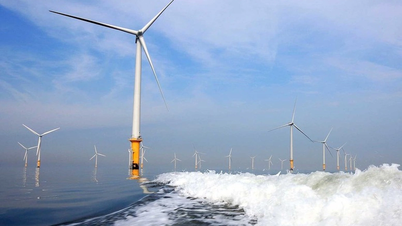
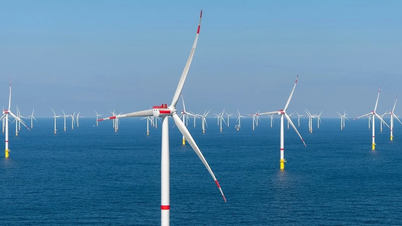
Waiting for a pilot mechanism for offshore wind power.
Based on the practical implementation of the Oil and Gas Project, Mr. Nguyen Tuan, Head of the Commercial Department of Vietnam Petroleum Technical Services Corporation, shared his experience. PTSC stated that the draft revised Electricity Law currently has 130 articles, but only 9 articles relate to offshore wind power and are general, overarching regulations.
Vietnam National Petroleum Corporation ( Petrovietnam ) and PTSC proposed 17 issues aimed at clarifying development orientations and policies, but only 4 issues were accepted.
The recommendations that have not yet been adopted include: orientation and models for development stages; institutionalizing the role of Petrovietnam according to Resolution 76-KL/TW; unifying the management authority and the role of the Government; synchronizing land allocation with the sea area; and a clear mechanism for exporting offshore wind power.
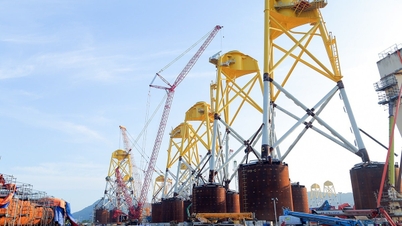
This leads to ambiguity regarding the procedures for offshore wind power , and a lack of mechanisms for developing sustainable projects.
 |
| Mr. Nguyen Tuan, Head of Commercial Department, PTSC |
“ Offshore wind power projects are a new field in Vietnam that urgently needs a pilot mechanism. Therefore, PTSC proposes that the draft Law assign the Government and the Prime Minister the authority to decide on the phased development stages of the industry; the criteria for selecting investors, the decentralization of authority, and the procedures for approving the policy; and to develop pilot offshore wind power projects for domestic use and export,” Mr. Nguyen Tuan commented.
Another important recommendation mentioned by PTSC is to strengthen the role of Petrovietnam and its member units in the offshore wind power supply chain, in accordance with Conclusion 76/KL-BCT, to lead the implementation of geological and geotechnical surveys, wind and hydrological measurements; to encourage Petrovietnam member enterprises to participate in the supply chain and develop offshore wind power projects; to increase the shareholding ratio of Petrovietnam/Petrovietnam member units in offshore wind power projects; and to pilot export.
Discussing the challenges of offshore wind power , Dr. Du Van Toan, The Institute of Environmental, Marine and Island Sciences (Ministry of Natural Resources and Environment) stated that offshore wind power has good potential in Vietnam, especially in the South Central region. Therefore, registration for sea areas for survey and investment is currently in high demand.
According to Dr. Du Van Toan, the Ministry of Industry and Trade has identified four obstacles to offshore wind power projects: It is unclear which authority has allocated the sea area, or granted permission or approval for organizations to use the sea area for surveying, monitoring, investigation, exploration, and research activities to serve the preparation of offshore wind power projects.
The national marine spatial plan has not yet been approved, so there is no basis for implementing the Power Development Plan VIII. Obstacles remain regarding the authority to approve investment policies and market access conditions for foreign investors in the offshore wind power sector. Mr. Toán believes that the planning issue requires the Electricity Law (amended) to be reviewed soon, addressing licensing issues and measurement standards.
Based on that reality, Dr. Du Van Toan proposed a mechanism to support the pilot project, recommending that the National Assembly issue a Resolution on piloting the development of offshore wind power, with a scale of 1000 MW – 2000 MW, while also regulating the time and price for implementation.
Regarding the survey area and location, Mr. Toan suggested that PTSC should propose a pilot project in the Quang Ninh or Binh Thuan sea areas – two areas with good wind conditions, favorable for maritime activities, and easy to mobilize partners. In addition, Mr. Toan also mentioned the pilot mechanisms for preliminary surveys, timeframes, area, capital, and the management, acceptance, and evaluation process.
Electricity : Legal procedures take too long.
Another area identified in the draft amended Electricity Law as gradually becoming an important source of electricity supply is gas-fired power.
As the unit implementing these projects, Mr. Nguyen Duy Giang, Deputy General Director of Vietnam Oil and Gas Power Corporation (PV Power), shared that the gas-fired power projects are prepared by the company over 8 years, with the procedural process taking 2/3 of that time, showing that completing legal procedures takes a significant amount of time.
Mr. Giang shared that during implementation, businesses faced many major difficulties due to fluctuating raw material prices, therefore the price-sharing mechanism played a necessary role. In addition, many gas-fired power projects cannot be implemented due to obstacles in the financial model, with lenders unable to determine the source of funds.
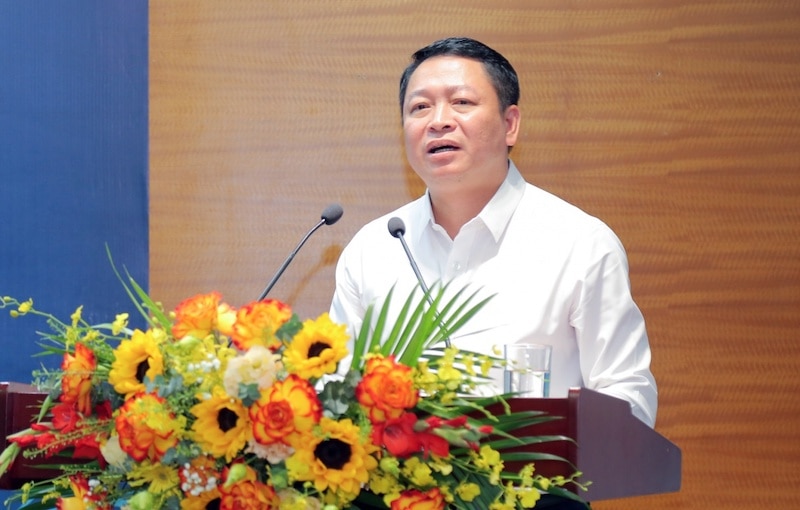 |
| Mr. Nguyen Duy Giang, Deputy General Director of PV Power: The Nhon Trach 3&4 project is one of the first projects in Vietnam with a credit loan contract without a government guarantee. PV Power used shares of the Nhon Trach 1&2 power plant and the cash flow from Nhon Trach 1&2 as collateral for this first LNG power plant project in Vietnam. |
"Without a different perspective on promoting the power purchase agreement (PPA) mechanism, it's impossible to accelerate the development of LNG power projects. Based on the lessons learned from the Nhon Trach 3&4 gas-fired power plant project, we propose that the Ministry of Industry and Trade adopt a practical approach to draw lessons for future LNG projects. We suggest that the financial model for these projects must include a Power Purchase Agreement (PPA)," Mr. Nguyen Duy Giang suggested.
Speaking further about the challenges of electricity generation, Mr. Dinh Duc Manh, Vietnam Gas Corporation According to PV GAS, during the implementation of the Power Development Plan VIII, investors in LNG power projects are pursuing a strategy of investing in separate, decentralized LNG import terminals and storage facilities, following a configuration of one power plant per terminal. This approach cannot optimize costs to reduce electricity prices, risks delays in project implementation, and impacts national energy security.
However, the draft amended Electricity Law does not include provisions for the construction of LNG-based thermal power projects in a chain linked to a central LNG hub. Recognizing this risk, PV GAS proposes that the amended Electricity Law specifically include a mechanism for constructing thermal power projects using natural gas and LNG in a chain linked to a central liquefied natural gas (LNG) hub to leverage existing infrastructure and ensure state efficiency.
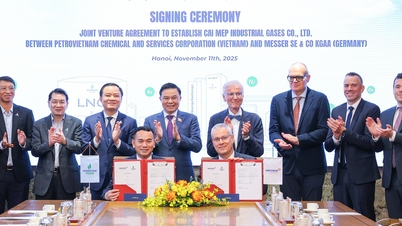
In addition, Mr. Manh also stated that the draft Law does not contain provisions regulating green energy projects such as hydrogen and ammonia, leaving investors without a basis to conduct research and invest in such projects, leading to the risk of disrupting the Power Development Plan VIII. Therefore, PV GAS proposes developing a chain of projects to produce hydrogen and ammonia gas, gradually replacing natural gas in electricity production, and utilizing the existing gas transportation and distribution infrastructure.
While acknowledging Vietnam's significant advantages in developing gas-fired power, Dr. Ngo Tri Long, an economic expert, recommends that the price of gas-fired and LNG electricity should follow market mechanisms. This is because the cost of importing LNG often accounts for a large proportion of the total cost of electricity production. If electricity prices remain administratively regulated as they are now, they will not accurately reflect actual costs, leading to losses and supply shortages.
Mr. Long also stated that long-term commitments are needed to ensure a stable supply of LNG for electricity production. This is crucial given that LNG prices can fluctuate significantly over time and due to market factors.
In addition, the expert suggested expanding the scope of entities eligible for direct electricity trading, including both gas-fired and LNG-fired power plants, to create competition, thereby boosting efficiency and reducing electricity prices for consumers.
Continue to contribute to the improvement of the draft Electricity Law.
Echoing the recommendations of the member units, Mr. Phan Tu Giang, Deputy General Director of Petrovietnam, said that it takes an average of 7-8 years to implement a gas-fired power project, and 7-10 years for offshore wind power projects. Therefore, it is necessary to quickly finalize the mechanisms, especially those to attract investment.
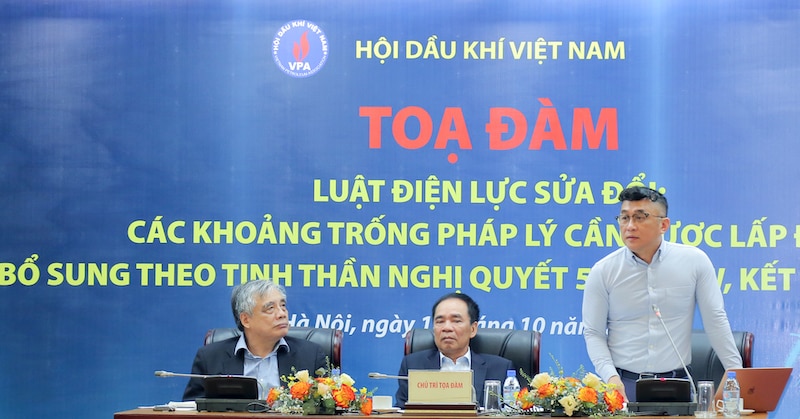 |
| Mr. Phan Tu Giang, Deputy General Director of Petrovietnam: It is necessary to quickly finalize the mechanisms, especially the mechanisms for attracting investment. |
“Cheap power sources have reached their limits, and coal-fired power cannot be further developed due to emission reduction commitments. At this point, we must consider gas-fired power and new energy sources. To achieve this, we need a transparent investment and operation mechanism that creates favorable conditions to attract investors to participate in the electricity market. This is not just a matter for Petrovietnam alone, but a necessary condition for all businesses participating in the electricity market in general and new energy sources in particular,” Mr. Phan Tu Giang suggested.
Responding to the opinions expressed at the seminar, Mr. Doan Ngoc Duong, Deputy Director of the Electricity Department (Ministry of Industry and Trade), highly appreciated the interest and research of the Vietnam Petroleum Association and its member units.
The draft law has undergone its fifth update, and the process of addressing, resolving, and incorporating feedback has involved filtering many suggestions. However, in the development of electricity in particular and energy in general, diverse obstacles remain.
“The drafting agency will strive to address the issues by focusing on resolving as many emerging problems as possible and institutionalizing the major guidelines and policies of the Party and the State. For content that is not yet mature or has not been summarized from practical experience, the drafting agency will apply general regulations and issue circulars and decrees to guide it under the Law,” Mr. Duong said.
Regarding the proposal for an LNG Hub, Mr. Duong also stated that the draft Law does not require specific supply sources and does not limit investors from independently investing in port and storage systems. However, sourcing from other ports and storage facilities to optimize costs, lower electricity prices, and create competitiveness will be encouraged.
In addition, the Ministry of Industry and Trade has reported to the Government on recommendations for pilot mechanisms for other renewable energy projects, with the understanding that any issues lacking practical experience will be addressed in a holistic manner.















































































Comment (0)