

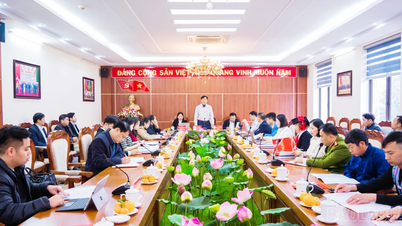
In her opening remarks, Ms. Tran Thi Thuy Lan, Deputy Head of the Hoan Kiem Lake and Hanoi Old Quarter Management Board, stated that the event was organized to celebrate the 49th anniversary of the Liberation of Southern Vietnam and National Reunification (April 30, 1975 – April 30, 2024) and the 137th anniversary of International Labor Day (May 1, 1886 – May 1, 2024), with the aim of preserving and promoting traditional handicraft values and showcasing the beauty of local culture.
The brocade weaving village of Xí Thoại hamlet, Xuân Lãnh commune, Đồng Xuân district, was established in 1945. Initially, it appeared in households and individuals who produced and sold their products independently. Gradually, it became popular and expanded its trade to other hamlets in Xuân Lãnh commune and the districts of Sơn Hòa and Sông Hinh.
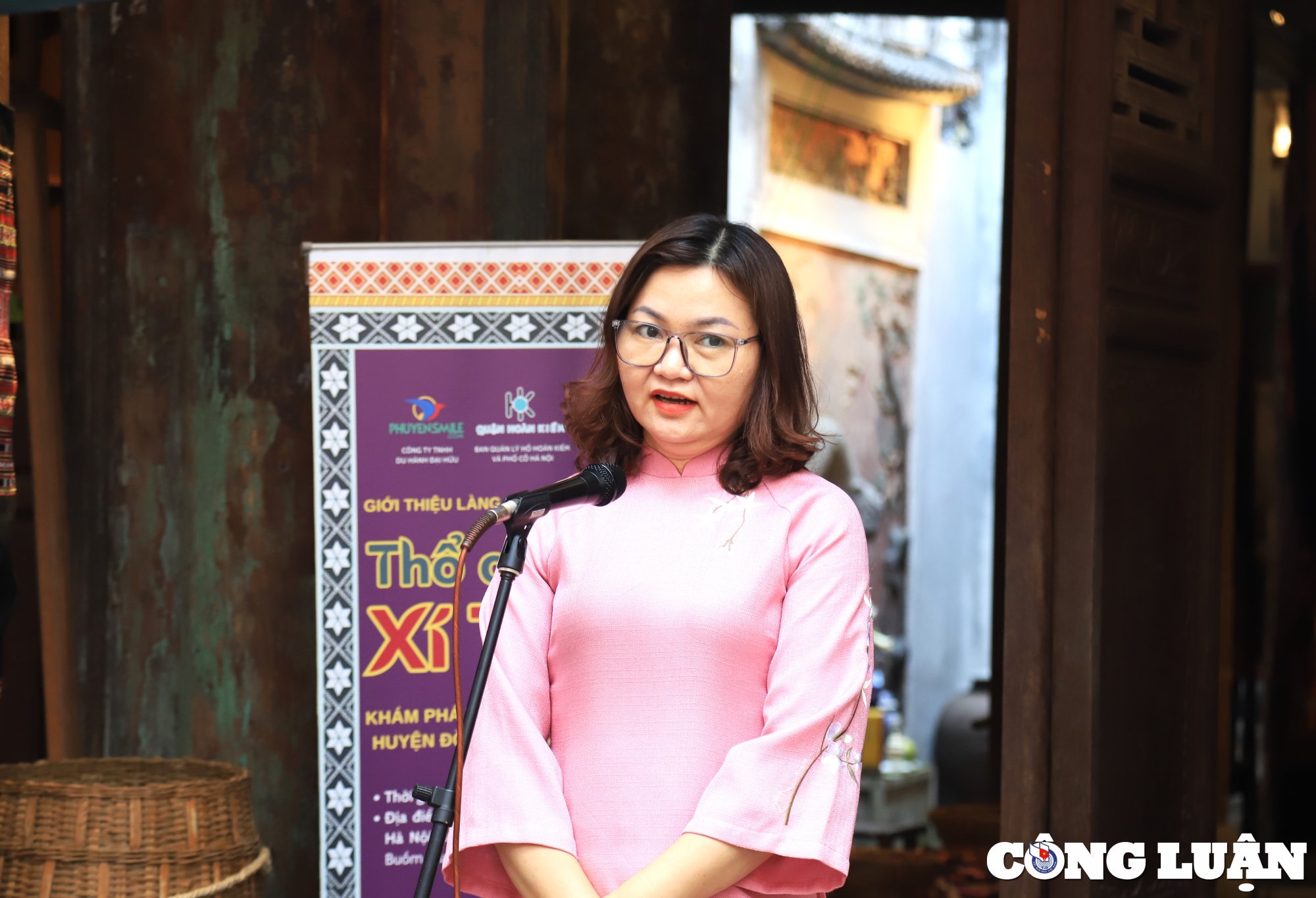
Ms. Tran Thi Thuy Lan, Deputy Head of the Hoan Kiem Lake and Hanoi Old Quarter Management Board, delivered the opening remarks at the event.
"Through this event, we hope to have the opportunity to exchange cultural knowledge about traditional crafts. This year, we chose the Xí Thoại brocade weaving craft – which is also one of the very developed crafts in the Northwest region of Vietnam. However, this is the first time we are collaborating with the Central region, and the Hoan Kiem Lake and Hanoi Old Quarter Management Board hopes that participating units will exchange and introduce the craft, its unique characteristics, and the beauty of regional culture to people nationwide," emphasized Ms. Tran Thi Thuy Lan.
Brocade is a type of fabric hand-woven from fibers derived from flax, cotton, and hemp plants. The surface of brocade fabric is intricately woven, with raised patterns resembling hand embroidery, but in reality, the entire process of creating brocade fabric is done on a loom. Brocade fabric is handcrafted by the people of Xuan Lanh commune.
Each pattern woven into the fabric represents the unique identity of the local ethnic group. Weaving brocade is often much more difficult because one must remember each thread and pattern to change the colored spools correctly. If a mistake or oversight occurs during weaving, the entire piece must be unraveled and corrected immediately.
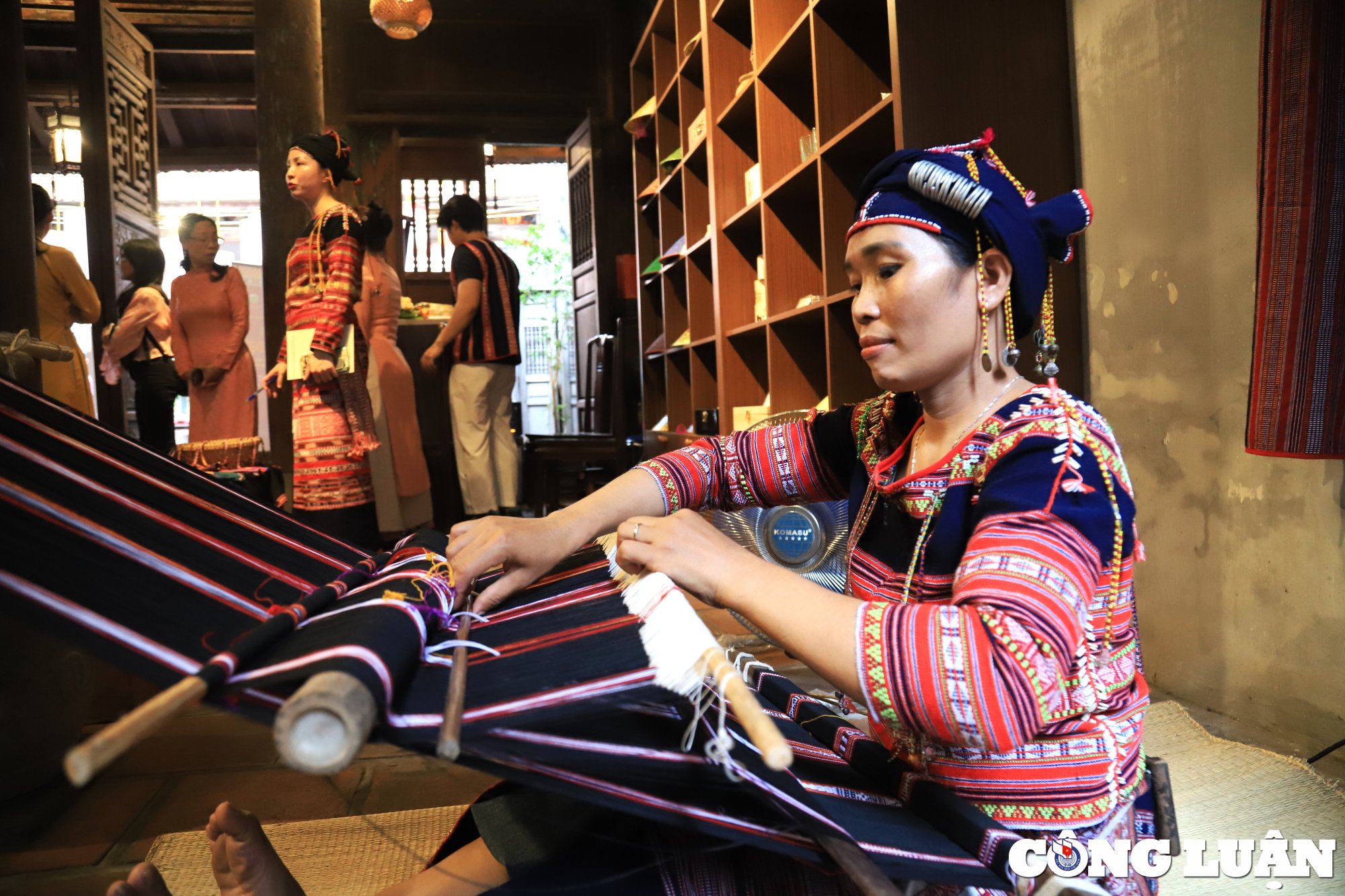
Artisans from the Xí Thoại brocade weaving village demonstrate traditional weaving techniques.
With their simple way of thinking, the patterns in the Bana people's brocade textiles are highly symbolic, symmetrical shapes. These symmetrical patterns reflect their conception of the universe, heaven and earth, yin and yang, using nature as a model. Each piece of brocade is a miniature depiction of nature, created from stylized geometric lines. The patterns on the fabric surface represent the daily life of the people here. Furthermore, the patterns symbolize nature, forests, mountains, and flowers.
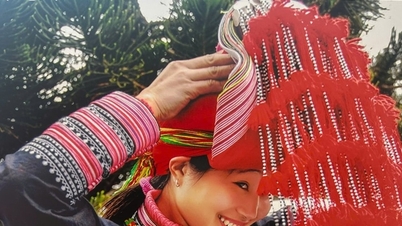
With the dominant colors being white, red, and black. Red symbolizes strength and love. White symbolizes aspiration and dreams. Black symbolizes power and the strength of the mountains and nature. Among these colors, the Ba Na people value black the most and revere it as a supernatural power.
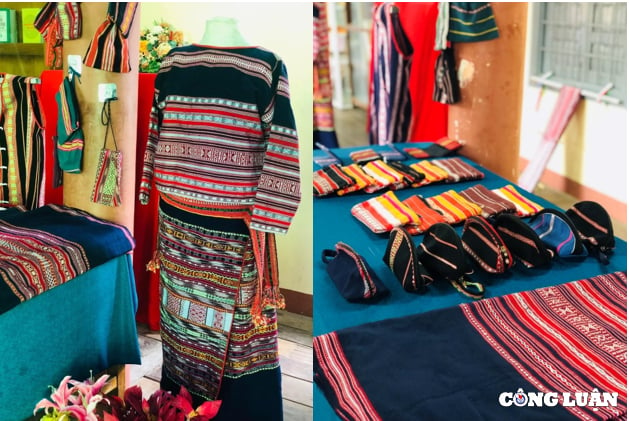
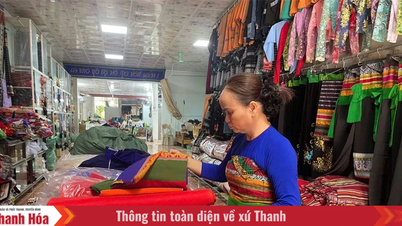
Some typical tourism products of Xi Thoai craft village, Phu Yen province.
Over the past period, Dong Xuan district has focused many resources on supporting and creating conditions for members of brocade weaving groups to participate in vocational training courses, trade promotion, support production and business, market research, and promote the image of products associated with the brand of the brocade weaving village. At the same time, it has supported the development of village products in conjunction with the development of OCOP products, and currently, 40 households are participating in brocade weaving production.
With nearly 80 years of operation, the brocade weaving village has produced a wide variety of products in diverse styles and colors to meet the needs of local people and tourists , providing them with a stable income through a range of tourism products such as brocade fabrics, traditional clothing of the Ba Na ethnic group, wallets, scented pouches, scarves, etc., creating a value chain from production to consumption.
Viet Trung - Duc Anh
Source







![[Video] Hue and Quang Ninh mark strong tourism growth](https://vphoto.vietnam.vn/thumb/402x226/vietnam/resource/IMAGE/2025/12/12/1765555481742_dung00-22-16-02still007-jpg.webp)

























































Comment (0)