

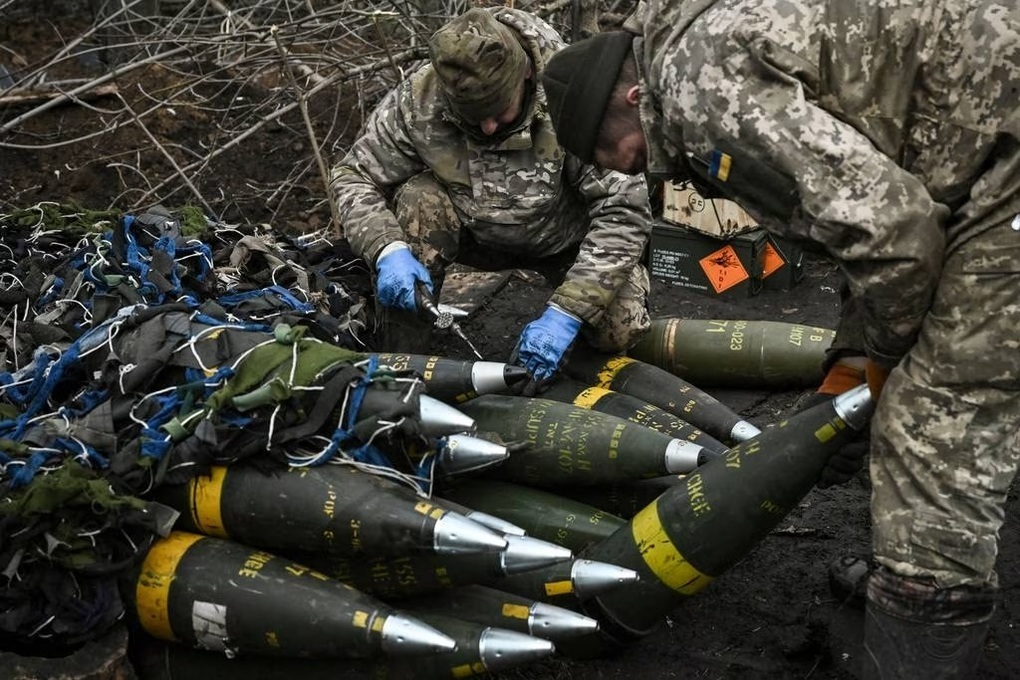
Ukrainian soldiers prepare artillery shells in Bakhmut (Photo: AFP).
The European Union admitted on January 31 that it would not meet its goal of sending 1 million artillery shells to Ukraine by March, but would only achieve half of it.
Speaking after a meeting of EU defense ministers in Brussels, the bloc's top diplomat , Josep Borrell, said that around 52% of the promised artillery shells would be delivered by March.
The EU said its initial target of 1 million artillery shells is expected to be reached by the end of this year.
The target of one million rounds was set to meet Ukraine's need for 155mm artillery shells, which have become a key weapon in the fierce war of attrition between Ukraine and Russia.
Borrell explained why the EU failed to deliver on its promise: "Initially, there was a certain inertia (in production), but once things got going, they could accelerate."
According to the EU's foreign policy chief, artillery shell production capacity in Europe has increased by 40% since the outbreak of the Russia-Ukraine conflict and is expected to reach 1.4 million shells per year by the end of 2024.
Mr. Borrell told reporters that the European Defence Agency had signed 60 framework agreements for the joint purchase of 155mm ammunition.
He stated: "These contracts have a reserve capacity with an estimated 1.5 million rounds of ammunition. Ukraine needs more support, and that is the message I have conveyed to the member states: You must act more and more quickly because the fighting is fierce on the front lines."
In addition, EU defense ministers agreed to train an additional 20,000 Ukrainian soldiers, on top of the previous figure of 40,000, according to Borrell.
Western officials appear concerned that Russia's increased artillery production will make efforts to regain Ukrainian territory even more challenging. Ukraine is currently heavily reliant on Western-supplied ammunition as its Soviet-era arsenal dwindles.
Some estimates suggest that Russian factories could deliver 2 million artillery shells this year, a figure that could create an overwhelming advantage on the battlefield.
According to expert Stephen Bryen at the Center for Security Policy and the Yorktown Institute (USA), the Russia-Ukraine conflict shows that the West's defense production capabilities are not prepared for a major war.
Source






































































Comment (0)