

If you want to escape the hustle and bustle of city life and enjoy the fresh, peaceful atmosphere of the countryside, seeking interesting experiences about farming life, local culture, and agriculture, then a farmstay is a great choice for tourists. This is considered a promising direction in the development of agricultural and rural tourism, but it needs a suitable legal framework to operate effectively and in accordance with regulations.
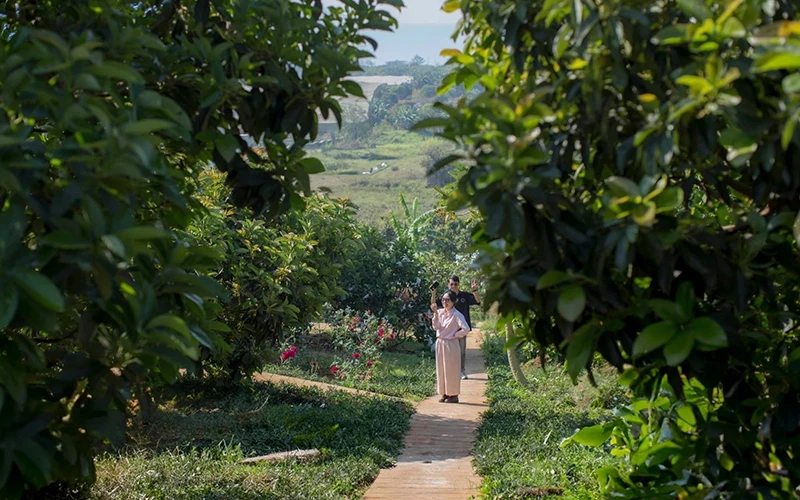
Farmstay, also known as "farm accommodation" or "farm vacation," can be simply understood as a form of tourism associated with agricultural farms, providing accommodation, food, and activities such as: recreation, experiencing production, processing, harvesting, and purchasing agricultural products directly on the farm. Farmstays have existed in the world since the 1980s, but have only taken shape in Vietnam in the last 10 years and are increasingly developing, especially after the Covid-19 pandemic, when the trend of green, sustainable tourism close to nature has attracted particular attention from tourists.
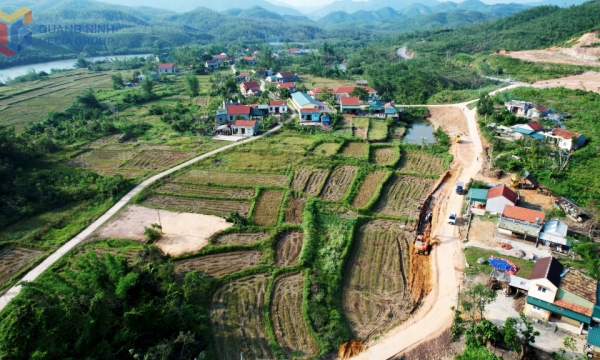
As an agricultural nation with a long tradition of agricultural production, rich climate and soil conditions suitable for cultivating a diverse range of crops and livestock, and unique cultural values formed in conjunction with agricultural production, Vietnam is considered to possess invaluable resources for developing agricultural tourism, including farmstays. This is also a tourism model with a broad market segment, meeting the experiential needs of children, adults, especially families and international tourists.
According to experts, developing farmstay tourism not only diversifies tourism products but also promotes local consumption, increases revenue from agricultural production, creates jobs, preserves agricultural heritage, and promotes local culture. Recently, the farmstay model has flourished in many provinces and cities across Vietnam, such as Hanoi, Ninh Binh, Hoa Binh, Son La, Quang Nam, Khanh Hoa, Ninh Thuan, Binh Thuan, Lam Dong, Ho Chi Minh City, Can Tho, Dong Thap, and An Giang… Many farmstays have become popular destinations attracting both domestic and international tourists.
However, in reality, the development of farmstays in our country poses many challenges. In the comprehensive report on the task "Assessing the current state of farmstay development in Vietnam and policy recommendations," a group of experts from the Institute for Tourism Development Research (Vietnam National Tourism Administration) stated that: Developing tourism in conjunction with agriculture and rural areas is one of the major policies and orientations of our country, consistently reflected in many Party documents and Government documents.
However, regarding the development of farmstays, Vietnam still lacks specific regulations and guidelines, even though this is a unique and interdisciplinary type of business, regulated and governed by numerous legal documents from various sectors and fields. This has left many localities confused and facing difficulties in management, both in encouraging farmstay development and in handling violations related to this type of business.
Experts believe that the potential for developing farmstays in many localities in Vietnam is enormous, but not all of them are zoned for commercial and service purposes. In many areas, land zoned for commercial and service use lacks the potential for farmstay development, while land with potential for farmstay development is not zoned for commercial or service use. Adjusting and converting land use purposes for farmstay development significantly impacts local planning.
Recently, some investors have been exploiting farmstay businesses to speculate on agricultural land and engage in illegal real estate development, altering the nature, scale, and intended use of agricultural land. Furthermore, many farmstays operating spontaneously pose significant security and safety risks for tourists during their visits and experiences.
Therefore, to promote the development of farmstays in Vietnam effectively and in accordance with regulations, it is crucial to review, amend, supplement, and perfect the legal framework for farmstays, paying particular attention to planning to maximize the potential of this model, ensuring sustainable development and benefits for both local communities and tourists. The government needs to provide support policies regarding capital, infrastructure development, and the dissemination of experience and management knowledge to the people for this new business model, such as agricultural techniques and tourism communication skills.
Furthermore, the tourism sector needs to develop criteria for agricultural and rural tourism destinations, including farmstay criteria, linked to the model new rural development program. This will guide localities in investing in and organizing agricultural and rural tourism destinations and farmstay destinations that meet the requirements of exploiting unique characteristics. The tourism sector also needs to coordinate with the agricultural sector to develop guidelines on the procedures for providing some basic tourism services at farmstay locations and organize training programs for local people to serve in the tourism industry.
Experts note that for a farmstay model to be unique and distinctive, special attention should be paid to exploiting and promoting local cultural values, such as guiding tourists to experience traditional farming methods, learn how to cook local dishes, and participate in traditional rituals and festivals. In designing and constructing farmstay facilities, it is necessary to maintain or even restore the traditional architecture of the area.
Developing farmstays in the right direction and in accordance with regulations will create many advantages in developing tourism products with the unique characteristics of local culture, enhancing the competitiveness of Vietnamese tourism.
Source
![[Photo] Prime Minister Pham Minh Chinh holds a phone call with the CEO of Russia's Rosatom Corporation.](/_next/image?url=https%3A%2F%2Fvphoto.vietnam.vn%2Fthumb%2F1200x675%2Fvietnam%2Fresource%2FIMAGE%2F2025%2F12%2F11%2F1765464552365_dsc-5295-jpg.webp&w=3840&q=75)
![[Photo] Closing Ceremony of the 10th Session of the 15th National Assembly](/_next/image?url=https%3A%2F%2Fvphoto.vietnam.vn%2Fthumb%2F1200x675%2Fvietnam%2Fresource%2FIMAGE%2F2025%2F12%2F11%2F1765448959967_image-1437-jpg.webp&w=3840&q=75)


































![[OFFICIAL] MISA GROUP ANNOUNCES ITS PIONEERING BRAND POSITIONING IN BUILDING AGENTIC AI FOR BUSINESSES, HOUSEHOLDS, AND THE GOVERNMENT](https://vphoto.vietnam.vn/thumb/402x226/vietnam/resource/IMAGE/2025/12/11/1765444754256_agentic-ai_postfb-scaled.png)











































Comment (0)