

A withdrawn article can become a "black mark" on a research record.
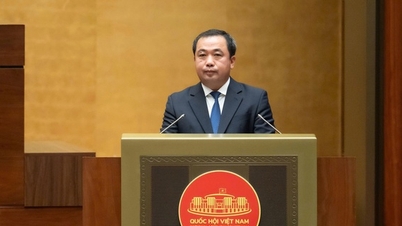
According to data compiled by Professor Nguyen Van Tuan, Director of the Centre for Health Technology at the University of Technology Sydney (UTS), based on reputable global scientific databases, Vietnam is among the top countries in Southeast Asia in terms of the number of retracted articles. Between 2011 and the end of 2025 alone, hundreds of articles from Vietnam were officially removed or had warnings issued.

But what is even more worrying is not the absolute number, but the increasing and continuing trend of retracted papers. The consequences of many retracted papers include a loss of credibility within the international scientific community; genuine scientists being negatively impacted when seeking international funding and collaboration; students and researchers being affected when citing retracted papers; and the risk of being blacklisted by major journals or having their papers reviewed by reviewers.
Professor Nguyen Van Tuan argues that in science, the retraction of a scientific paper is permanently flagged in scientific databases (Web of Science, Scopus, PubMed, and Retraction Watch). It loses its scientific value, is not validly cited, and becomes a "black mark" on the research records of all related authors. Possible reasons for retraction include: excessive pressure to meet international publication quotas; reward mechanisms based on monetary incentives and academic titles determined by the number of Scopus/WoS publications; a lack of rigorous training in research ethics and publication ethics at the postgraduate level; and weak internal quality control systems in many universities and research institutions.
Dr. Le Van Ut, Assistant to the Chairman of the University Council for Scientific Research, Head of the Research Group on Scientific Measurement and Research Governance Policy at Van Lang University, also emphasized that the retraction of a scientific paper can lead to many consequences that directly affect the individual scientist, the educational institution where the scientist works, and the reputation of the country.
According to COPE (Committee on Publication Ethics, based in the United Kingdom), there are at least eight reasons why a scientific paper might be retracted after publication in a scientific journal, including: unreliable research results due to serious errors, fabrication, or falsification; plagiarism; repeated publication without proper attribution of previous sources; unauthorized use of research materials or data; copyright infringement or other legal issues; ethical violations in scientific research such as research topics involving animals, humans, or other sensitive issues without ethical approval; manipulation of the peer review process; and conflicts of interest in scientific publication.
However, according to Dr. Le Van Ut, practical experience shows that the reasons for withdrawing a paper can include both subjective reasons due to violations by the author and objective reasons from violations by the journal. Therefore, not all cases of withdrawn papers should be equated with violations of scientific ethics or integrity, and a withdrawn paper should not be considered a "criminal record" that will bind a scientist for life.
Enhancing scientific integrity
Sharing further insights with a reporter from the Public Security Newspaper regarding solutions to prevent the increasing trend of scientific papers being withdrawn in Vietnam, Dr. Le Van Ut stated that, first and foremost, scientists need to adhere to research integrity, specifically avoiding fraud, fabrication, and plagiarism in their research and scientific publications. They should exercise extreme caution when deciding to endorse a scientific paper for various purposes, especially those that are not entirely legitimate, if they do not fully understand the content and background of the author group involved. Each scientific paper is publicly available worldwide, stored for life in scientific databases, and may be reviewed and judged by billions of readers.
Furthermore, scientists should also be cautious when collaborating with authors who show signs of unusual research or publications. This could include unusually large numbers of scientific outputs, questionable research collaborations, participation in questionable research funding programs, especially international programs, a high number of retracted papers, and other signs of violations of scientific integrity. In particular, caution is needed when choosing scientific journals for publication; avoid fraudulent, predatory, and low-quality journals; and be wary of journals with high scientific merit but potentially high risk of unusual publications.
Furthermore, a crucial long-term solution is to create a research environment that minimizes violations of research integrity. This requires a balanced allocation of research objectives and resources. Imposing KPIs or forcing researchers to produce "top-tier" or "high-quality" products with limited resources can be a key cause of research integrity violations.
From the perspective of someone with many years of research and collaboration with Vietnamese scientists, Professor Nguyen Van Tuan also proposed several solutions such as publicly disclosing regulations on scientific research, regulations on scientific ethics and publication ethics, possibly referencing regulations and rules in the US and Australia in a way that is suitable for Vietnam. In particular, it should be mandatory for all doctoral and master's students to complete a formal course on research ethics and publication ethics before beginning their research.
Furthermore, further research should be conducted on the mechanism of awarding monetary bonuses and considering professorships and associate professorships based on the number of Scopus/WoS publications, shifting towards a truly qualitative assessment including citations, impact, and applied products; establishing an independent national research ethics committee modeled after COPE with the power to investigate and publicly handle cases of violations; strengthening the use of plagiarism detection and image manipulation technology in all domestic journals and encouraging universities to apply it before submission; and strictly punishing cases of intentional data falsification.
Source: https://cand.com.vn/giao-duc/giai-phap-nao-de-ngan-ngua-tinh-trang-bai-bao-khoa-hoc-bi-rut--i790712/













































































Comment (0)