

Durian is available in Hanoi markets year-round. However, it has been a long time since our country's "king of fruits" has flooded the markets during the Lunar New Year of the Year of the Snake (2015) with incredibly cheap prices, with even the best quality durian costing only 40,000 VND/kg.
On the morning of the 5th day of Tet (February 2nd), while opening a box of Ri6 durians with their golden, fragrant flesh, Ms. Dao Thi Minh (from Trinh Dinh Cuu, Hoang Mai, Hanoi) proudly showed off: “Three ripe durians weighing 9kg that I just bought for 390,000 VND. And they're Grade A, each fruit has five segments.”
According to Ms. Minh, this is an incredibly cheap price, something she hasn't seen in years. It works out to only about 43,000 VND per kilogram. Therefore, she bought a box of the ripe ones, opened it, and stored it in the refrigerator to eat gradually.
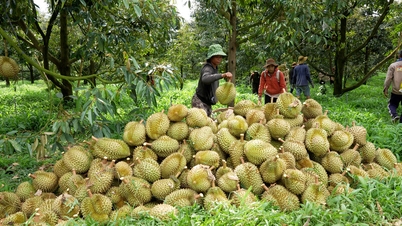
In fact, durian is one of the main fruit crops in our country. In recent years, durian production has skyrocketed from nearly 1 million tons to 1.45 million tons per year. Accordingly, in addition to domestic consumption, a large amount of this fruit is also exported to the Chinese market.
However, since 2022, when Vietnamese durian was officially exported to China, prices began to rise sharply and have remained at extremely high levels.
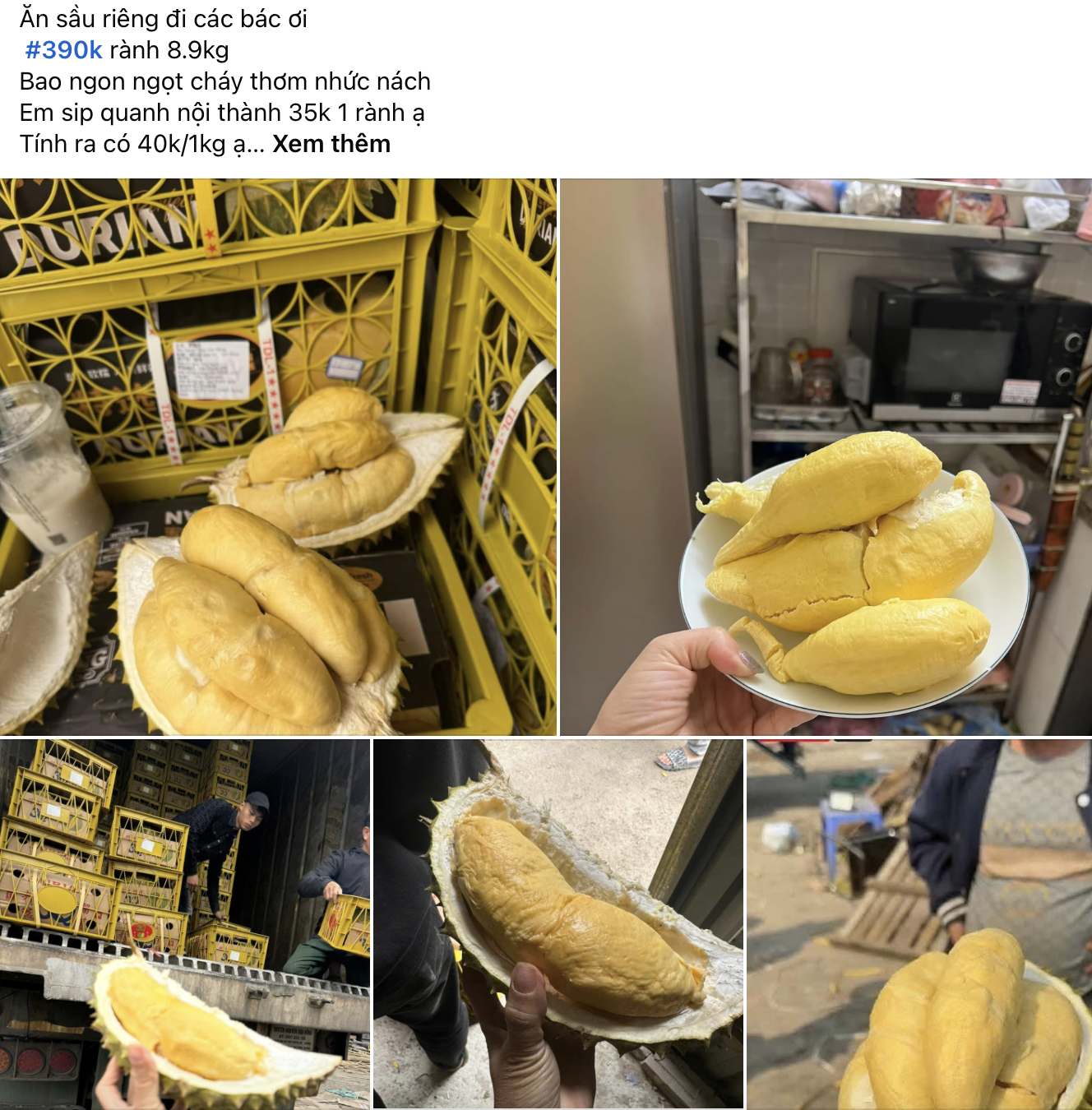
In major durian-growing regions of the Central Highlands, Southeast Vietnam, and the Mekong Delta, Grade A durians are typically sold by farmers during peak harvest season at prices ranging from 70,000 to 120,000 VND/kg. Off-season durians can sometimes fetch prices as high as 160,000 to 190,000 VND/kg.
At this price, durian has become the "king of fruits" in Vietnam, driving domestic market prices to sky-high, even exorbitant, levels.
In recent years, at stores, premium grade A durian has skyrocketed to prices of 160,000-250,000 VND/kg if bought whole. Durian flesh costs 400,000-850,000 VND/kg depending on the time of year.
Therefore, from a cheap fruit, the "king of fruits" has become a luxury item with a high price tag, making it unaffordable for many families.
However, during the Lunar New Year of the Year of the Snake, durian unexpectedly flooded online fruit markets in Hanoi at incredibly low prices.
Notably, traders advertised these as top-grade, export-quality fruit intended for China, but are now selling them off at prices ranging from 350,000 to 390,000 VND per box of 3-4 fruits, weighing approximately 8-10 kg.
These are the prices offered by vendors who sell by the box, not by weight. Delivery within Hanoi city limits costs approximately 10,000-35,000 VND per order.
Mr. Phung Van Tan, a durian vendor selling durians for just over 40,000 VND/kg in the Thanh Xuan area (Hanoi), admitted that China has tightened inspections for Yellow O dye in durians, and since his goods do not have inspection certificates, he has to return them for domestic consumption.
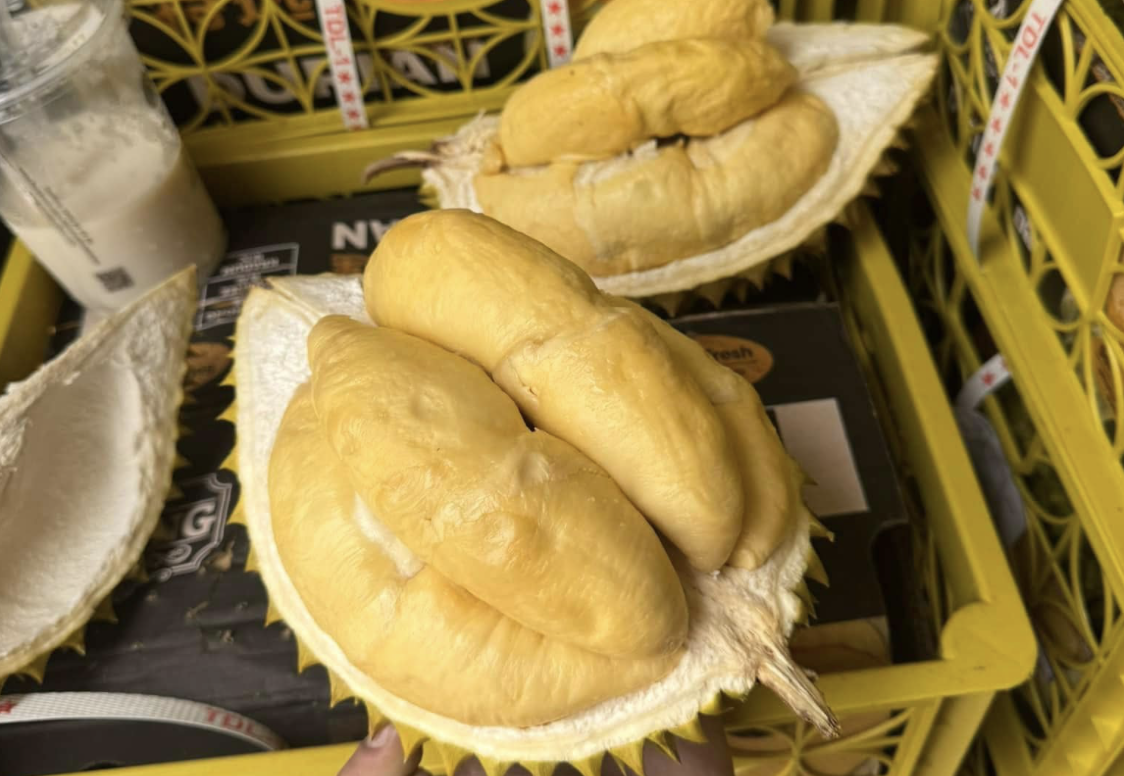
This is also why, from the morning of the second day of Tet until now, he has had to sell off 3 containers of durian (each container containing 16 tons) in Hanoi and ship them to other provinces. These containers all contain Ri6 and Monthong durians, and the selling price is the same for all of them.
"When we harvested and packed the durians, we calculated that they would ripen perfectly before being shipped to China. Now, due to the Yellow O quality control, we're delayed and forced to sell them immediately to avoid over-ripening, which would affect the quality of the flesh," he said. Therefore, this retail price is even cheaper than the wholesale price at the farm.
After selling out one container on the 4th day of Tet, on the morning of the 5th day, Ms. Doan Thi Tuyen (from Tam Trinh, Hanoi) continued to open another container of Ri6 durians to sell at 380,000 VND per box of 3-4 fruits weighing 9-10kg.
"Yesterday, everyone was scrambling to buy the durian containers because the price was so cheap. Some people even placed orders for several boxes," she said. Today, she and her staff have been taking orders since 6 a.m. because people have returned to Hanoi to prepare for work after the long Tet holiday. The delivery drivers have been busy delivering goods since early morning.
Previously, according to information from the Vietnam Fruit and Vegetable Association, at the end of 2024, the General Administration of Customs of China discovered that some shipments of durian from Thailand contained Yellow O residue. Immediately afterwards, China announced the application of strict measures on imported durian. At the same time, it required that in addition to a Cadmium inspection certificate, durian imported into China must also have a Yellow O inspection certificate.
Auramine O, also known as Basic Yellow 2 (BY2), is a coloring agent used in industry. There is considerable evidence suggesting that this substance is carcinogenic to animals and humans.
Therefore, Chinese customs inspect 100% of imported shipments and it can take up to a week to clear them. This has disrupted our country's durian exports.
Many shipments without inspection certificates had to be turned back. Some companies said they were temporarily suspending durian exports to China to study and prepare the necessary documentation to meet these new requirements.
The Vietnam Fruit and Vegetable Association has requested that authorities quickly establish more testing laboratories to issue safety certificates, ensuring the absence of Yellow O residue, to avoid disrupting durian exports. At the same time, the association has expressed its desire to receive guidance and certification for Yellow O testing, as required by the General Administration of Customs of China.
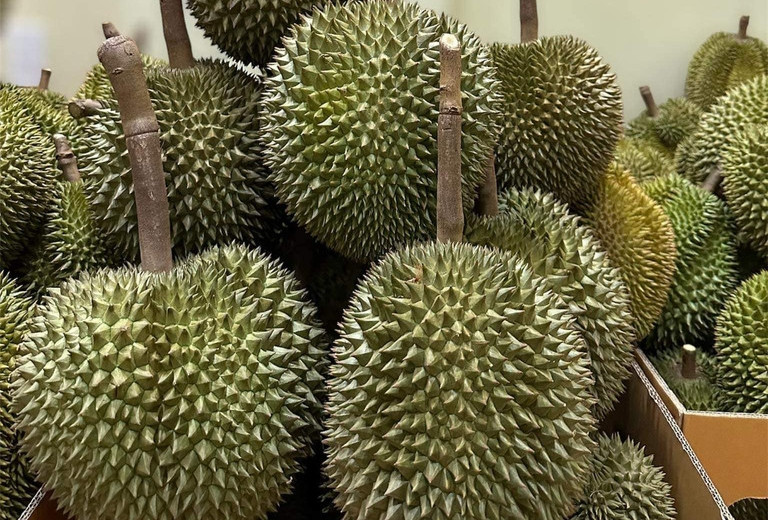
Source: https://vietnamnet.vn/vua-trai-cay-do-bo-cho-ha-noi-hang-thuong-hang-gia-chi-40-000-dong-kg-2367809.html






















![[Photo] Prime Minister Pham Minh Chinh holds a phone call with the CEO of Russia's Rosatom Corporation.](/_next/image?url=https%3A%2F%2Fvphoto.vietnam.vn%2Fthumb%2F1200x675%2Fvietnam%2Fresource%2FIMAGE%2F2025%2F12%2F11%2F1765464552365_dsc-5295-jpg.webp&w=3840&q=75)















































Comment (0)