


Specify the level of conventional and unprocessed processing
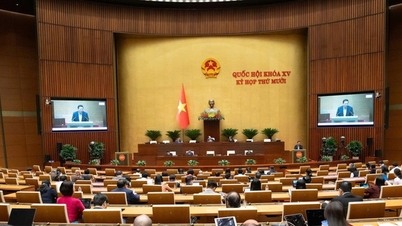
National Assembly deputies basically agreed with the amendments and supplements to the Law on Value Added Tax proposed by the Government .
National Assembly Deputy Tran Van Lam (Bac Ninh) emphasized that these are all issues that people and businesses are looking forward to, from simplifying the collection management process, VAT management process to reduce management costs of tax authorities, reduce compliance costs of businesses and people; limit invoice fraud, tax evasion, arrears and especially remove difficulties for export enterprises to refund input tax to ensure competitiveness and benefits of domestic enterprises producing goods not subject to VAT. At the same time, reduce taxes on scrap and waste products to encourage optimal utilization of the production chain, promote the circular economy .

Agreeing with the amendment and supplementation of a number of articles of the current Law on Value Added Tax, National Assembly Deputy To Ai Vang (Can Tho) said that this is a strategic step to resolve difficulties and shortcomings arising from practice, creating favorable conditions for businesses and people, while ensuring transparency and efficiency in tax management.

Regarding the amendment of Clause 1, Article 5 on the subjects not subject to VAT, which are unprocessed or only pre-processed agricultural, forestry and aquatic products, National Assembly Deputy Thach Phuoc Binh (Vinh Long) highly appreciated the fact that the draft Law has expanded the scope of regulation, clarified the tax exemption policy for crop, livestock, aquaculture, and fishing products in the sale and import stages. The addition of regulations for the case of cooperative enterprises selling unprocessed products to other cooperative enterprises is also necessary, reflecting the characteristics of the agricultural supply chain.
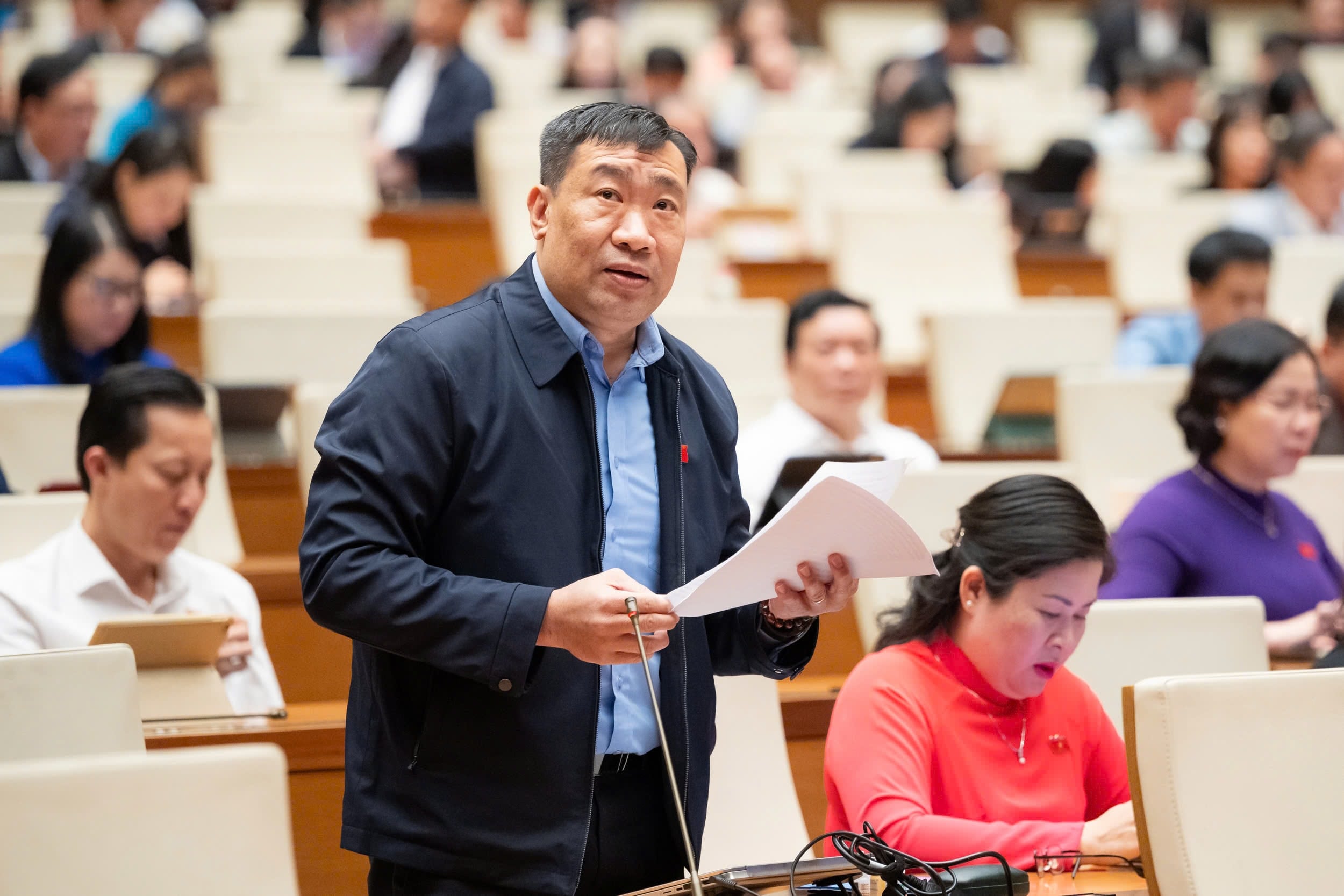
However, delegate Thach Phuoc Binh pointed out that in the process of implementing the Law, many problems have arisen due to the lack of definition and specific criteria for what constitutes normal processing. Activities such as classification, cold storage, peeling, drying, and vacuuming are still understood differently among localities. This has led to many tax disputes that pose risks to businesses as well as management agencies.
Therefore, delegate Thach Phuoc Binh suggested that it is necessary to supplement regulations assigning the Ministry of Finance to issue a list and specific quantitative criteria for activities considered as normal preliminary processing based on international practices and the characteristics of Vietnamese agricultural products.
In addition, clarify the criteria for distinguishing between primary processing and processing in relation to added value, the degree of change in product characteristics or technology application. Complete regulations on documents, proof of origin and purchasing procedures to facilitate businesses and prevent tax fraud. "This will ensure transparency and consistency nationwide, limit the risk of policy abuse and create a healthy business environment," said delegate Thach Phuoc Binh.
Delegate To Ai Vang also suggested that the Government clearly define the scope and provide detailed and specific guidance on the level of preliminary processing that is considered normal and not yet processed into other products. Because the current Law does not clearly stipulate, causing difficulties in applying tax policies.
Along with that, delegates suggested that the Government consider transferring agricultural and aquatic products to the VAT taxable subject with a low tax rate of 0% or 5% so that businesses can deduct input tax, reducing the burden on agricultural enterprises.
On the other hand, in reality, when businesses buy goods from farmers, they often make statements to account for costs. The reasonable and valid control of these statements is also a challenge in tax management, which can easily lead to the risk of illegal invoice trading if there is no strict control mechanism. Therefore, delegate To Ai Vang said that it is necessary to increase the transparency of transactions, possibly through promoting the use of electronic invoices or more modern transaction management methods, while minimizing procedures for farmers.
Consider converting fertilizers into non-VAT taxable objects
Regarding animal feed and fertilizer products, delegate Tran Van Lam suggested that the Government must be consistent in its policies in handling the same issue and be equal among taxable subjects. This time, the Government proposed to add a regulation that input VAT of goods and services that are not subject to VAT can be fully deducted.

According to the delegate, this regulation aims to resolve the current problem because animal feed and some other products are not subject to VAT, so the input is not deductible, increasing costs and reducing competitiveness with imported products. This policy is completely reasonable, will support businesses and farmers because animal feed is an important input that accounts for the majority of costs in this production sector.
However, delegate Tran Van Lam wondered that, although both animal feed and fertilizer are input materials for agriculture, the VAT policy has two different approaches to solve the same problem of ensuring competitiveness for domestic production enterprises.
“This is an inadequacy and if the above situation remains, input costs for fertilizer prices will still be subject to tax and increase input costs for farmers, causing damage to businesses as well as farmers in the field of cultivation. Meanwhile, cultivation is also the field that suffered the most damage in the recent storms and floods and is in great need of attention and support,” delegate Tran Van Lam stated.
Therefore, delegate Tran Van Lam suggested that it is necessary to consider thoroughly resolving the above problem, which is to transfer fertilizer back to the non-VAT subject.
Source: https://daibieunhandan.vn/han-che-nguy-co-loi-dung-chinh-sach-tao-moi-truong-kinh-doanh-lanh-manh-10399808.html
























































![[Podcast] National Assembly approves personal allowance deduction of VND 15.5 million/month](https://vphoto.vietnam.vn/thumb/402x226/vietnam/resource/IMAGE/2025/12/10/1765340032834_hnm-1cdn-vn-thumbs-540x360-2025-11-04-_hnm-1cdn-vn-thumbs-540x360-2025-06-27-a7b22b8722-_thu.jpeg)















Comment (0)