

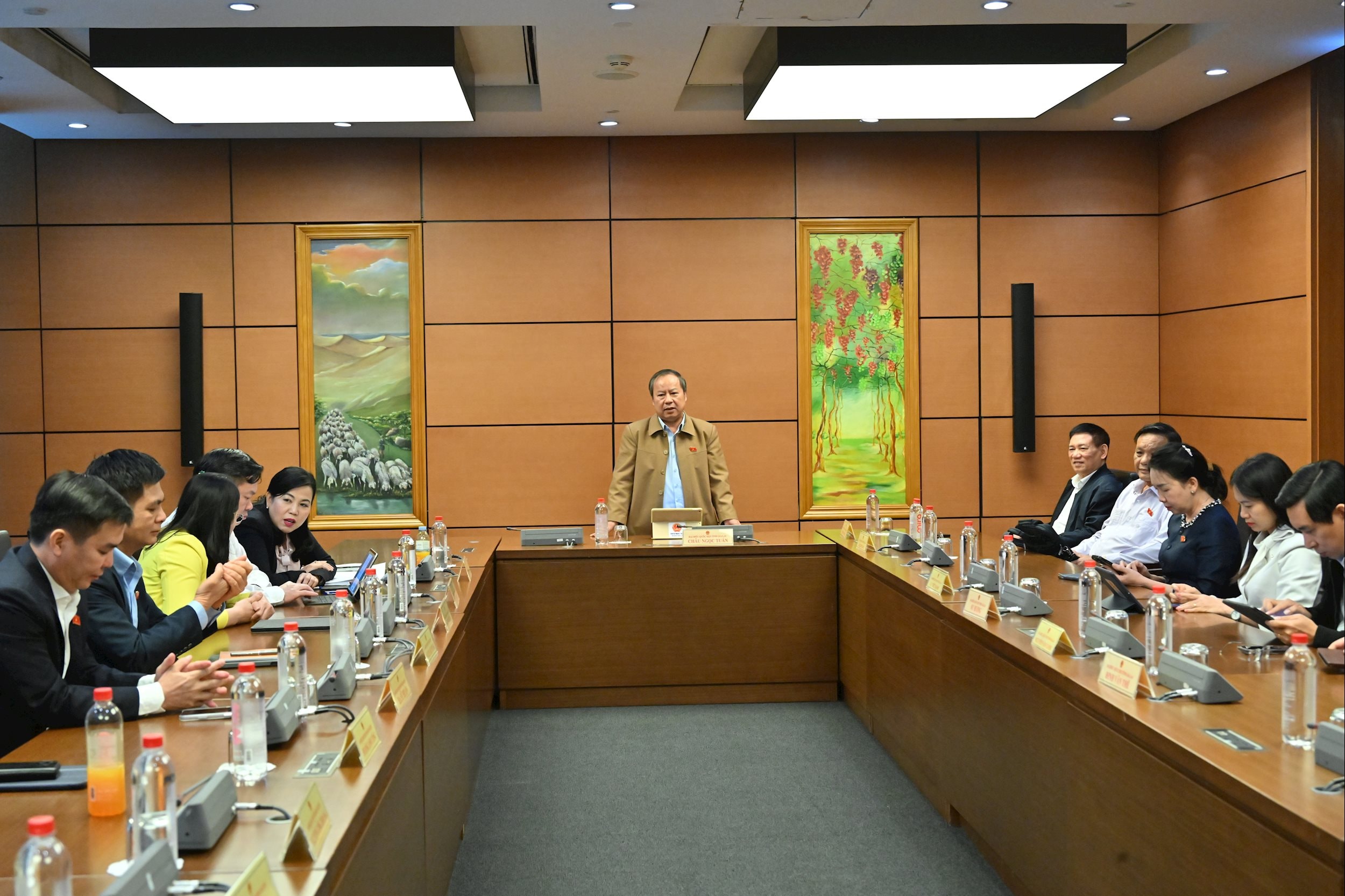
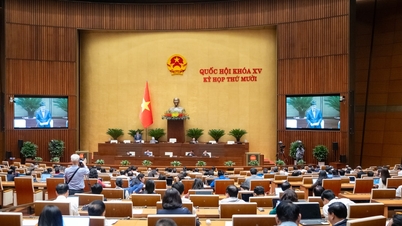
The Law on Value Added Tax 2024 will take effect from July 1, 2025, but according to the Government, the implementation process has revealed many difficulties, especially in the fields of agriculture , animal feed and tax refunds. Therefore, submitting the amendment to the National Assembly at this 10th Session is considered urgent.
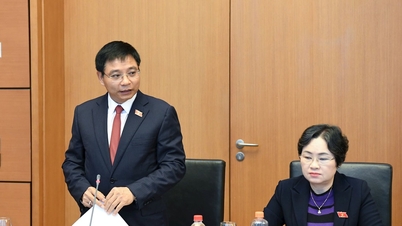
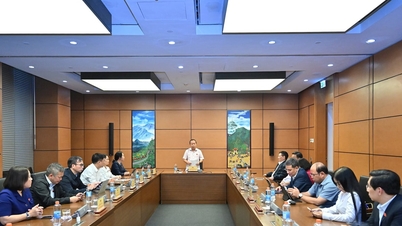
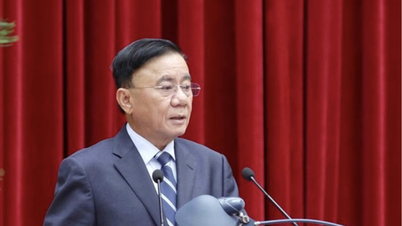
Commenting on this content, National Assembly Delegate Nguyen Thi Thuy ( Thai Nguyen ) was concerned about the practical basis for amending the Law, which was clearly stated in the Government's Submission.
Accordingly, businesses must pay 5% input VAT on agricultural products purchased and sold at the commercial stage. The VAT collected is then refunded for items where the majority of production is for export (such as catfish, pepper, coffee, etc.).
This leads to wasted time and capital stagnation for businesses while credit institutions do not disburse this tax portion when providing working capital, causing financial pressure and reducing business efficiency.

In addition, current legal regulations have led to discrimination between domestically produced agricultural and aquatic products and imported agricultural and aquatic products because imported agricultural and aquatic products are not subject to VAT when imported into Vietnam.
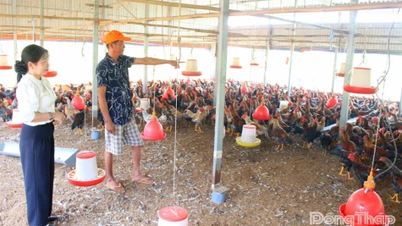
Furthermore, because animal feed is not subject to tax, it cannot be deducted or refunded input VAT, which leads to increased costs and selling prices for animal feed production enterprises, which will affect livestock farmers.
In addition, due to current regulations, buyers are only refunded when the seller has declared and paid taxes, leading to the fact that when exporting, businesses are refunded input VAT, but are delayed because they have to wait to determine that the seller has declared and paid taxes. This causes difficulties and risks for businesses requesting tax refunds because businesses requesting tax refunds do not have legal or technical tools to check the seller's tax compliance status at the time of preparing tax refund dossiers.
From the above shortcomings, delegate Nguyen Thi Thuy said that the National Assembly needs to amend the law to immediately remove practical bottlenecks.
Regarding the suggestion that there is no need to amend the Law on Value Added Tax at this Session and that the Government can temporarily handle it by a Resolution under the special mechanism in Resolution 206/2025/QH15, delegate Nguyen Thi Thuy expressed her opinion: tax policy should be stipulated in the tax law, and the Government should not be assigned to amend it through a Resolution.
“Practice is constantly changing, if regulations are no longer suitable, they must be amended immediately. Laws are not only management tools but also driving forces for growth. If problems arise, the National Assembly should amend them, not wait until 2027,” emphasized National Assembly Deputy Nguyen Thi Thuy.
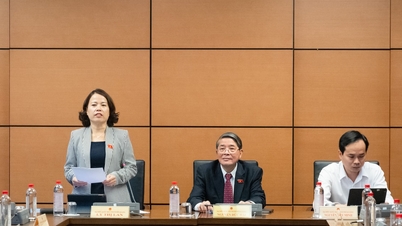
Delegates also proposed continuing to seek opinions from businesses and experts to ensure the final decision has sufficient practical basis and consensus.
Source: https://daibieunhandan.vn/som-sua-luat-thue-gia-tri-gia-tang-de-go-vuong-mac-tu-thuc-tien-10399678.html


![[Photo] General Secretary To Lam receives the Director of the Academy of Public Administration and National Economy under the President of the Russian Federation](/_next/image?url=https%3A%2F%2Fvphoto.vietnam.vn%2Fthumb%2F1200x675%2Fvietnam%2Fresource%2FIMAGE%2F2025%2F12%2F08%2F1765200203892_a1-bnd-0933-4198-jpg.webp&w=3840&q=75)




















































































Comment (0)