

Over the past 400 years, there have been hundreds of reports of the strange phenomenon of so-called spontaneous human combustion (SHC), sparking much curiosity and speculation.
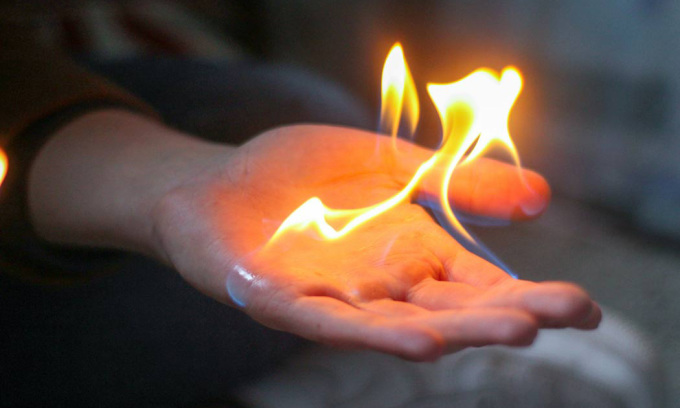
Spontaneous human combustion (SHC) is a highly controversial phenomenon. (Image: Lucas le coadou/EyeEm/Adobe Stock)
What is spontaneous human combustion?
Spontaneous combustion occurs when an object burns without an external ignition source – the flame forms from chemical reactions within the object. In the case of humans, this phenomenon is called spontaneous human combustion (SHC). However, SHC remains controversial and lacks a definitive scientific explanation.
Cases believed to be SHC often share several common characteristics: The body is destroyed while everything around it remains almost intact. However, the entire body doesn't always turn to ashes. In some cases, only the torso burns up, leaving the limbs unaffected.
Furthermore, SHC cases often lack a clear heat source that could have caused the fire. The majority of victims share common characteristics such as being elderly, overweight, socially isolated, female, and having consumed a large amount of alcohol.
SHC has never been reliably observed. Despite the skepticism, SHC is sometimes accepted in forensic science and listed as a legitimate cause of death. For example, in 2011, an investigator determined the death of a 76-year-old man in Galway, Ireland, was due to SHC.
Past cases of spontaneous human combustion
Cases of spontaneous human combustion (SHC) have been recorded since the 17th century, a large number occurring in the 19th century, but only a few have happened in the last 100 years. The Italian knight Polonus Vorstius is the first recorded case of spontaneous human combustion, according to the medical expert Thomas Bartholin. One evening in 1470, while resting and drinking a few glasses of wine, Vorstius suddenly vomited fire, burst into flames, and was burned to death in front of his parents.
Thomas Bartholin recorded the event in his 1641 work, "Historiarum Anatomicarum Rariorum," nearly two centuries after the incident. He said he had heard the story from Vorstius' descendants. But many doubt the accuracy of the story due to the distance in time.
Several other cases occurred later, including those related to alcohol, leading to the hypothesis that SHC was a consequence of excessive alcohol consumption. In 1851, the German chemist Justus von Liebig conducted a series of experiments and discovered that anatomical specimens preserved in 70% ethanol did not burn, and mice injected with ethanol also did not burn, thus refuting alcohol as the sole cause of SHC.
Alcohol cannot be blamed; many other theories have been proposed, ranging from intestinal gas, bioelectricity, overactive mitochondria to even the devil, but none of them have much scientific merit.
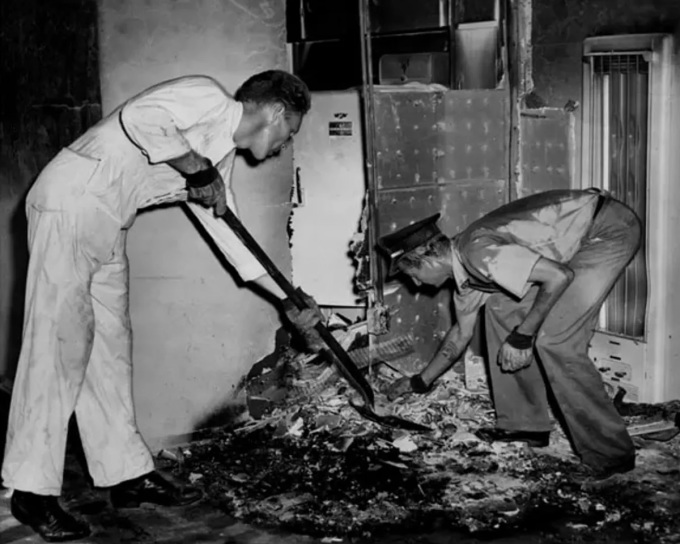
Mary Reeser died mysteriously in 1951, leaving behind a pile of ashes. Photo: Wikimedia
One of the most famous cases of SHC occurred in 1951, when widow Mary Reeser was mysteriously burned to death in her own apartment in St. Petersburg, Florida, USA. Reeser was an overweight woman, weighing approximately 77 kg, according to the St. Petersburg Times.
Her body and the armchair she had been sitting in were completely burned, leaving only her feet. The ceiling and upper walls were covered in black soot, but the furniture and walls below were untouched. Detective Cass Burgess, who investigated the case, confirmed that there was no sign of the usual combustibles such as ether, kerosene, or gasoline.
In 2009, reporter Jerry Blizin, who covered the 1951 case, revisited the events and added new details. According to him, the FBI concluded that the fat in Reeser's body was the fuel that ignited the fire. On that fateful evening, Reeser told her son she was skipping dinner to take two sleeping pills. The last time her son saw Reeser was when she was sitting in an armchair smoking.
Modern explanation
"The most plausible explanation is the wick effect. For example, isolated, overweight alcoholics wrapped in blankets might spill some of the alcohol they're drinking, then drop a burning cigarette – all of which leads to a slow combustion process," IFLScience quoted Roger Byard, professor of Pathology at the University of Adelaide, Australia, on July 17.
Essentially, the wicking effect requires an external ignition source to melt body fat. Through a tear in the skin, the fat seeps into the clothing—acting as a candle wick—and burns for an extended period at a relatively low temperature.
A cloth wick in molten human fat has been shown to continue burning at temperatures as low as 24°C, according to Byard. This is thought to explain the limited extent of the fire, with some body parts and adjacent clothing remaining untouched. The whole process can be exacerbated by spilled alcohol on clothing, especially if the victim is a smoker.
The wick effect—arising from a missed external ignition source—is now the prevailing scientific explanation for cases of spontaneous human combustion (SHC). "SHC definitely isn't real. Humans do combust, but not spontaneously. That's why there haven't been any real cases under reliable observation," Byard stated.
Thu Thao (According to IFL Science )
Source link












































































































Comment (0)