

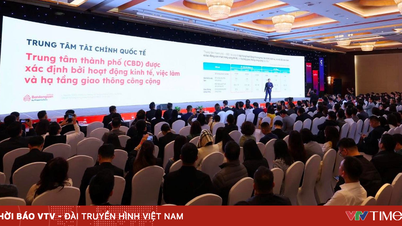
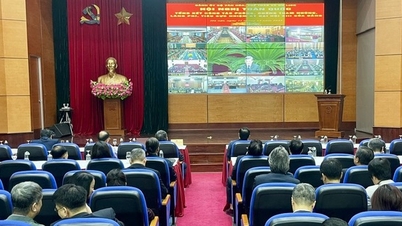
The conference was held in a hybrid format, combining in-person and online participation, with the theme "Discussion on the Proposal to Establish an International Trade Center and Develop Raw Materials and Accessories for the Fashion Industry".
Textiles and footwear are two priority industries of Vietnam.
The Vietnam Industrial Development Strategy to 2025, with a vision to 2035, issued under Decision No. 879/QD-TTg dated June 9, 2014, identified textiles and footwear as two of Vietnam's seven priority industries.
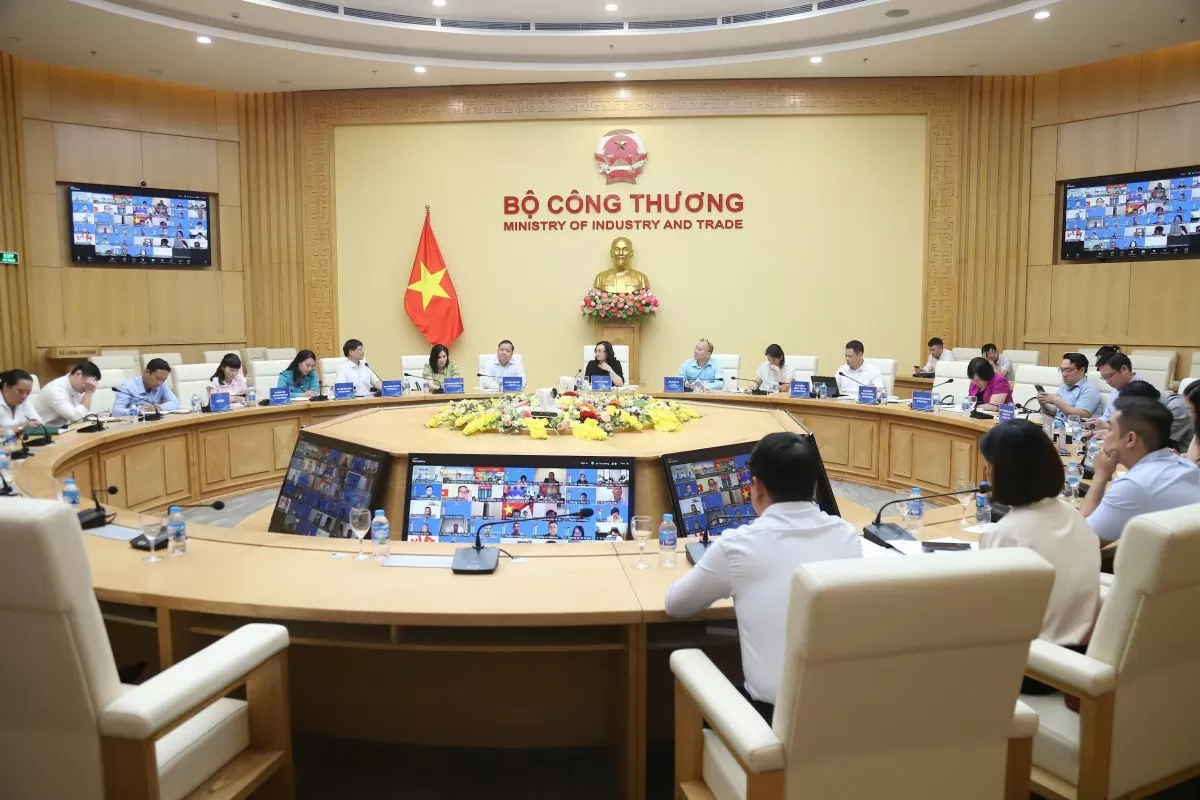 |
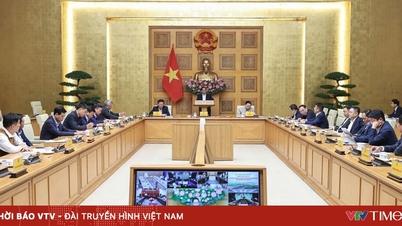
| Meeting to promote trade with the system of Vietnamese Trade Offices abroad, August 2024. Photo: Vu Hoa |
However, to continue developing the industry in the coming period, breakthrough solutions are needed to upgrade the industry's value chain in order to create more long-term and sustainable benefits. To achieve this, there is no other way than to promote the development of the raw material supply market towards scale, standardization, and transparency. Only then will it help businesses in the industry, especially small and medium-sized enterprises, to innovate and improve their dynamism and efficiency, and have the opportunity to participate more strongly in the industry's supply chain.
Reporting at the conference, Mr. Pham Tuan Anh, Deputy Director of the Industry Department, Ministry of Industry and Trade , stated: " Textiles and footwear are two key export sectors of Vietnam, with export turnover consistently growing year after year, averaging over 10% per year."
In the first six months of 2024, despite still being heavily affected by the global economic downturn, the total export value of the two sectors reached nearly 30 billion USD, accounting for nearly 16% of Vietnam's total export value and creating nearly 5 million jobs, representing 22% of Vietnam's industrial workforce .
Although the textile, garment, and footwear industries account for a high percentage of the country's total import and export turnover, the contribution of domestic enterprises remains limited. In reality, the Vietnamese textile, garment, and footwear industries are still primarily focused on processing, with low added value creation. Raw materials and accessories are mainly imported from foreign markets such as China, South Korea, and other ASEAN countries.
The heavy reliance on imported raw materials and components could negatively impact the overall development of the industry in the future, as many countries aiming for net-zero emissions by 2050 are imposing strict regulations on supply chain control. This necessitates products meeting a high percentage of domestic origin.
The application of rules of origin stipulated in free trade agreements (such as the EVFTA) to allow textile and footwear products to take advantage of import tax exemptions and reductions in the Vietnamese market is having a significant impact on domestic and FDI enterprises producing for export in Vietnam. Therefore, developing sources of raw materials and components for the textile and footwear industries is essential.
The need to build a raw materials center.
Expressing his views on the necessity of establishing a fashion raw materials center, Mr. Truong Van Cam, Vice President and General Secretary of the Vietnam Textile and Garment Association, stated: “ Establishing a fashion raw materials center is not a major issue, but its success largely depends on government support. Therefore, we believe that the mechanism is especially important .”
Mr. Cam also suggested that it is necessary to promote the development of the raw material supply market towards scale, standardization, and transparency. Only then will it help businesses in the industry, especially small and medium-sized enterprises, to innovate and improve their dynamism and efficiency, and have the opportunity to participate more strongly in the industry's supply chain.
Currently, many raw material markets are operating, but they are small-scale and inefficient. In the long term, Vietnam needs a center for trading and developing the supply of raw materials because as the domestic textile, garment, and footwear industries develop, there will be a need for a place to concentrate samples, distribute raw materials, facilitate investment, transfer technology, and conduct transactions between domestic and foreign businesses.
Further elaborating on this issue, Mr. Pham Tuan Anh emphasized: “In the past period, the Department of Industry has worked with the two associations and provided feedback on finalizing the details of the Center establishment project, such as agreeing on the name, location, scale, form, funding sources, impact assessment, etc. It is expected that in October, the associations will deploy a delegation to survey and learn from the experiences of China and other countries that have successfully built this model to finalize the project, ensuring it is suitable for reality and operates effectively in the future .”
Through this, Mr. Pham Tuan Anh proposed that foreign trade offices provide feedback on the establishment of the Center, coordinate research and share information on similar models, especially information on scale, operating methods, and support and incentive policies of foreign governments. In addition, this is also an opportunity for the Department of Industry and associations to listen to opinions on the needs and development trends of the textile, garment, and footwear industries in other countries and update information on potential supply markets.
Source: https://congthuong.vn/hoi-nghi-giao-ban-xuc-tien-thuong-mai-voi-he-thong-thuong-vu-viet-nam-o-nuoc-ngoai-thang-82024-343559.html


![[Photo] Closing Ceremony of the 10th Session of the 15th National Assembly](/_next/image?url=https%3A%2F%2Fvphoto.vietnam.vn%2Fthumb%2F1200x675%2Fvietnam%2Fresource%2FIMAGE%2F2025%2F12%2F11%2F1765448959967_image-1437-jpg.webp&w=3840&q=75)

































![[OFFICIAL] MISA GROUP ANNOUNCES ITS PIONEERING BRAND POSITIONING IN BUILDING AGENTIC AI FOR BUSINESSES, HOUSEHOLDS, AND THE GOVERNMENT](https://vphoto.vietnam.vn/thumb/402x226/vietnam/resource/IMAGE/2025/12/11/1765444754256_agentic-ai_postfb-scaled.png)








































Comment (0)