

In just one week, the country recorded over 3,000 cases of dengue fever. The cumulative number of cases since the beginning of the year has reached 52,957 nationwide.
According to statistics, in the week from August 6-13, the whole country recorded 3,095 cases of dengue fever, a slight increase compared to the previous week. From the beginning of the year, the country has recorded 52,957 cases of dengue fever, with 6 deaths; compared to the same period in 2023, the number of cases decreased by 15%, and the number of deaths decreased by 10.
 |
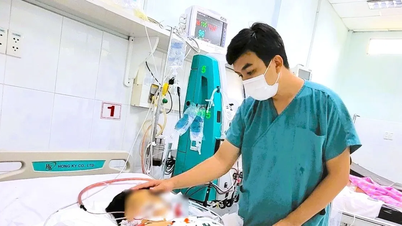
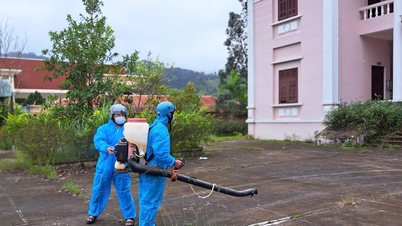
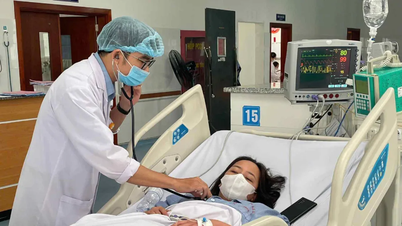
| Illustrative image |
Also this past week, according to information from the Hai Phong Department of Health , at approximately 4 PM on August 8th, the Le Chan District Medical Center received information from the Hai Phong CDC reporting a case of death at home in Thien Loi, Le Chan District, involving a patient named Bui THH, born in 1979, diagnosed with Dengue shock, severe pneumonia, secondary infection, and multiple organ failure.
Accordingly, the Le Chan Medical Center directed the Department of Disease Control to go to the area to coordinate with the local health station to conduct epidemiological investigations, surveillance, and gather information about the case and related cases.
In Hanoi , according to the Hanoi Center for Disease Control (CDC), the city recorded 188 cases of dengue fever last week (August 2-9) (an increase of 17 cases compared to the previous week).
Patients are distributed across 26 districts and counties; some areas have recorded a high number of patients, such as Dan Phuong with 27 cases, Ha Dong with 10 cases, and Phuc Tho with 6 cases.
From the beginning of 2024 to the present, Hanoi has recorded 1,759 cases of dengue fever. The Hanoi CDC assesses that the number of dengue fever cases is trending upwards, with some outbreaks continuing to persist and patients still being reported.
Regarding disease prevention, currently only one vaccine against dengue fever has been licensed for use in Vietnam. Therefore, in the short term, provinces must effectively communicate to the public the importance of eliminating mosquito larvae and pupae in preventing dengue fever.
Experts warn that certain groups of people are more likely to experience severe symptoms when infected with dengue fever: Children under 4 years old, especially those under 12 months old.
People with underlying conditions, such as those prone to bleeding, idiopathic thrombocytopenic purpura, or clotting disorders, have difficulty controlling bleeding. Unfortunately, if bleeding occurs due to dengue fever or thrombocytopenia, controlling the bleeding becomes very complicated.
Obese individuals react very strongly to dengue fever, and the rate of severe cases is higher in this group. When severe cases occur, treatment is much more difficult.
Pregnant women with dengue fever can give birth at any time. If platelets decrease, the risk of bleeding during labor is very high.
People with blood type O may weigh more than people with other blood types; white people tend to weigh more than Asian people… but these are only secondary factors.
Regarding the severity of the disease, Dr. Nguyen Trung Cap, Deputy Director of the Central Hospital for Tropical Diseases, shared that recently, the hospital recorded a regrettable death of a student who had a high fever for 3-4 days, was treated at home, and was cared for by a friend.
After the patient's fever subsided, the caregiver went to school, and the patient went into shock at home. By the time they were discovered and taken to the hospital, it was too late.
There was a similar case involving an elderly man: during phase 1 of high fever, his children stayed home to care for him. When phase 2 subsided, his children went to work, leaving him alone at home. By the end of the day, when they returned, his condition had worsened.
The biggest concern with dengue fever patients is shock, which often occurs in phase 2 and is difficult to monitor. If patients receive prompt intervention from the first warning signs before shock develops, they recover quickly. "If it's not detected and progresses to shock, the situation becomes extremely serious, and the survival rate is not high," Dr. Cap said.
According to Nguyen Trung Cap, Deputy Director of the Central Tropical Diseases Hospital, dengue fever is divided into different stages (phases): Phase 1 is when the patient has a high fever, headache, and discomfort lasting about 3 days. This phase makes the patient very uncomfortable due to high fever, headache, and vomiting, but it rarely causes serious complications; only fever reduction and oral rehydration solution (ORS) are needed.
Phase 2, from the end of day 3 to the end of day 7. Patients have two conditions: in the group of patients with good prognosis (94%), they will gradually recover. The remaining 6% of patients are at risk of severe deterioration, with blood in the blood vessels becoming concentrated. In severe cases, this can lead to hypotension and shock due to fluid leakage from the vessel walls.
In the initial phase, a positive test result is crucial within the first three days, but if tested on the fourth day, it may be negative.
Therefore, in some patients, even if they have clinical signs of dengue fever, a negative test result should still be considered dengue fever. A test the following day may then be positive.
When receiving a test result, it's important to understand which stage of the disease the test was performed on in order to know the value of the test.
Therefore, Dr. Cap advises that a patient living in a dengue fever-endemic area should seek medical attention to check for dengue fever if they experience fever or unusual bleeding.
Signs indicating a risk of the disease worsening include: fatigue (especially in children; children who cried a lot a few days ago may now be lethargic; the elderly may be listless, lethargic, and slow-moving);
Some patients experience pain or tenderness in the liver area; some experience generalized abdominal pain; some experience vomiting and nausea (vomiting 3 times in 8 hours is considered excessive vomiting); bleeding gums, hemorrhages…; laboratory tests show decreased platelet count, blood concentration, elevated liver enzymes…
If any of these signs appear, immediate medical attention is necessary for prompt treatment. With timely treatment, patients can usually be discharged after 2-3 days. If this stage is missed by 4-6 hours, the patient may experience hypotension, shock, uncontrolled bleeding, and multiple organ failure.
"When warning signs are detected, patients must go to a medical facility immediately. Because the time for treatment for patients to recover is not long, only a few hours," the leader of the Central Hospital for Tropical Diseases emphasized.
In addition, experts also warn of harmful misconceptions about dengue fever. One common misconception is that "dengue fever only happens once in a lifetime." However, according to experts, there are four types of dengue virus: DEN-1, DEN-2, DEN-3, and DEN-4.
Therefore, each time the body gets sick, it only develops immunity to that specific type of virus, so the risk of contracting other types still exists. Furthermore, the risk of severe complications usually increases from the second infection onwards.
The second misconception is that "Aedes mosquitoes, which transmit dengue fever, only thrive in stagnant water." However, in reality, Aedes mosquitoes prefer stagnant, clean water. Furthermore, mosquitoes can still reside in high-rise buildings.
Thirdly, the misconception that "the fever is gone means the illness is over" is considered a dangerous misunderstanding by experts. According to doctors, a high fever is only the first symptom of dengue fever.
After the fever subsides, dengue shock syndrome, with symptoms such as skin rash, nosebleeds, joint pain, and nausea, can suddenly occur.
In more severe cases, patients may experience multiple organ failure, secondary infections, or even death. Therefore, doctors advise that if you have a persistent fever for two days or more without a clear cause, you should go to a medical facility for timely examination.
Another common misconception is confusing dengue fever with other illnesses. Symptoms such as high fever, fatigue, headache, and nausea associated with dengue fever are often mistaken for the flu. Even with subcutaneous bleeding, many people think it's just an allergy or a mild case of dengue fever, leading to complacency and delayed treatment.
Furthermore, many people believe that only children get dengue fever. However, epidemiological analyses from recent years have shown that the proportion of people under and over 15 years old contracting dengue fever is almost equal.
The risk of severe complications does not differ significantly between the two groups of patients. Due to complacency and possibly multiple previous infections, severe cases tend to be more common in adults. For example, the elderly, those with underlying medical conditions, immunocompromised individuals, and pregnant women are at high risk.
At the same time, dengue fever cannot always be treated on its own. However, many people believe that simply self-administering intravenous fluids or buying over-the-counter medication will cure it. In reality, each stage of the disease requires a specific treatment plan.
Severe cases require close clinical diagnosis, monitoring, and treatment by a team of experienced doctors and medical staff. According to Dr. Thai, this complacency is one of the leading causes of death from dengue fever.
Many people believe that dengue fever only occurs during the rainy season. However, doctors say that the source of the disease is currently latent and stable. It will break out if the conditions and opportunities are right.
Unpredictable weather conditions, urbanization, and human migration have resulted in dengue fever occurring almost year-round. Therefore, vigilance and prevention are necessary throughout the year, both during the dry season and the cold winter months.
The idea that "dengue fever is not fatal" is also a misconception held by some people. According to the WHO, dengue fever is one of the top 10 threats to global health.
The period from the 2nd to the 7th day after contracting the disease is a critical phase requiring close monitoring to promptly identify and treat serious complications.
Shock due to blood loss, plasma leakage, hypotension, and multiple organ failure can all be fatal. For pregnant women, dengue fever threatens the lives of both mother and fetus and leaves many sequelae in the child.
These misconceptions lead people to neglect dengue prevention measures, increasing the number of infections and severe complications, and putting a great burden on the healthcare system.
Source: https://baodautu.vn/hon-3000-ca-mac-sot-xuat-huyet-trong-mot-tuan-d222703.html

![[Photo] Prime Minister Pham Minh Chinh holds a phone call with the CEO of Russia's Rosatom Corporation.](/_next/image?url=https%3A%2F%2Fvphoto.vietnam.vn%2Fthumb%2F1200x675%2Fvietnam%2Fresource%2FIMAGE%2F2025%2F12%2F11%2F1765464552365_dsc-5295-jpg.webp&w=3840&q=75)


![[Photo] Closing Ceremony of the 10th Session of the 15th National Assembly](/_next/image?url=https%3A%2F%2Fvphoto.vietnam.vn%2Fthumb%2F1200x675%2Fvietnam%2Fresource%2FIMAGE%2F2025%2F12%2F11%2F1765448959967_image-1437-jpg.webp&w=3840&q=75)














































































Comment (0)