

On November 21, the International Criminal Court (ICC) issued arrest warrants for Israeli Prime Minister Benjamin Netanyahu and former Defense Minister Yoav Gallant, as well as Hamas leader Mohammed Diab Ibrahim Al-Masri.
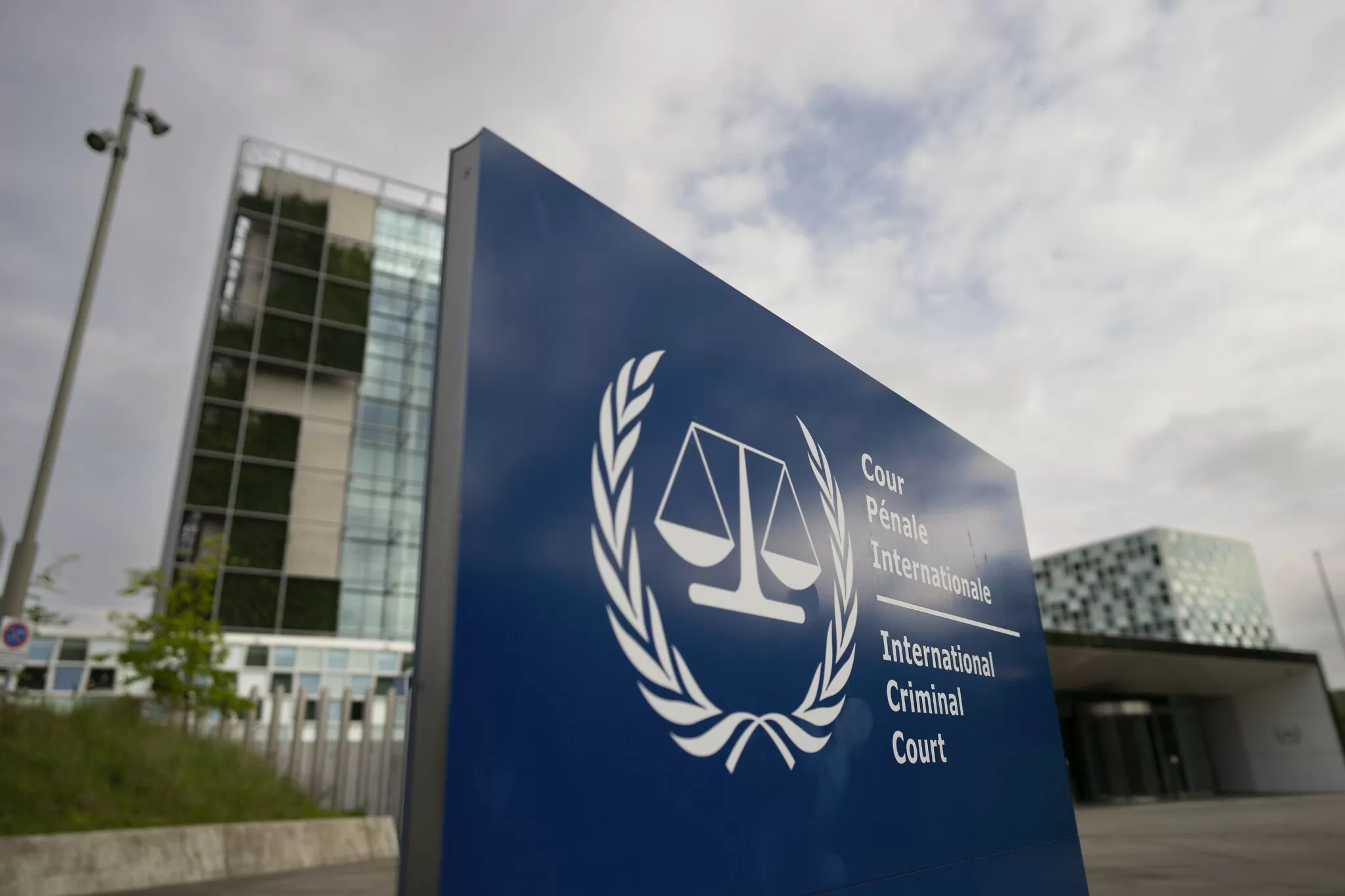 |
| ICC headquarters in The Hague, Netherlands. (Source: AP) |
Reuters reported that the ICC announced via its social media account X that: "The ICC's first instance court rejected the State of Israel's claims to jurisdiction and issued arrest warrants for Benjamin Netanyahu and Yoav Gallant."
According to the ICC, Israel's acceptance of the body's authority is not mandatory.
In theory, the ICC's move restricts Prime Minister Netanyahu's freedom of movement, because any of the Court's 124 members would have an obligation to arrest the Israeli head of government on their territory.
With this latest arrest warrant, the Israeli Prime Minister's Office stated on the same day: "Israel completely rejects the baseless and false accusations of the ICC."
On the same day, Israeli Foreign Minister Gideon Saar also issued a statement on social media saying that the ICC had "lost its legitimacy" after issuing arrest warrants for the Israeli Prime Minister and former Defense Minister.
For its part, Palestine welcomed the ICC's arrest warrant, issuing a statement assessing that the Court's decision "reflects hope and confidence in international law and the institutions of this legal body."
The statement, published by the official Wafa news agency, also called on ICC members to implement a “policy of cutting off contact and meetings with internationally wanted individuals,” including Netanyahu and Gallant.
On the US side, AFP news agency quoted a White House statement saying that Washington "essentially rejects" the ICC's decision.
A spokesperson for the U.S. National Security Council stated: “We remain deeply concerned about the ICC prosecutor’s hasty pursuit of an arrest warrant and the procedural errors that led to this decision. The U.S. has made it clear that the ICC has no jurisdiction over this matter.”
Meanwhile, many Western countries have voiced their support for the ICC's decision and pledged to enforce the arrest warrant.
According to AFP , the European Union's High Representative for Security and Foreign Policy, Josep Borrell, stressed that the ICC's arrest warrants for senior Israeli officials and the Hamas leader are "binding" and must be enforced, emphasizing that this is not a political decision.
According to him, all countries, "every member state of the ICC - including the EU member states - have an obligation to implement this ruling."
On the same day, Irish Prime Minister Simon Harris assessed the arrest warrants as an important and significant step, emphasizing that anyone "who has the ability to support the important work of the ICC must act immediately."
Similarly, Switzerland, the Netherlands, Italy, Sweden , and Spain all pledged to fulfill their commitments and obligations related to the Rome Statute and international law. Austria also issued a similar statement, although its Foreign Minister Alexander Schallenberg considered the arrest warrants unreasonable.
Meanwhile, Norwegian Foreign Minister Espen Barth Eide stated: "It is important that the ICC carry out its duties cautiously. I am confident that the court will proceed with the case based on the highest standards of fairness."
Meanwhile, Turkish Foreign Minister Hakan Fidan assessed the ICC's arrest warrant as a "hopeful" and extremely important step.
South Africa and Canada also affirmed their commitment to complying with all regulations and rulings of the international court.
Source: https://baoquocte.vn/icc-ban-hanh-lenh-bat-giu-thu-tuong-and-cuu-bo-truong-quoc-phong-israel-phan-ung-manh-294654.html


![[Photo] Closing Ceremony of the 10th Session of the 15th National Assembly](/_next/image?url=https%3A%2F%2Fvphoto.vietnam.vn%2Fthumb%2F1200x675%2Fvietnam%2Fresource%2FIMAGE%2F2025%2F12%2F11%2F1765448959967_image-1437-jpg.webp&w=3840&q=75)


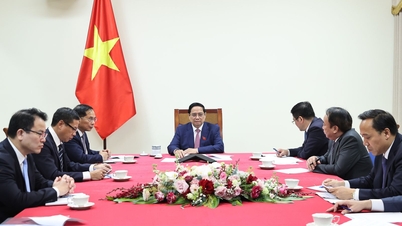
![[Photo] Prime Minister Pham Minh Chinh holds a phone call with the CEO of Russia's Rosatom Corporation.](/_next/image?url=https%3A%2F%2Fvphoto.vietnam.vn%2Fthumb%2F1200x675%2Fvietnam%2Fresource%2FIMAGE%2F2025%2F12%2F11%2F1765464552365_dsc-5295-jpg.webp&w=3840&q=75)



































![[OFFICIAL] MISA GROUP ANNOUNCES ITS PIONEERING BRAND POSITIONING IN BUILDING AGENTIC AI FOR BUSINESSES, HOUSEHOLDS, AND THE GOVERNMENT](https://vphoto.vietnam.vn/thumb/402x226/vietnam/resource/IMAGE/2025/12/11/1765444754256_agentic-ai_postfb-scaled.png)








































Comment (0)