

For the wealthy, a trip is no longer judged by the number of places they "check in" at, but by the feeling they have after returning: relaxed, amazed, happy, or inspired to reinvent themselves.
When "vibe" is more important than the map.
While travelers used to plan trips based on "bucket lists"—lists of dream destinations they wanted to visit at least once—now the key criterion revolves around the question: "What do I want to feel after the trip?"
According to a Virtuoso survey, 65% of luxury travelers seek joy and happiness, 57% want an exhilarating experience, while 51% need excitement. Misty Belles, Virtuoso's Director of Communications, stated: " Travel is only truly luxurious when it delivers the exact emotions that travelers are seeking."
This shift has led to the concept of "vibe travel" becoming the new norm. Some people want to "escape somewhere" after a major event, others need a spectacular trip to celebrate a life milestone, while still others simply seek a few peaceful days with family.
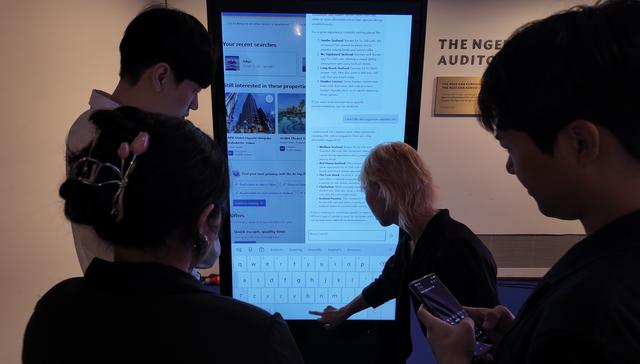
The booking app integrates AI to chat with users and suggest itineraries that match their desired mood.
PHOTO: LE NAM
Artificial intelligence technology is being seen as the "launchpad" for this trend. Booking.com has developed AI Trip Planner – a tool that allows for live conversations in natural language to suggest itineraries based on emotional preferences. Unlike traditional systems that focus solely on price or location, this tool connects the entire chain of services, from hotels, flights, car rentals to destination experiences, into a seamless journey.
Another example is the Feelings Engine, introduced by the luxury travel company Black Tomato. Users simply input desires such as: "I just broke up, where should I go?", "I want to feel free," or "I need a trip to change myself"... The system will translate the emotional language into specific suggestions: from a pilgrimage in Bhutan to find tranquility, to experiencing a sunset in Alhambra (Spain) to enjoy a romantic feeling.
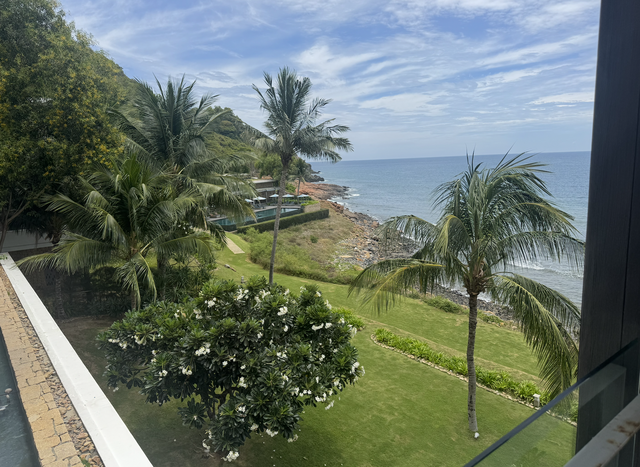
This trend is clearly evident in Vietnam.
PHOTO: LE NAM
During the September 2nd holiday, the trend of "emotional travel" was clearly evident, with the majority of tourists choosing destinations that were unique and rich in cultural identity rather than crowded, mainstream tourist spots. Instead of staying in massive buildings in the bustling city center, purely Vietnamese-style villas along the coast were fully booked months in advance.
Following in the footsteps of Russians and Australians in previous years, Korean tourists are increasingly favoring beaches in Central and Southern Vietnam. At Mia Nha Trang resort, foreign visitors are captivated by the beauty of Vietnam. Situated on a private beach, each villa spans over 1,220m², spread across three floors, and features five ocean-facing bedrooms, an infinity pool, and outdoor landscaping. The highlight is the absolute privacy, allowing guests to watch the sunrise together, host BBQ parties by the pool, or enjoy candlelit dinners without being disturbed.
"What we want to offer our guests is an experience that is both luxurious and warm. The entire service team is Vietnamese, experienced and dedicated, and ready to personalize service to meet individual needs," a representative of the resort shared.
James Cooper, an Australian tourist, emphasized the human aspect: "From the warm and friendly way the staff greeted me, I felt a sense of warmth and something very 'Vietnamese'. That closeness made my holiday an unforgettable experience."
Meanwhile, Kim Soo-jin from South Korea shared: "I've heard a lot about Vietnam on TV and YouTube, and my mind has been picturing the nature and food for a long time. I was looking for that feeling and decided to bring my whole family here during Vietnam's National Day to experience the atmosphere I've been waiting for."
According to experts, the rise of the upper-middle class in the country, along with the demand for unique experiences, has strongly boosted the detached villa segment.
Redefining the concept of 'luxury'
Jack Ezon, founder of Embark Beyond, argues that "bucket lists are outdated." The new generation of consumers, who have traveled the world since childhood thanks to social media, now need more than just a location: they want vibe, community, atmosphere, shopping, and unique experiences.
However, along with the excitement come skepticism. According to Booking.com, while 99% of Vietnamese travelers want to use AI in their travel planning, only 11% fully trust it. The majority still prefer to verify information themselves or need the support of experienced consultants to ensure details about visas, weather, or overcrowding at their destination.
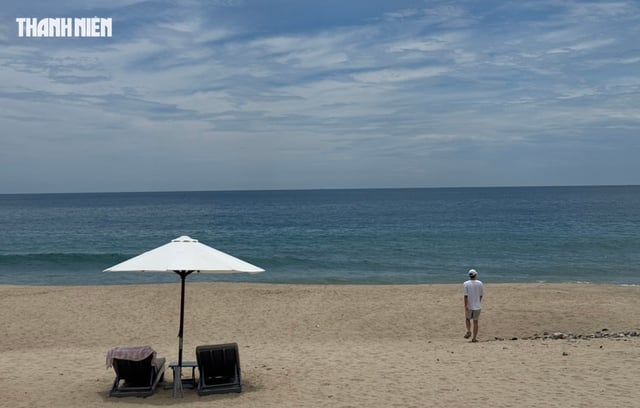
Korean tourists enjoy the atmosphere and coastal scenery of central Vietnam.
PHOTO: LE NAM
Marnie Wilking, Director of Cybersecurity at Booking.com, stated: "Not everything can be solved with AI. The important thing is to listen to and integrate the real needs of travelers."
In the luxury travel segment, small details, from welcome gifts in hotel rooms and suggestions for lesser-known local eateries to the ability to flexibly adjust itineraries, can transform a trip into a truly authentic experience. This is where AI and humans complement each other: AI expands options and evokes emotions, while travel experts ensure the finesse, situational awareness, and relationships needed to turn desires into reality.
The emotional economy is reshaping how the wealthy travel. Instead of asking "Where to go?", the more important question in the future will be: "How do I want to feel?"... That is the starting point of a truly luxurious journey.
Source: https://thanhnien.vn/khi-gioi-nha-giau-di-du-lich-theo-vibe-thay-vi-diem-den-185250908113543158.htm


![[Photo] Prime Minister Pham Minh Chinh holds a phone call with the CEO of Russia's Rosatom Corporation.](/_next/image?url=https%3A%2F%2Fvphoto.vietnam.vn%2Fthumb%2F1200x675%2Fvietnam%2Fresource%2FIMAGE%2F2025%2F12%2F11%2F1765464552365_dsc-5295-jpg.webp&w=3840&q=75)

































































Comment (0)