

Vietnam’s transportation sector is witnessing a dramatic shift: electric vehicles are becoming more common, businesses are investing in green transformation, and consumers are starting to consider low-emission mobility options. The question is, what really motivates Gen Z – the generation that has a big influence on current consumer trends – to make the decision to use electric car-hailing services?
A study by a group ofFPT lecturers and students presented at the recent International Scientific Conference on Economics, Business and Management - FCBEM 2025 showed that ESG is acting as a "value filter" to help Gen Z decide whether they are ready to switch to electric car calling services or not, and at the same time scientifically explained the psychological mechanism that motivates Gen Z to choose sustainable transportation methods.

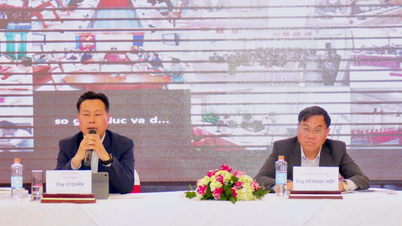
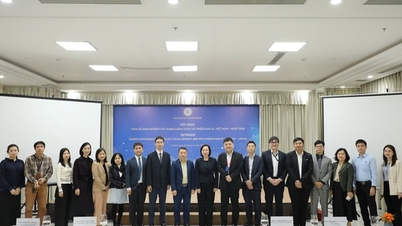
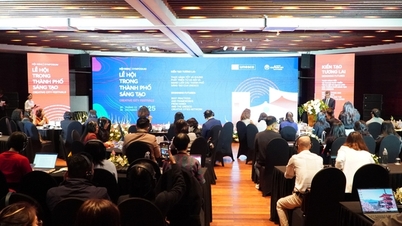
The group of authors presented the research “Gen Z Vietnam and the future of sustainable transportation: When ESG factors promote the intention to use electric car calling services” at the FCBEM 2025 Conference organized by FPT.
Conducting a quantitative survey with 411 Gen Z born between 1995 and 2010, a group with an open mind towards technology and a high awareness of the environment, the study found that all three ESG factors (environment, society and governance) positively impacted Gen Z's attitudes and beliefs, thereby promoting the intention to use electric car calling services. Notably, the Governance factor - related to transparency, data ethics, and policy commitment - had the strongest influence.
This finding contradicts the popular belief that Gen Z chooses electric vehicles primarily for convenience. Instead, the study found that they are strongly influenced by how companies demonstrate values and responsibility, ensuring social equity and driver well-being.
Applied to reality, the research sets new requirements for electric vehicle service businesses. Instead of just expanding electric vehicle fleets or launching promotions, businesses are forced to invest in a comprehensive ESG strategy: transparency of environmental indicators, improvement of driver policies, public disclosure of data security mechanisms and responsible platform operation. A marketing campaign about “calling green electric vehicles” will be difficult to convince Gen Z if it is not backed by strong and authentic governance evidence.
For policymakers, the study shows that in addition to administrative solutions such as restricting gasoline vehicles, promoting communication about ESG - especially corporate responsibility - will have a greater impact on young people's awareness and behavior.

The study received attention and discussion from participants in the reporting session.
As Gen Z continues to act as a leading consumer force, well-crafted ESG values will be key for businesses to gain the trust of this generation, thereby promoting the spread of green mobility services in the future.
The fact that a highly applicable study was presented at FCBEM 2025 shows that the quality of domestic research is quickly catching up with international trends in green consumption, millennial psychology and sustainable transformation. In the context of Vietnam’s transportation entering a transformational phase, the analytical model from this study can become an important suggestion for technology enterprises, the transportation industry and management agencies.
The FCBEM 2025 conference is the 6th time FPT has organized this academic activity. The conference brings together many domestic and foreign experts and researchers, contributing to knowledge sharing and connecting scientists in the field of economics .
Source: https://dantri.com.vn/giao-duc/khi-trach-nhiem-esg-cham-den-nhan-thuc-gen-z-20251205150506685.htm

![[Photo] 60th Anniversary of the Founding of the Vietnam Association of Photographic Artists](/_next/image?url=https%3A%2F%2Fvphoto.vietnam.vn%2Fthumb%2F1200x675%2Fvietnam%2Fresource%2FIMAGE%2F2025%2F12%2F05%2F1764935864512_a1-bnd-0841-9740-jpg.webp&w=3840&q=75)
![[Photo] National Assembly Chairman Tran Thanh Man attends the VinFuture 2025 Award Ceremony](/_next/image?url=https%3A%2F%2Fvphoto.vietnam.vn%2Fthumb%2F1200x675%2Fvietnam%2Fresource%2FIMAGE%2F2025%2F12%2F05%2F1764951162416_2628509768338816493-6995-jpg.webp&w=3840&q=75)













































































Comment (0)