

Vietnamese stocks are not among the top-performing stocks.
Asian markets witnessed a volatile year in 2023, with inflation, rising interest rates, and a slow recovery in China dragging down last year's growth.
Japan's Nikkei 225 is leading the region in market performance in 2023 and gained around 28% last year, according to data from Refinitiv. Japanese stocks are being supported by improving earnings results, as well as growing optimism that the Bank of Japan may finally end its ultra-loose monetary policy after decades of near-zero interest rates.
Following the Nikkei 225 are the indices: Taiwan's Taiex (up 26.83%), India's Nifty 50 (up 20.03%), South Korea's Kospi (19.3%), and India's BSE Sensex (18.74%). The VN-Index and HNX-Index are not among the top-performing stock indices in Asian markets in 2023.
On the other hand, Hong Kong's Hang Seng index is the worst-performing in the region, having experienced four consecutive years of decline after losing nearly 14% in 2023.
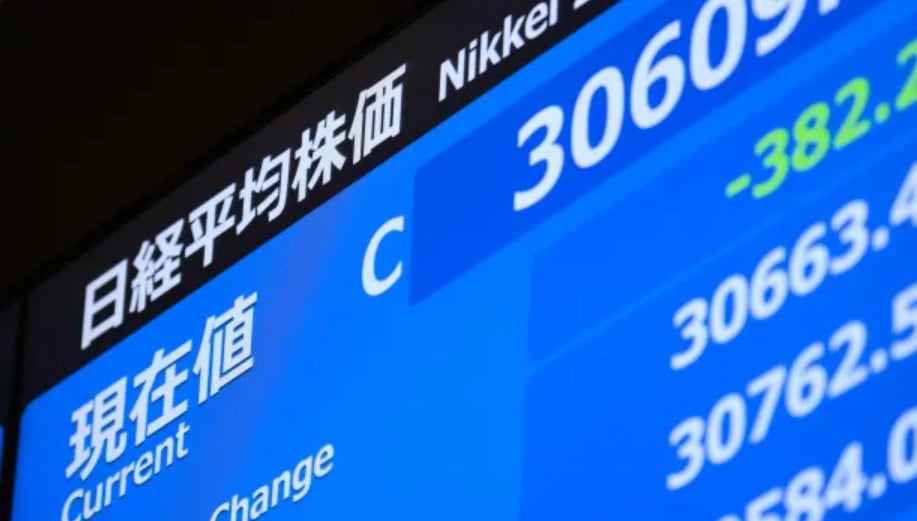
Japanese stocks saw the strongest gains in Asia in 2023. Photo: Getty Images
Highlighting China's sluggish recovery is the performance of the CSI 300, a measure of the largest companies listed in Shanghai and Shenzhen, the third-worst performing stock market in Asia, which lost 11.38% last year.
Peggy Mak, research director at PhilipCapital, told CNBC that China's post-reopening process has been "gloomy" due to a real estate downturn and local government debt problems, impacting spending and dampening demand and investment in the manufacturing sector.
Nevertheless, Asia's outlook remains bright, according to analysts from Pinebridge Investments.
They see continued strong growth momentum from Asia, as well as a “relatively promising outlook,” which they believe will offer attractive potential for select equity investors in 2024.
The two largest economies in Asia cannot be ignored. While China requires patient, focused investment on individual companies as the economy stabilizes, India is surging ahead in many areas.
Their view is supported by the International Monetary Fund, which projects growth rates of 4.6% in 2023 and 4.2% in 2024 for Asia, compared to a global growth forecast of 3% in 2023 and 2.9% in 2024. This is according to Krishna Srinivasan, IMF Director for Asia and the Pacific .
Michael Strobaek, chief investment officer at Lombard Odier, shared his outlook on the 2024 market: “There were a lot of surprises in 2023, from China’s underwhelming Covid recovery to the strength of the US economy, the promise of artificial intelligence and a global recession that didn’t materialize.”
After 2023, this is what investors are looking for in 2024.
Lower exchange rate
Interest rate cuts will be a central issue on investors' minds.
The US Federal Reserve (Fed) has outlined a roadmap for interest rate cuts, with a so-called “dotted chart” implying that interest rates will be cut by 75 basis points in 2024 and 100 basis points in 2025.
Central banks in Asia and around the world tend to follow the lead of the Fed.
Interest rate hikes in major Asian economies have largely stalled, although banks like the Reserve Bank of Australia remain wary that they are prepared to take further action to curb inflation.
Central banks in Southeast Asia have largely kept interest rates stable and are no longer raising them aggressively, although banks like the Philippine central bank still maintain a hawkish stance.
The only exception is the Bank of Japan (BOJ), where investors will be watching to see whether the central bank moves away from negative interest rate policies.
Japan's headline inflation has been above the BOJ's 2% target for more than 19 months and is set to see a 5% increase in spring wage talks guided by the Japan Federation of Trade Unions. Homin Lee, senior macro strategist at Lombard Odier, said these conditions support policy normalization.
Lee expects the BOJ to raise interest rates to 0% in 2024 (from the current negative 0.1%) as well as “gradually end” the bank’s 1% ceiling on 10-year Japanese government bonds.
Taiwan, Vietnam, and Singapore are the "hearts" of growth.
When inflation falls and interest rates drop, where will the growth sectors be?
Hebe Chen, a market analyst at IG International, said that 2024 could see inflation normalize and economic growth slow, which would benefit the infrastructure and real estate sectors. Broadly speaking, this would benefit the energy and commodities industries, as well as those driving the AI revolution.
More specifically, Hebe Chen is optimistic about real estate investment trusts (REITs) and technology in Asia.
When interest rates fall, REITs will offer more funding options and allow for asset buybacks or asset recycling—where the REIT divests assets and uses the proceeds to reinvest. This will ultimately drive higher real returns for REIT investors.

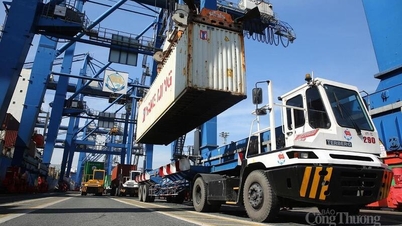
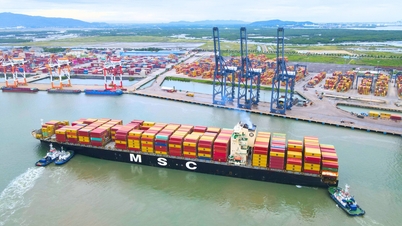
The potential for growth in the emerging global technology cycle is evident in Taiwan, Vietnam, and Singapore. (Illustrative image)
Furthermore, Chen stated that there is potential for growth in the emerging global technology cycle, and Taiwan, Vietnam, and Singapore could outperform others due to their higher focus on manufacturing facilities and R&D.
That's because Vietnam, Singapore, and Malaysia – manufacturing hubs often leveraged to reduce reliance on China – are now producing for markets outside of China.
Thus, they may no longer be vulnerable to a Chinese slowdown. Chen anticipates a “potential turnaround” for Chinese stocks in 2024, despite their underperformance in 2023.
She said the world's second-largest economy is likely to experience a modest recovery, supported by measures from the central government and improved export prospects, adding that a global technological recovery could contribute to improved Chinese exports.
Geopolitics and elections
Geopolitical developments will also be closely monitored.
Chen said that elections in Taiwan, India, and the US are poised to bring about “significant changes in the economic and diplomatic landscape of the Asia-Pacific (APAC) region.”
Chen said, “The growing uncertainty and anxiety, inevitably fueled by the rapidly evolving international landscape and the critical juncture in Sino-US relations, will not provide global investors with much reassurance.”
Mak from PhilipCapital said the Taiwanese election would be a geopolitical event to watch, adding that “how China reacts to the election results, especially if the pro-independence Democratic Progressive Party retains control, could affect its recently warm relationship with Europe, a key trading partner.”
The upcoming US election will also be a focal point.
Source





































































Comment (0)