

Within the framework of the recent Stage Scriptwriting Workshop organized by the Vietnam Association of Stage Artists in Tam Dao ( Phu Tho ), the seminar "Stage Scripts with Contemporary Themes: Current Situation and Solutions" took place with great enthusiasm.
Facing the "bottlenecks" head-on.
At the workshop, the authors discussed many practical issues, addressing concerns about the need for contemporary scripts that closely reflect real life and offer interactive critiques to young audiences. According to them, the first step is to determine whether the staging style and script material are appropriate and of high quality.
Author Le Thu Hanh stated that after graduating from university, she primarily focused on research, then pursued a career in film theory and criticism, which meant she was constantly seeking knowledge and learning. Her main concern is that art schools in Ho Chi Minh City still haven't been able to offer screenwriting classes, leading to a decline in the quality of many scripts.
"Training young writers is a crucial issue. I am very pleased to learn that the Vietnam Association of Theatre Artists is about to organize a training course for young writers, directors, and theorists/critics in Ho Chi Minh City. This will be a breeding ground for many talented young writers and passionate individuals, enabling them to contribute and create for the theatre," Ms. Le Thu Hanh expressed her expectations.
According to author Hong Yen, who studied screenwriting in South Korea, outdated writing should be discarded. The "secret" she learned from South Korea is to write about things others haven't written yet; only then will it be fresh and contemporary.
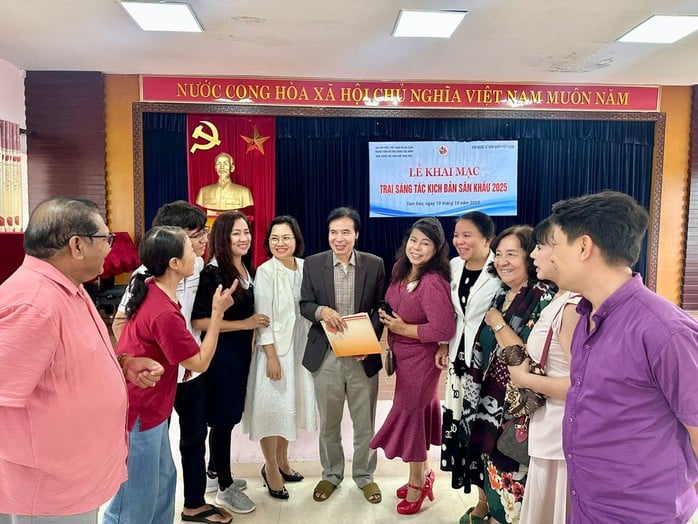
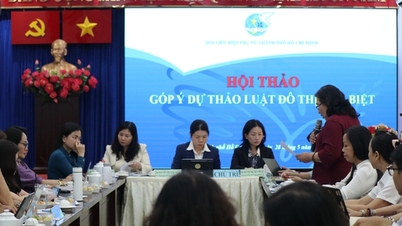
People's Artist Giang Manh Ha, Vice President of the Vietnam Association of Stage Artists, speaks with delegates attending the workshop on the morning of October 14.
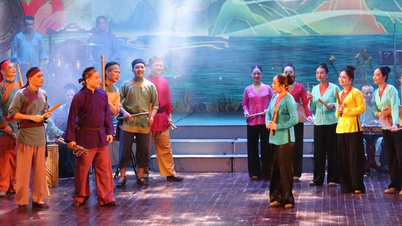
Author Truong Minh Thuan expressed concern that the Mekong Delta is now becoming a "low-lying area" for Cai Luong (Vietnamese traditional opera) scripts because many writers are getting older. Without training and guidance, young authors will find it difficult to maintain their passion and continue the tradition of Cai Luong theater, especially when royalties and remuneration are not commensurate. "I hope to participate in writing camps like this to gain experience, grow, and contribute to helping the Mekong Delta have more contemporary Cai Luong scripts," the author from Vinh Long confided.
Author Minh Nguyet suggests that the Vietnam Association of Theatre Artists should organize creative workshops specializing in contemporary themes. Each outstanding script should only be staged in two forms: spoken drama and musical theatre, leaving the rest of the opportunity for other authors. In reality, some workshops produce works on contemporary themes, but many theater troupes choose not to stage them "because they are hesitant."
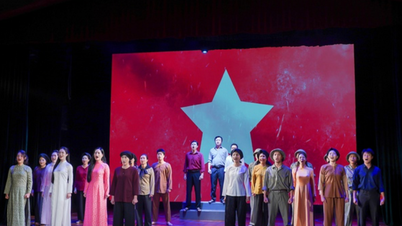
From the Army Drama Theatre – which recently successfully organized a professional theatre festival focusing on the image of the People's Public Security soldier – author Vu Thu Phong points out the reality that many contemporary scripts constantly insert bombastic and unrealistic dialogues into the characters' mouths, making it difficult for audiences to patiently watch. Meanwhile, traditional scripts remain stuck in the same old patterns. To revitalize contemporary themes, organizing scriptwriting workshops or theatre festivals would create a source of scripts that audiences, especially young people, would appreciate.
According to author Nguyen Toan Thang, many writers suffer from "severe delusions," often comparing their work to other professions. He also stated that he had watched 10 productions of "The Miser" from Vietnamese and international theaters for comparison. "Stage productions with new formats will create highlights and solve the problem of how to achieve a contemporary feel in the script. Authors need to assess whether their scripts are of good quality; whether the dialogue is contemporary enough..." he frankly stated.
Expressing a unique perspective and meeting audience needs.
At the aforementioned workshop, many experts, scriptwriters, and directors raised the question: What constitutes contemporaneity in stage scripts? Ensuring contemporaneity in stage scripts is a major challenge for all stage scriptwriters today.
Author Nguyen Thu Phuong argues that the core issue lies in the limited knowledge and academic thinking of the scriptwriting team. The majority of current stage scriptwriters are not truly proactive in systematically learning, updating their knowledge, and honing their professional skills. Many are complacent with past successes and achievements, hesitant to innovate, and even tend to reject or oppose creative trends due to a lack of understanding or apprehension. They choose to write about safe topics such as history, famous people, and traditions – which are easily accepted and less risky.
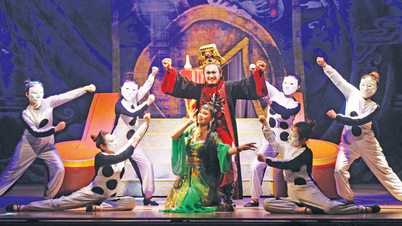
This causes the stage to lose its contemporary spirit, its social critique, and its detachment from issues that the public cares about. This so-called "safety" is actually a step backward. Many scripts lack integration with contemporary trends and theatrical life. "A worrying reality is that many authors don't care who their target audience is, they don't watch popular plays, they don't research the trends of young directors, new staging languages, or the expressive abilities of modern actors... While young directors experiment with many new forms: black theater, mime, 6D lighting applications… most authors don't understand what they're doing, they don't write scripts for them," lamented author Nguyen Thu Phuong.
On the other hand, many authors tend to look down on plays aimed at the general public, considering them "commercial" rather than "art," without first trying to connect with the audience to understand their needs and thoughts. Furthermore, many writers create works simply to follow competitions, trends, and events.
The workshop concluded with a heartfelt message: Scriptwriters should always express their own perspectives to meet the needs of contemporary audiences. This serves as both a reminder and a direction for the future of theater in this new landscape.
People's Artist Giang Manh Ha, Vice President of the Vietnam Association of Stage Artists, assessed: "If a script simply recounts a legend or illustrates the past, then there is no need for the stage. The stage needs scripts that are predictive, dialogue-based, and interactive with the audience."
Source: https://nld.com.vn/kich-ban-san-khau-can-hoi-tho-duong-dai-196251014220105285.htm
![[Photo] Standing Committee member of the Party Central Committee Tran Cam Tu working with the Central Inspection Committee](https://vphoto.vietnam.vn/thumb/1200x675/vietnam/resource/IMAGE/2026/05/28/1779969579668_ndo_br_bnd-2495-jpg.webp)

































































Comment (0)