

According to the Trade Remedies Department of the Ministry of Industry and Trade , float glass products exported to the United States are subject to an anti-dumping and countervailing duty investigation.
Float glass exported to the United States is subject to an anti-dumping and countervailing duty investigation, specifically targeting products from China and Malaysia. The Trade Remedies Department of the Ministry of Industry and Trade announced that on November 21, 2024, the U.S. Department of Commerce received a petition requesting an investigation into the application of anti-dumping and countervailing duties on float glass imported from China and Malaysia. The petition was filed by Vitro Flat Glass, LLC and Vitro Meadville Flat Glass, LLC.
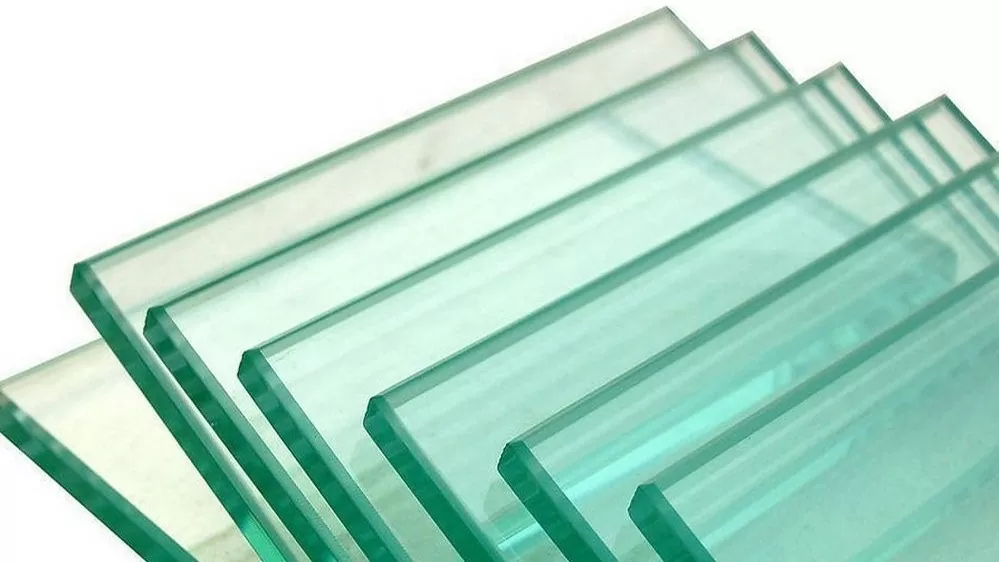 |
| The U.S. Department of Commerce has received a request to investigate and apply anti-dumping and countervailing measures against float glass products imported from China and Malaysia. (Illustrative image) |
The scope of products subject to proposed anti-dumping and countervailing duty investigations includes float glass made from soda-lime-silica glass, produced by floating a continuous strip of molten glass over a vat of fine tin (or another liquid metal with a density greater than molten glass), cooling the glass in an annealing furnace, and cutting it to appropriate sizes. According to the investigation request, the float glass products under investigation must have a nominal thickness of at least 2.0 mm and a nominal surface area of at least 0.37 m².
The country of origin of each float glass product is determined by the location where the glass is initially manufactured by floating a continuous stream of molten glass over a smooth tin vat and cooling the glass in an annealing furnace, regardless of where any finishing or further fabrication operations are performed. Before being processed, finished, or further fabricated, float glass products meet the requirements of Type I according to ASTM-C1036 of the American Society for Testing and Materials.
Additionally, float glass products can be clear, tinted, colored, or coated with one or more materials to alter properties such as thermal insulation, electrical conductivity, noise reduction, durability, color, and/or light transmission. Examples of coated float glass products include low-emissivity (“Low-E”) building glass and frameless mirrors (i.e., flat glass with a silver, aluminum, or other reflective coating) such as mirror panels.
Float glass products may be annealed, chemically strengthened, heat-strengthened, or tempered to achieve the desired surface compression, according to ASTM-C1048, ASTM-C1422/C1422M, or other similar specifications. Float glass products may undergo further processing, including but not limited to finishing operations such as sandblasting, etching, bending, beveling, grooving, drilling, punching, embossing, and engraving.
Float glass products may be unassembled or assembled. Examples of assembled float glass products include: Mirrors with one or more light-emitting diodes (“LEDs”) integrated into the mirror, as well as framed mirrors with one or more LEDs integrated into the mirror or mirror frame; and products comprising two or more panes of glass bonded together by a polymer interlayer (i.e., laminated glass), as well as insulated glass units (“IGU”), comprising two or more panes of glass separated by an insulating material and completely sealed together at the edges to create a thermal barrier by air or one or more gases.
The scope of the products under proposed investigation includes, but is not limited to, glass products that meet one or more of the specifications, definitions, and/or standards ASTM-C162, ASTM-C1036, ASTM-C1048, ASTM-C1172, ASTM-C1349, ASTM-C1376, ASTM-C1422/C1422M, ASTM-C1464, ASTM-C1503, ASTM-C1651, ASTM-E1300, and ASTM-E2190.
The products under investigation are currently classified under codes 7005.10.8000, 7005.21.1010, 7005.21.1030, 7005.21.2000, 7005.29.1810, 7005.29.1850, 7005.29.2500, 7007.29.0000, 7008.00.0000, 7009.91.5010, 7009.91.5095, and 7009.92.5010 of the United States High Tariff Schedule (HTSUS). The products under investigation may also be classified under codes 7006.00.4010, 7006.00.4050, and 7007.19.0000. These product codes are provided for reference and comparison purposes only; a detailed description of the scope of the products proposed for investigation is the determining factor.
According to the investigation request, Chinese exporting companies are dumping at margins ranging from 91.05% to 165.11%, while Malaysian companies are dumping at margins ranging from 141.87% to 344.43%. The investigation request also alleges that Chinese and Malaysian companies received significant subsidies, although the amount of subsidies is not specified in the request.
The U.S. Department of Commerce is expected to make a decision on the investigation on December 11, 2024. Temporary countervailing duties on Chinese and Malaysian companies could be applied from the end of April 2025. Temporary anti-dumping duties could be applied from the end of June 2025. Formal anti-dumping and countervailing duties could be applied no later than the end of December 2025.
The Trade Remedies Department recommends that Vietnamese businesses producing and exporting float glass and related products that meet the above description to the United States closely monitor the developments of the case. In cases where businesses have large or rapidly increasing export volumes to the United States, they should be aware of the risk of the United States continuing its anti-dumping investigation against Vietnamese products. Businesses using imported float glass from China and Malaysia as raw materials should be aware of the risk of the United States conducting circumvention investigations if they export to these markets.
At the same time, businesses manufacturing float glass and related products can contact the Department for further guidance and advice on assessing trade defense risks if they export to the US market.
Source: https://congthuong.vn/kinh-noi-xuat-khau-vao-hoa-ky-bi-yeu-cau-dieu-tra-chong-ban-pha-gia-chong-tro-cap-360735.html


![[Photo] Prime Minister Pham Minh Chinh holds a phone call with the CEO of Russia's Rosatom Corporation.](/_next/image?url=https%3A%2F%2Fvphoto.vietnam.vn%2Fthumb%2F1200x675%2Fvietnam%2Fresource%2FIMAGE%2F2025%2F12%2F11%2F1765464552365_dsc-5295-jpg.webp&w=3840&q=75)
















































































Comment (0)