

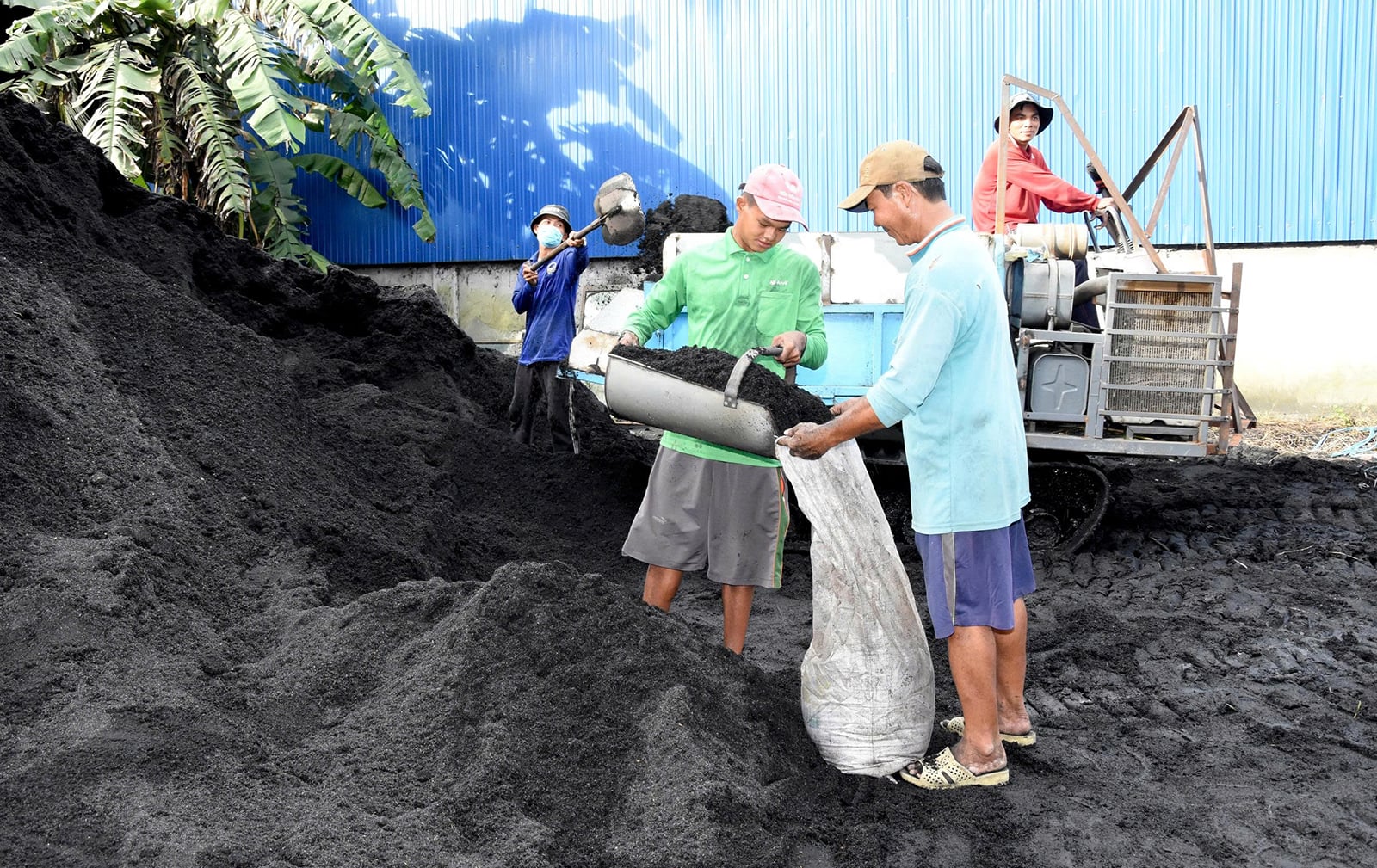
Workers at Mr. Nhan Van Tam's rice mill put ash in bags to spread in the garden as fertilizer. Photo: KIEU DIEM
Closed from rice husk to coconut garden
Coming to the garden of more than 13 hectares of land of Mr. Nhan Van Tam - the owner of a rice mill in Tan Hoi commune, I was impressed by the black color of the land, between the rows of green coconut trees interspersed with fish ponds and flocks of ducks frolicking in the ditches. Few people think that the main source of nutrition for the whole garden starts from... the layer of rice husk ash, which is considered a waste product.
Mr. Tam said that after the rice was dried, he used the husks as fuel to generate heat for the next batches of drying. “After burning, the husks turn into ash, and if we throw them away, it would be a waste. I use all the ash to compost the garden, both to keep it moist and to make natural fertilizer. After deducting expenses, I earn more than 300 million VND per year. I am renovating 20 more hectares of land to expand the model and increase the output of coconuts for export processing factories in Tay Ninh and Vinh Long,” Mr. Tam said.
After burning, he mixed the rice husk ash into the soil to compost the garden, both to retain moisture and improve the porosity, helping the coconut trees grow strongly. From that layer of ash, the garden was transformed into a miniature ecological model: coconut trees spread out, chickens roam free, ducks swim in the pond and wild fish grow naturally. Without spending too much money on fertilizers or industrial feed, his family's income is increasing. From materials that seem to be discarded, Mr. Tam created a new life cycle for resources, in the spirit of the circular economy that the State is encouraging.
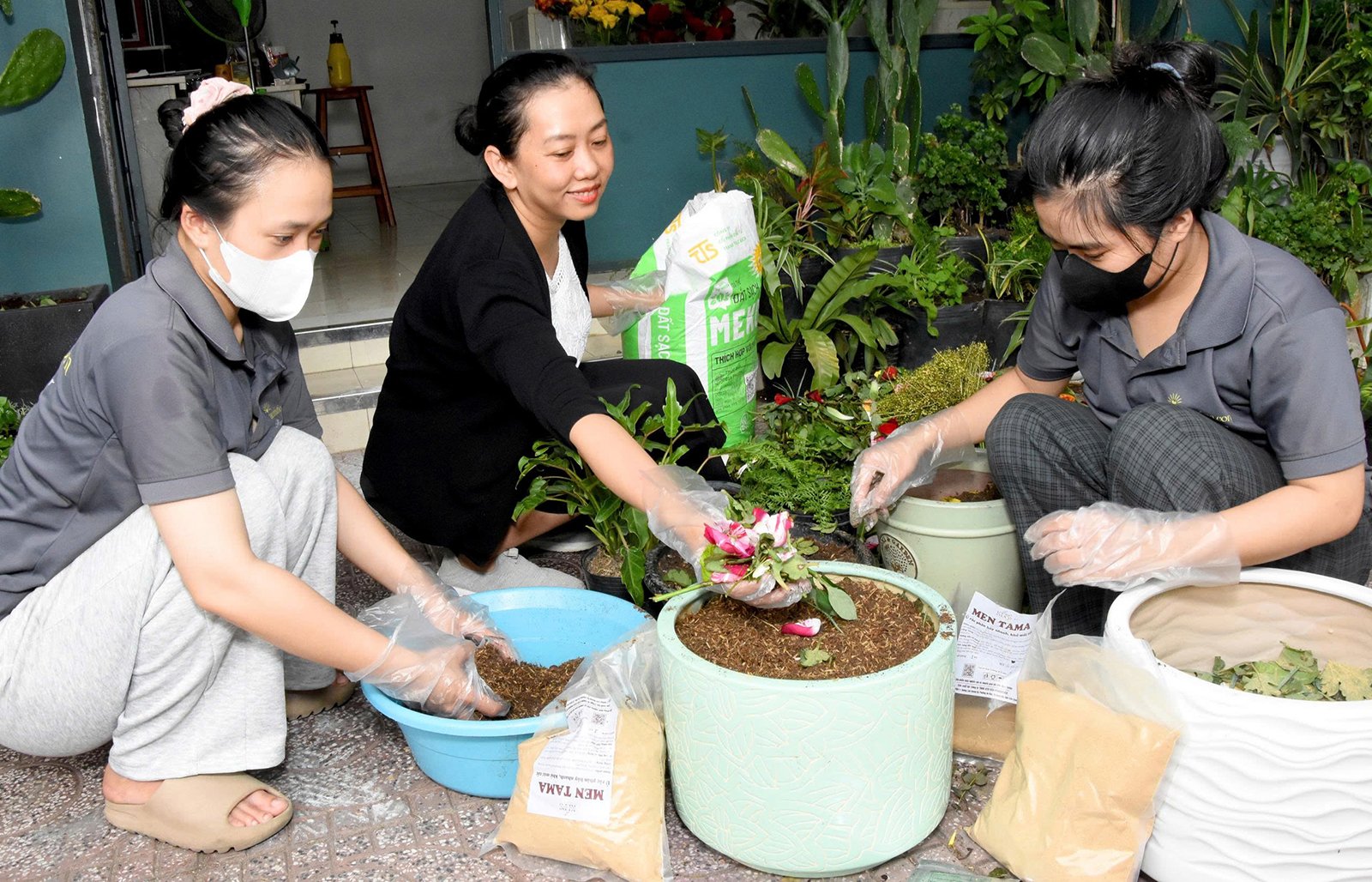
Ms. Lam Kim Tam (middle) mixes flower waste to make fertilizer. Photo: KIEU DIEM
From flower litter to compost
If Mr. Tam's model originated from agricultural production, the story of Ms. Lam Kim Tam - owner of the Tam Nhu Hoa flower shop chain (Rach Gia ward and Phu Quoc special zone) opened a new direction: Recycling organic waste right in service business.
Every day, her flower shop releases 60-100kg of organic waste including branches, leaves, wilted petals, cut flowers... Previously, Ms. Tam had to hire people to collect this amount of waste, which was costly and potentially polluting. After attending a training course of the Women's Union of Rach Gia Ward, she immediately applied the method of composting flower waste into organic soil. After 3 months, the amount of waste that needed to be treated decreased significantly, while helping her save significantly on the cost of buying soil and fertilizer for plants.
The organic compost helps plants grow greener, bloom healthier, and last longer. She also guides employees and flower buyers on how to utilize flower waste at home. Each bag of trash, once considered a nuisance, now becomes the main source of fertilizer for a lush flower pot. A closed cycle, easy to do, economical, and environmentally friendly.
When the circular economy starts from very small things, people can do it right away with what is available. These small models contribute to significantly reducing waste, saving input costs, increasing stable income, creating awareness about resource utilization and spreading green lifestyle in the community. The circular economy can start from a bag of rice husks, a small bag of trash in business, in daily family life, bringing a positive lifestyle.
Source: https://baoangiang.com.vn/kinh-te-tuan-hoan-tu-viec-nho-a469080.html
![[Photo] Parade to celebrate the 50th anniversary of Laos' National Day](/_next/image?url=https%3A%2F%2Fvphoto.vietnam.vn%2Fthumb%2F1200x675%2Fvietnam%2Fresource%2FIMAGE%2F2025%2F12%2F02%2F1764691918289_ndo_br_0-jpg.webp&w=3840&q=75)

















![[Photo] Worshiping the Tuyet Son statue - a nearly 400-year-old treasure at Keo Pagoda](/_next/image?url=https%3A%2F%2Fvphoto.vietnam.vn%2Fthumb%2F1200x675%2Fvietnam%2Fresource%2FIMAGE%2F2025%2F12%2F02%2F1764679323086_ndo_br_tempimageomw0hi-4884-jpg.webp&w=3840&q=75)


















































Comment (0)