

1. Temple of Literature - Xich Dang
The Hung Yen Confucian Temple, also known as the Xich Dang Confucian Temple, is a provincial-level Confucian temple built in the 20th year of the Minh Mang reign (1839) on a high, spacious plot of land approximately 4,000 m2 in Xich Dang village, Lam Son ward, Hung Yen town. The Xich Dang Confucian Temple currently preserves 9 stone steles, 8 of which were erected in the 3rd year of the Dong Khanh reign (1888) and 1 in the 18th year of the Bao Dai reign (1943), recording the names of Hung Yen scholars. From the Tran dynasty to 1919 – the last Confucian examination – 138 successful candidates were recorded. The highest academic title was held by the First-ranked Scholar Tong Tran from An Cau village, Phu Cu district (Tran dynasty); and the First-ranked Scholar Nguyen Ky from Binh Dan commune, Khoai Chau district (Mac dynasty). The highest official position held was held by Le Nhu Ho, a Duke of the Mac dynasty.
In the past, on the 10th day of the first lunar month and the 14th day of the eighth lunar month, the Temple of Literature - Xich Dang held ceremonies to worship Confucius, with many officials of the imperial court attending.
Despite numerous historical changes and upheavals, the Temple of Literature - Xich Dang still retains its original architecture quite intact, including the triple gate, bell tower, ceremonial hall, and two rows of side buildings (left and right). The Temple of Literature in Hung Yen has become a symbol of the culture and civilization of Hung Yen province.
2. Huong Lang Pagoda (Lang Pagoda)
Located in Huong Lang village, Minh Hai commune, Van Lam district, the pagoda is large in scale, comprising many buildings, with an architectural layout in the "inner courtyard, outer country" style. Renovations began in 1955.
Currently, Huong Lang Pagoda still preserves many artifacts from the Ly Dynasty. Among them, the most valuable is the lion statue (Thunder God statue) made from a large stone slab (2.8 m x 1.5 m x 0.9 m) with extremely exquisite and beautiful carvings. In addition, the pagoda has ten pairs of stone handrails carved with phoenixes, weasels, and chrysanthemum vines; four perpendicular stone columns supporting the stone beams of the structure; and many stone bases of the columns carved with lotus and chrysanthemum petals in meticulous detail. These are priceless works of art from the Ly Dynasty that have been preserved.

Pho Hien still preserves many valuable historical and cultural relics, including a special national-level historical site.
3. Thai Lac Pagoda (Phap Van Pagoda)
The pagoda is located in Thai Lac village, Lac Hong commune, Van Lam district. It was built during the Tran Dynasty (1225-1400) and renovated in 1609, 1612, 1630-1636, and 1691-1703. Currently, the pagoda has an architectural style of "inner courtyard, outer enclosure," consisting of 5 front halls, 3 main halls, 2 rows of corridors with 9 bays each, and a 7-bay ancestral hall. Thai Lac Pagoda still retains a wooden truss system with Tran Dynasty architecture in the central hall. This type is very rare in Vietnam; besides Thai Lac Pagoda, it is only found at Dau Pagoda and Boi Khe Pagoda. The trusses, columns, and brackets of the truss system feature many large carvings. When intact, the pagoda housed about 20 bas-relief carvings with various themes, but today only 16 remain at Thai Lac Pagoda. For example, there are carvings of celestial maidens with human heads and bird bodies, statues of deities raising their hands to support lotus towers, celestial maidens riding phoenixes, playing flutes, two-stringed fiddles, and other stringed instruments, etc.
In 1964, Thai Lac Pagoda was classified by the Ministry of Culture and Information as a particularly important architectural and artistic relic.
4. Dau An Temple (An Xa Temple)
Located in An Xa village, An Vien commune, Tien Lu district, the temple is dedicated to the Five Immortal Elders and the Heavenly and Earthly Immortals who helped the people reclaim land, eliminate fierce tigers, and protect crops. Dau An Temple also preserves unique terracotta artifacts such as a terracotta incense burner from the Tran Dynasty and a terracotta tower dating back to the 17th century. These terracotta artifacts, with their exquisite patterns, possess high cultural value.
The traditional Dau An Temple Festival takes place from the 6th to the 12th of April in the lunar calendar, featuring many attractive and interesting games.
5. Mother Goddess Temple
Located in Quang Trung ward, Hung Yen town, the temple is one of the most beautiful scenic spots in Pho Hien. The Mother Goddess Temple is dedicated to Consort Duong (of the Song Dynasty), who was praised by people as Duong Thien Hau, Mother Goddess of the Immortal Realm.
Legend has it that in the 13th century, when the Mongol army invaded China, refusing to submit to their persecution, the Song emperor and some close associates committed suicide while sailing south. Yang Guifei's body drifted ashore at the mouth of the Pho Hien River, where she was respectfully buried by the local people. After several renovations, the temple's architecture is quite complete, including a triple gate, incense burner, front hall, central hall, and rear hall. The temple houses many precious artifacts such as a palanquin, dragon pavilion, dragon bed, and dragon throne dating from the 18th and 19th centuries, as well as 15 imperial decrees from the Le and Nguyen dynasties, along with numerous horizontal plaques, couplets, and large inscriptions praising the loyalty and virtue of the Empress.
The traditional festival at the Mother Goddess Temple is held from the 10th to the 13th of March in the lunar calendar. The ceremony includes a procession and many folk games.
6. Ung Temple
The temple is located in Phu Ung village, Phu Ung commune, An Thi district. It is dedicated to General Pham Ngu Lao, a renowned general of Hung Dao Dai Vuong Tran Quoc Tuan, who made significant contributions to the resistance against the Yuan-Mongol army, the Southern invaders, and the Laotians.
The temple was destroyed by the French colonialists in 1948. In 1990, it was restored with 5 front halls and 3 rear halls. Within the temple complex are the tomb of Pham Tien Cong (Pham Ngu Lao's father), the Nhu Mau Temple (Pham Ngu Lao's foster mother), the Tinh Hue Princess Temple (Pham Ngu Lao's daughter), etc. The main festival at the temple is held from the 11th to the 15th of the first lunar month, commemorating Pham Ngu Lao's departure for battle.
7. Ne Chau Pagoda
The pagoda is located in Ne Chau village, Hong Na commune, Tien Lu district. It was built at the end of the 10th century. Despite numerous renovations, the pagoda still retains the architectural style of the 17th century. Outstanding among the sculptural works of Ne Chau Pagoda are the Three Buddhas and the Snow Mountain statue, dating back to the 18th century. The statues are well-proportioned, with vivid details, demonstrating a high level of sculpting skill.
8. Hien Pagoda (Thien Ung Temple)
Hien Pagoda is located on Pho Hien Street, Hong Chau Ward, Hung Yen Town. Legend says the pagoda was built during the reign of King Tran Thai Tong (1232-1250) by To Hien Thanh, a high-ranking official of the Ly Dynasty. It was renovated in 1625 and 1709. Hien Pagoda has an "inner courtyard, outer enclosure" layout, consisting of a front hall, incense hall, main hall, and three sides of corridors. In the center of the main hall is a statue of Quan Am Nam Hai (Guan Yin of the South Sea), and in front are statues of four Bodhisattvas. These statues all date back to the 19th century. Overall, this is not a particularly outstanding architectural site compared to other similar relics of the same period. However, the value of this pagoda lies in the two stone steles in front of the pagoda courtyard.
A stele, "Thien Ung Temple - New Temple Restoration Stone Stele Inscription," dating from the 7th year of Vinh To (1625), records the restoration of the temple by the benefactor, and another stele acknowledges that "Pho Hien Nam was famous as a small, bustling metropolis of Chang'an from all four directions." From this, we can imagine Pho Hien as a place where people from all directions gathered for trade and commerce.
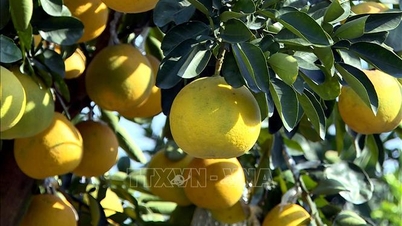
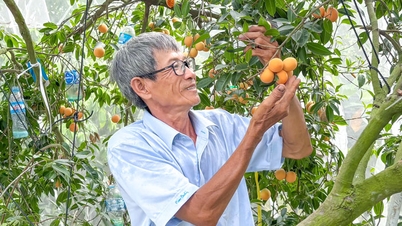
In front of Hien Pagoda stands the ancestral longan tree, known as Tien Longan Tree. This is a variety of longan with large, thick-fleshed, sugary-sweet fruit and a uniquely delicious flavor. The main trunk is old and gnarled, with only one branch remaining, nurtured and cared for to grow into a descendant tree, a symbol of the special longan variety of Pho Hien - Hung Yen.
9. Chuong Pagoda (Kim Chung Temple)
The pagoda is located in Nhan Duc village, Hien Nam ward, Hung Yen town. Built during the Le Dynasty, Chuong Pagoda is said to be one of the most beautiful ancient landmarks of Pho Hien. In 1707, the pagoda was renovated on a complete scale, showcasing the typical architecture of Vietnamese pagodas during the Late Le Dynasty. The beauty of the Chuong Pagoda complex lies in its balanced and harmonious layout. From the outside, there is a triple gate, a two-story, eight-roofed structure. Crossing the stone bridge leads to the courtyard, then the front hall, incense hall, main hall, and at the far end are the bell tower, the gong tower, and the ancestral hall. Inside the pagoda is a rich collection of Buddha statues, including the Three Worlds, Amitabha Triad, and Nine Dragons statues. Notable among them are the eight Diamond Buddha statues, the eighteen Arhats, and the four Bodhisattva statues. These are truly works of art of high value. In addition, the pagoda also houses many artifacts such as horizontal plaques, couplets, religious objects, and stone steles.
10. Pho Pagoda
Pho Pagoda, also known as Bac Hoa Nhan Dan Pagoda, was built in the 18th century by both Chinese and local people. It was last renovated in the late 19th and early 20th centuries. The pagoda's overall architecture features a tiered roof style. The main gate has an eight-roofed, overlapping structure. The main temple consists of six interconnected bays running lengthwise, creating a spacious area. Adjacent to the main temple are four ancestral halls, built in a truss-bridge style, connecting to the front courtyard. In 1992, the pagoda was recognized as a national historical site. Since the re-establishment of Hung Yen province, Pho Pagoda has been chosen as the headquarters of the Hung Yen Provincial Buddhist Association.
11. Dạ Trạch Temple
The temple, located in Yen Vinh village, Da Trach commune, Khoai Chau district, is dedicated to Chu Dong Tu, Tien Dung, and Hong Van Princess. Legend says that Da Trach Temple was built on the high ground of an ancient castle and ramparts, shortly after Chu Dong Tu and Tien Dung ascended to heaven. The temple preserves many ancient artifacts such as royal decrees, horizontal plaques, couplets, and large inscriptions. Particularly noteworthy are the hat and staff – symbols of Chu Dong Tu's magical transformations used to save people. Within the complex of relics is Da Trach Pond, a remnant of the former Da Trach swamp where King Trieu Quang Phuc stationed his troops to successfully defend against the Liang invaders. Annually, Hoa Da Trach Temple holds four main commemorative events: the 4th day of the 1st lunar month (Tien Dung Princess's birthday), the 10th day of the 2nd lunar month (Hong Van Princess's birthday), the 12th day of the 8th lunar month (Chu Dong Tu's birthday), and the 17th day of the 11th lunar month (the anniversary of the saint's death). The main festival takes place from the 10th to the 12th of the 2nd lunar month.
12. Da Hoa Temple
The temple, located in Da Hoa village, Binh Minh commune, Khoai Chau district, is dedicated to Chu Dong Tu, Tien Dung, and Princess Hong Van. It overlooks the Red River and Tu Nhien beach, the site of the love story between Chu Dong Tu and Tien Dung. The temple complex comprises 18 structures of varying sizes: a stele house, a bell tower, a gong tower, the main gate, the front hall, the incense hall, the second and third chambers, the rear chamber, and various thatched houses. The temple roofs are shaped like stylized dragon boats. Viewed from above, the combined roofs resemble the fleet of boats of Princess Tien Dung at the age of 18, sailing on the river. Da Hoa Temple also preserves many valuable artifacts: bronze statues of the saint Chu Dong Tu and his two wives, lifelike in appearance. Three wooden thrones dedicated to Chu Dong Tu and his two wives, with dragon carvings on the headstones, dating from the late 16th to early 17th centuries, are considered the oldest surviving thrones in Vietnam.
Source: According to the book "Hung Yen's Strength and Potential"


![[Photo] Closing Ceremony of the 10th Session of the 15th National Assembly](/_next/image?url=https%3A%2F%2Fvphoto.vietnam.vn%2Fthumb%2F1200x675%2Fvietnam%2Fresource%2FIMAGE%2F2025%2F12%2F11%2F1765448959967_image-1437-jpg.webp&w=3840&q=75)























![[OFFICIAL] MISA GROUP ANNOUNCES ITS PIONEERING BRAND POSITIONING IN BUILDING AGENTIC AI FOR BUSINESSES, HOUSEHOLDS, AND THE GOVERNMENT](https://vphoto.vietnam.vn/thumb/402x226/vietnam/resource/IMAGE/2025/12/11/1765444754256_agentic-ai_postfb-scaled.png)

















































Comment (0)