

Focus on one idea
"I recommend starting with an idea that you're genuinely excited about and spending time focusing on it to ensure it's polished," Wright said. She added that because editors are often busy and overworked, it's best for novice journalists to tackle one idea at a time.

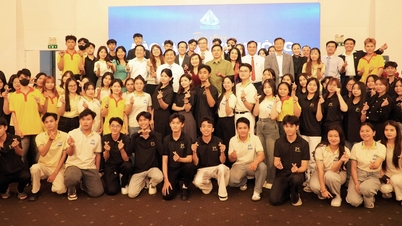
Illustration photo: GT
Choose a new perspective on a topic.
Meanwhile, according to Roisin Lanigan, editor at The Fence, small changes in approach to a topic can make a big difference. She advises choosing fresh perspectives on a hot topic, as these stories are often more likely to capture the attention of editors.
Concise and detailed
Keep your paper concise yet thorough. Explain terminology, list potential interviewees, describe the issues you will investigate, and estimate the word count as briefly as possible.
Cleary urged journalists to be transparent about their sources and to provide actual dates for submitting and publishing articles. She said, "For example, if you're introducing an article tied to a movie anniversary, then you should specify the publication date as either on or before the anniversary."
Appropriate title
Cleary said, "I've found that if you can't come up with a suitable title for your planned article, it's possible you don't have a clear enough understanding of the issue."
Dare to be unique
Wright emphasized the importance of using a distinctive and engaging tone to capture attention. "The best introductions draw me into something, especially something I'm unfamiliar with, in a unique and surprising way that makes me eager to learn more."
She also encourages embracing uniqueness, especially in pop culture. "Don't be afraid to be weird and even a little unconventional. I want personality and a strong writing style rather than just a resume," she said.
We welcome feedback.
After you submit your article, be open to constructive feedback. Lanigan said, "I'm really grateful to the editors for giving me this opportunity when I had little to no published work. But I think the mistake I made with these editors was being so upset about the edits they suggested."
Remember that the editor's job is to refine your work. Their feedback isn't a critique of your abilities, but a valuable tool to help you grow.
Don't be discouraged by rejection.
Wright said, "I've been in that stage, so I know things will be quite painful at first, but just keep going and it will get less painful over time."
There's nothing wrong with explaining to editors that you're a new journalist and want feedback so you can improve in the future. "Not every editor has the time to give you that kind of feedback, but asking never hurts, and we were all beginners once."
Ngoc Anh (according to IJNET)
Source: https://www.congluan.vn/mot-so-loi-khuyen-cho-nguoi-moi-buoc-chan-vao-nghe-bao-post299303.html


![[Photo] Prime Minister Pham Minh Chinh holds a phone call with the CEO of Russia's Rosatom Corporation.](/_next/image?url=https%3A%2F%2Fvphoto.vietnam.vn%2Fthumb%2F1200x675%2Fvietnam%2Fresource%2FIMAGE%2F2025%2F12%2F11%2F1765464552365_dsc-5295-jpg.webp&w=3840&q=75)
































































Comment (0)