

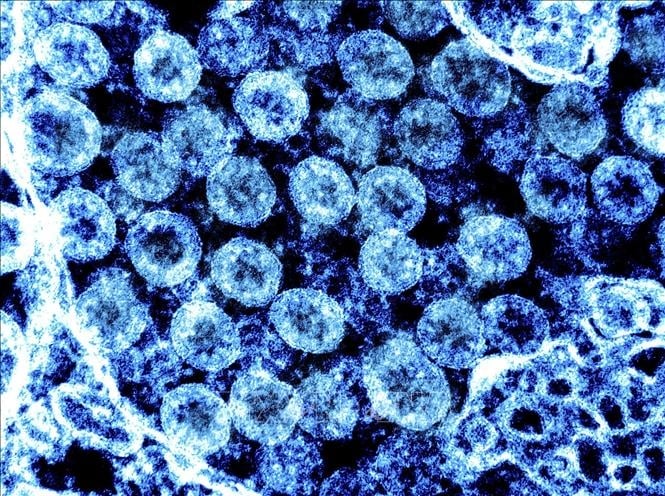
On December 20, the World Health Organization (WHO) announced that it had classified a new SARS-CoV-2 virus variant, JN.1, as "of concern".
JN.1 is derived from BA.2.86, a subtype of Omicron. This subtype has a distinct mutation in the spike protein (responsible for cell entry and infection) and mutations in other regions.
"Variations of concern" contain genetic traits that make the virus more contagious, evade the body's immune system, difficult to detect with testing, or cause more severe illness. Previously, XBB.1.5 and EG.5 were also classified by the WHO as "variations of concern".
According to the WHO, JN.1 does not pose a significant threat to the community. However, countries should be aware that COVID-19, along with other pathogens during the winter months, can create outbreaks of respiratory illnesses, impacting healthcare systems.
In the US, the new JN.1 subvariant is spreading rapidly, becoming a major contributor to the increase in new Covid-19 cases in the country.
On December 19, the US Centers for Disease Control and Prevention (CDC) reported that the JN.1 variant accounted for 21.4% of new infections nationwide and was the fastest-spreading variant. In the Northeast region alone, this variant accounted for over 30% of new infections. The CDC predicts that JN.1 will continue to increase in prevalence within the SARS-CoV-2 genome.
JN.1 was first detected in the US last September. By the end of October, JN.1 accounted for nearly 0.1% of cases. The CDC stated that the steady increase in JN.1 infections indicates that this variant is both highly contagious and evades the immune system.
In European countries such as Denmark, Spain, Belgium, France, and the Netherlands, there have been signs of an increase in the number of cases of the JN.1 variant and hospitalizations. This variant is also spreading rapidly in Australia, Asia, and Canada.
The CDC states that there is currently no evidence to suggest that the JN.1 variant poses an increased risk to public health compared to other circulating variants. However, officials and health experts are urging people to get the improved vaccine to avoid serious consequences from the virus. The CDC emphasizes that the improved vaccine will increase protection against JN.1 as well as other variants.
The number of respiratory illnesses is rising in the U.S. ahead of the holiday season. Hospitalizations related to Covid-19, influenza, and respiratory syncytial virus (RSV) are all at their highest levels since the beginning of the year. According to CDC data, more than 22,700 new Covid-19 cases required hospitalization in the week ending December 9th, the highest number since February 2023. Meanwhile, as of December 9th, only about 18% of adults had received the improved vaccine.
Minh Hoa (compiled from Lao Dong newspaper and Tin Tuc newspaper)
Source
























































































Comment (0)