

The US issues an ultimatum to TikTok.
On April 24 (local time), US President Joe Biden signed into law a foreign aid package that includes a bill requiring ByteDance to divest from TikTok within one year.
Thus, ByteDance has at least nine months to complete the transaction, although the president could extend it by three months if he sees progress.
Previously, on April 23, the US Senate completed a vote to pass a bill requiring parent company ByteDance to completely divest from the video -sharing app, or TikTok would be banned from operating in the US.

According to a U.S. Senate lobbying disclosure report, ByteDance lobbyists spent a record $2.68 million targeting federal and congressional officials in the first three months of 2024. Meanwhile, data from AdImpact shows TikTok spent over $4.5 million on a television and digital advertising campaign opposing a bill to ban the app.
TikTok spokesperson Alex Haurek said the company will take legal action. This could take a long time if the court delays enforcement while awaiting a resolution. Furthermore, it remains uncertain how China will react and whether it will allow ByteDance to sell TikTok.
Late on April 25, in a statement posted on the social media platform Toutiao, TikTok's parent company affirmed that it has no plans to sell the app, responding to The Information's report that ByteDance was considering selling TikTok in the US without its video recommendation algorithm.
According to The Washington Post, American tech companies, including Meta, Google, and to a lesser extent Snap and Amazon, are struggling to compete with TikTok. The first tech crackdown by the US Congress in years on TikTok is seen as a "gift" to American tech companies.
The US wants allies to tighten chip exports to China.
According to the Financial Times, the US is urging its allies in Europe and Asia to tighten export restrictions on chip-related technology and tools to China due to concerns about Huawei's development of advanced semiconductors.
The newspaper's sources revealed that Washington wants Japan, South Korea, and the Netherlands to use their existing export controls more forcefully, including preventing engineers from their countries from maintaining chip manufacturing equipment at advanced semiconductor factories in China.
Washington also wants its allies to make it more difficult for companies from third countries to supply China with goods containing technology manufactured in Japan, South Korea, or the Netherlands.
According to Kevin Wolf, an export control expert at the law firm Akin Gump, for controls to be more effective and create a level playing field for the U.S., allies need to prohibit domestic companies from providing advanced chip manufacturing support services in China.
The Financial Times notes that the US is increasingly concerned about the rapid development of advanced chips by Chinese companies, despite tighter US controls.
TSMC is about to produce advanced superchips.
At the North American Technology Symposium in California on April 24th, TSMC announced a series of new manufacturing and packaging processes for future chip designs, with the A16 technology asserted to serve the next generation of innovative AI.
Chips manufactured using this new technology will serve high-performance computing systems, with the potential to improve speed by 8-10% compared to the current N2P process, while reducing power consumption by 15-20%.
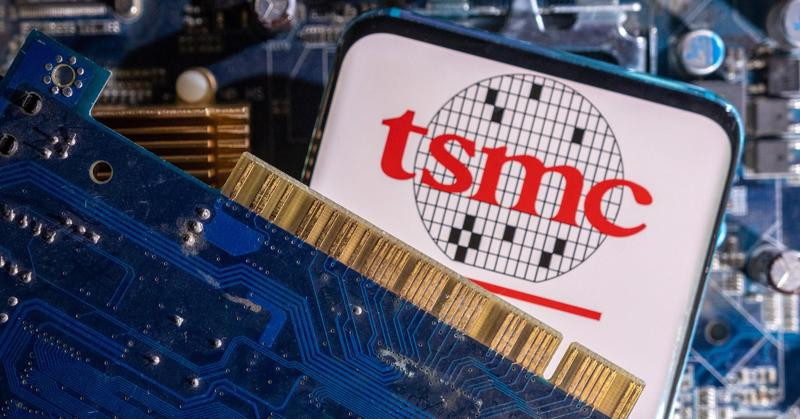
The A16 technology is expected to be incorporated into TSMC's 1.6 nm chip manufacturing process starting in 2026.
Previously, Intel also announced plans to add new processes such as Intel 3, 18A, and 14A, with the most advanced being 1.4 nm, aiming to surpass TSMC. According to Nikkei Asia, only TSMC, Intel, and Samsung are the companies that can continue to invest heavily in producing advanced transistors and pushing chip manufacturing to new heights.
Meta loses $200 billion in market capitalization.
Meta has just announced its first-quarter business results, with revenue increasing 27% to $36.46 billion and net income more than doubling to $12.37 billion compared to the same period in 2023.
Throughout Meta's online earnings call, Mark Zuckerberg spoke extensively about AI, the metaverse, virtual reality glasses, and the company's own operating system...
According to CNBC, investors didn't care about those things. Meta shares fell as much as 19% in trading on April 24, wiping out $200 billion in market capitalization, even as Meta reported better-than-expected revenue and profits in the first quarter.
In 2023, Facebook's stock nearly tripled, and despite a 19% drop on April 24th, it has already surged 40% in 2024, peaking at $527.34 earlier this month. After a "bruised" 2022, when the company lost two-thirds of its value, Zuckerberg appears to have regained Wall Street's confidence.
Meta's CEO reassured investors that if they were willing to "get on board" and commit for the long term, they would be rewarded accordingly.
Source

![[Photo] Prime Minister Pham Minh Chinh holds a phone call with the CEO of Russia's Rosatom Corporation.](/_next/image?url=https%3A%2F%2Fvphoto.vietnam.vn%2Fthumb%2F1200x675%2Fvietnam%2Fresource%2FIMAGE%2F2025%2F12%2F11%2F1765464552365_dsc-5295-jpg.webp&w=3840&q=75)
![[Photo] Closing Ceremony of the 10th Session of the 15th National Assembly](/_next/image?url=https%3A%2F%2Fvphoto.vietnam.vn%2Fthumb%2F1200x675%2Fvietnam%2Fresource%2FIMAGE%2F2025%2F12%2F11%2F1765448959967_image-1437-jpg.webp&w=3840&q=75)



















































![[OFFICIAL] MISA GROUP ANNOUNCES ITS PIONEERING BRAND POSITIONING IN BUILDING AGENTIC AI FOR BUSINESSES, HOUSEHOLDS, AND THE GOVERNMENT](https://vphoto.vietnam.vn/thumb/402x226/vietnam/resource/IMAGE/2025/12/11/1765444754256_agentic-ai_postfb-scaled.png)

















































Comment (0)