

In the draft Law on Personal Income Tax (amended), the proposal of the Ministry of Finance to increase the tax-free revenue for business households to 500 million VND/year is attracting great attention from the public, especially small traders, self-employed workers and those who are "supporting themselves" with a stall, a small restaurant, or a family store.
Reduce cost pressure for millions of businesses
Behind the figure of 500 million VND is not only a story of tax techniques, but also a policy choice. The State agrees to expand financial "breathing space" so that the household business sector can recover, stand firm and develop more transparently.
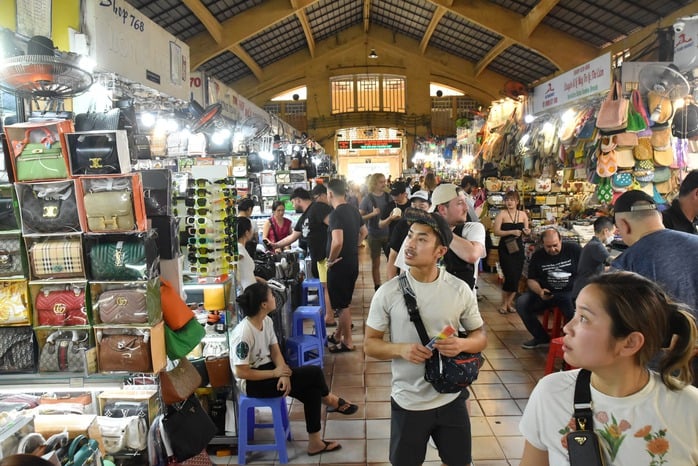
The Ministry of Finance has proposed raising the tax-free revenue threshold for business households.
From an economic expert's perspective, it can be seen that this new revenue threshold is based on both science and real life, if it is designed and implemented carefully and transparently.
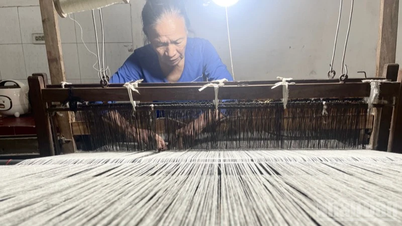
First of all, it is necessary to review the special role of household businesses in the Vietnamese economy and labor market. For many years, individual household businesses have been an important "buffer zone" whenever the economy is difficult and businesses have to cut staff. Many workers, after losing their jobs, have returned to open restaurants, sell online, drive service vehicles, open hair salons, repair cars, etc.
From there, they create jobs for themselves and sometimes even create jobs for relatives and neighbors. The contribution of the household business sector to GDP, job creation and budget revenue is very significant, although most of the activities are still small, scattered and not highly regulated.
However, because of their small scale and weak resilience, businesses are easily "suffocated" by cost pressure: rent, electricity, water, raw materials, transportation, interest...
In the context of escalating prices in recent years, a business household with a revenue of 100 - 200 million VND/year is not as "rich" as it appears, but is often only enough to cover expenses, and the food portion for workers in the household is very modest. If the tax is applied based on revenue with a threshold too low, the state will invisibly tax the minimum income used to reproduce labor and maintain family life.
In Vietnam, the revenue threshold of 100 million VND/year was set many years ago, when prices, costs and transaction scale were much lower than today. After the pandemic, the shock of prices and costs exposed the old threshold's backwardness, many households had revenue of over 100 million but profits after costs were very thin, even losing money in some years.
In that context, the proposal to raise the tax-free revenue threshold to 500 million VND/year is a late but necessary adjustment. If converted, the revenue of 500 million VND is equivalent to more than 40 million VND/month. With the common profit margin of industries such as grocery stores, cheap restaurants, and small retail services being only about 10-15%, the remaining actual income is often only equal to or slightly higher than a common urban salary.
In terms of practical impact, the VND500 million threshold, if passed, will directly reduce cost pressure for millions of small businesses. The exempted tax is not just a few million or tens of millions of VND per year, but is a very significant resource for households to: offset increased input costs, maintain jobs for themselves and their employees; reinvest in renovating stores, buying more equipment, improving service quality; and prepare for unexpected shocks such as illness, epidemics, and reduced orders.
Create a habit of keeping records and keeping input invoices.
At the macro level, the "relaxation" of the tax exemption threshold has an even more important goal of encouraging business households to register for legal operations and transparent revenue. When knowing that under 500 million VND, no tax is required, a large number of small traders, online sellers, and small shop owners will be less hesitant and willing to register their businesses, open accounts, and issue invoices.

Associate Professor, Dr. Ngo Tri Long, Economic Expert.
The State may not be able to collect taxes in the short term, but in return, it will have more complete data and a better foundation for long-term management and policy making. Not only that, the progressive point of this adjustment is that, for households with revenue from 500 million to 3 billion VND/year, the direction of the law amendment is to calculate tax based on income (revenue minus reasonable and valid expenses) instead of just applying lump-sum tax on revenue.
This motivates larger businesses to practice the habit of keeping records and keeping input and output invoices, which are very important steps on the path to transforming into an enterprise model.
For the policy to be truly fair and avoid exploitation, some concerns are completely justified. Firstly , compared to salaried employees, many opinions are concerned that business households with revenue up to 500 million VND/year but still exempt from tax will create a gap. It is important to emphasize that it is impossible to mechanically compare salary and business household revenue. Although salaried employees do not have high income, they are protected by labor contracts, social insurance, and health insurance. On the contrary, small business households have to bear all market risks, revenue can fluctuate from month to month, and there is no solid "safety net".
Second, the risk of dividing a business household to avoid the 500 million VND threshold is something that cannot be ignored. A business with a revenue of several billion VND can find a way to divide into many households under the names of relatives, each household "dividing" the revenue below the threshold to avoid tax.
To limit this situation, tax authorities need to promote the application of technology, connecting data from electronic invoices, bank accounts, business registrations, local data, etc. to identify high-risk cases, thereby conducting focused and key inspections and checks, instead of causing trouble and spreading out to small businesses.
From the perspective of workers and social justice, some directions for improving the policy can be proposed. Firstly , the threshold of 500 million VND should be designed with a mechanism for periodic review and adjustment according to price fluctuations and living costs, instead of being "fixed" and only adjusted once every several years.
Second , it might be worth looking at industry or region-specific adjustment factors, since the profit margins of a rural grocery store are very different from those of a high-end service in an urban center.
Third , along with the loosening of the threshold, the State needs to have a program to support small businesses in accessing basic accounting knowledge, cost management, and using simple recording applications on the phone. This will not only help them better manage their "income and expenditure", but also help the income tax policy on the excess portion to be able to operate in practice.
Finally , policy communication plays a key role. Newspapers associated with workers such as Nguoi Lao Dong need to help people understand clearly who is exempt, who must pay, how it is calculated, and what the procedures are; at the same time, honestly reflect the thoughts, concerns, and recommendations of small traders and business households so that authorities can continue to perfect policy designs, avoiding creating "blind spots" or unnecessary injustice.
Source: https://nld.com.vn/nang-nguong-chiu-thue-cua-ho-kinh-doanh-len-500-trieu-dong-chuyen-gia-noi-gi-196251202220220736.htm


![[Photo] 60th Anniversary of the Founding of the Vietnam Association of Photographic Artists](/_next/image?url=https%3A%2F%2Fvphoto.vietnam.vn%2Fthumb%2F1200x675%2Fvietnam%2Fresource%2FIMAGE%2F2025%2F12%2F05%2F1764935864512_a1-bnd-0841-9740-jpg.webp&w=3840&q=75)

![[Photo] National Assembly Chairman Tran Thanh Man attends the VinFuture 2025 Award Ceremony](/_next/image?url=https%3A%2F%2Fvphoto.vietnam.vn%2Fthumb%2F1200x675%2Fvietnam%2Fresource%2FIMAGE%2F2025%2F12%2F05%2F1764951162416_2628509768338816493-6995-jpg.webp&w=3840&q=75)





















































































Comment (0)