

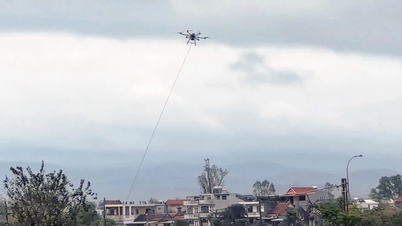
The device is the product of efforts to enhance remote detection and defense capabilities after Moscow witnessed an increasing number of UAV attacks from Kyiv.
According to TASS news agency, the SKVP was tested from 2021 to 2023. It was first showcased at the Army 2022 military exhibition, demonstrating that it is a radar developed to respond to ongoing conflicts and is considered to have export potential.
Increased drone attacks on Russian territory.
The latest attack involved two drones shot down near the village of Lukino, just outside Moscow, as they approached a warehouse belonging to a local military unit. The Associated Press reported that debris from a third drone was found about 20 kilometers (12 miles) away, with no damage or casualties reported.
The Russian Defense Ministry (RuMoD) said all three drones were shot down using "electronic jamming." Ukraine, which typically does not confirm attacks on Russian soil, has not commented on the incident.
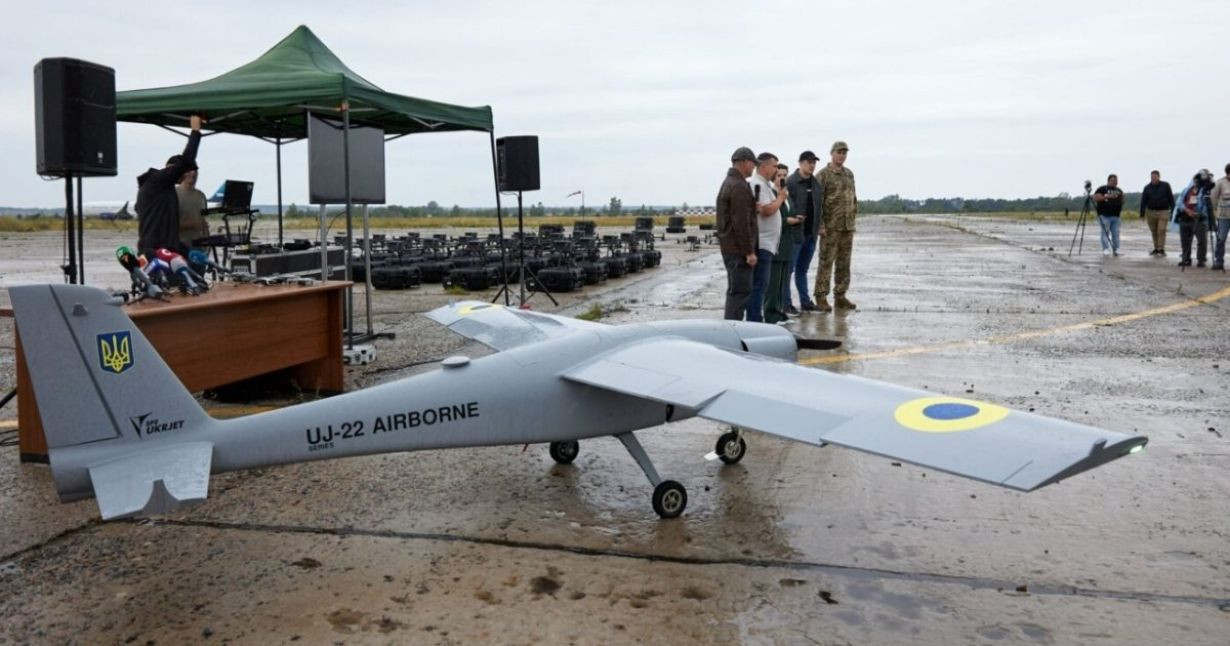
Previously, according to EurAsian Times, on May 30, Moscow and its surrounding suburbs were attacked by at least eight drones, but suffered only minor damage to some buildings. In early June, Ukrainian media circulated images of a new UAV, named Beaver, which was allegedly involved in these airstrikes.
The Russian Ministry of Defense (RuMoD) reported that all UAVs were destroyed, with three being "neutralized by electronic warfare," causing them to lose control and deviate from their intended targets. The Pantsir-S close-in air defense system shot down the remaining five.
Previously, from April 23 to 24, approximately 4-5 UAVs flew into the Belgorod area near Moscow but were shot down by electronic warfare or due to insufficient fuel. Subsequently, a Ukrainian-made UJ-22 drone was found upside down near Noginsk.
However, the most serious and alarming attack was the one targeting the Kremlin on May 3rd. Videos showed two drones crashing into the building before being shot down. While President Vladimir Putin was reportedly not inside the building at the time, Moscow called it an assassination attempt and blamed Ukraine.
Reduce pressure, increase defensive effectiveness.
The New York Times reported on May 25, citing US intelligence officials, that Ukrainian security agencies were likely behind the attack, and that the incident was more intended to demonstrate the ability to bypass Russian air defenses than as a genuine assassination attempt.
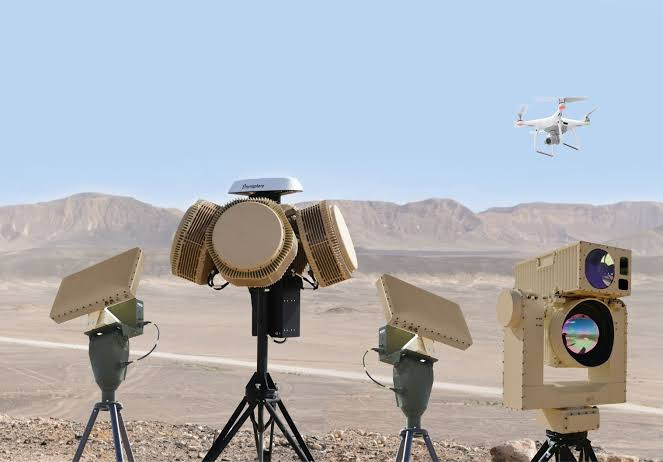
According to TASS, the SKVP is capable of detecting flying objects at ranges from 400 m to 80 km. For example, small aircraft can be detected by the radar at a distance of 30 km, while medium-sized drones like the Orlan-10 can be detected at 18 km, and smaller UAVs at a distance of 7 km. The "ideal" speed for optimal detection is 270 m/s.
The device will help alleviate pressure on military radars and EW systems currently protecting Moscow's airspace, while also thwarting Kyiv's plan to use UAV attacks to pressure Russia into withdrawing air defense forces from the front lines protecting key cities.
The full SKVP system consists of 24 units forming a network. Each unit is equipped with phased-array radar antennas mounted on tripods, mobile vehicles, or the rooftops of tall buildings. It can simultaneously track 20 aircraft, including small drones, with the ability to classify, determine altitude, and distance to the target. This means the system is capable of tracking swarms of UAVs.
Western military observers assume that the SKVP is designed to easily integrate with short-range air defense systems such as Pantsir-S and combined artillery-missile systems to protect Moscow.
(According to EurAsian Times)
Source






















![[Photo] Prime Minister Pham Minh Chinh holds a phone call with the CEO of Russia's Rosatom Corporation.](/_next/image?url=https%3A%2F%2Fvphoto.vietnam.vn%2Fthumb%2F1200x675%2Fvietnam%2Fresource%2FIMAGE%2F2025%2F12%2F11%2F1765464552365_dsc-5295-jpg.webp&w=3840&q=75)

















































Comment (0)