

As Vietnam's first LNG power plant project, Nhon Trach 3&4 clearly demonstrates the Group's energy transformation orientation, marking a shift from the traditional oil and gas model to a more integrated and modern development of industrial and energy sectors. According to the National Power Development Plan VIII, the country plans to develop 13 LNG power plant projects, and Nhon Trach 3&4 is the pioneering project realizing this orientation with systematic, on-schedule steps and a leading role.
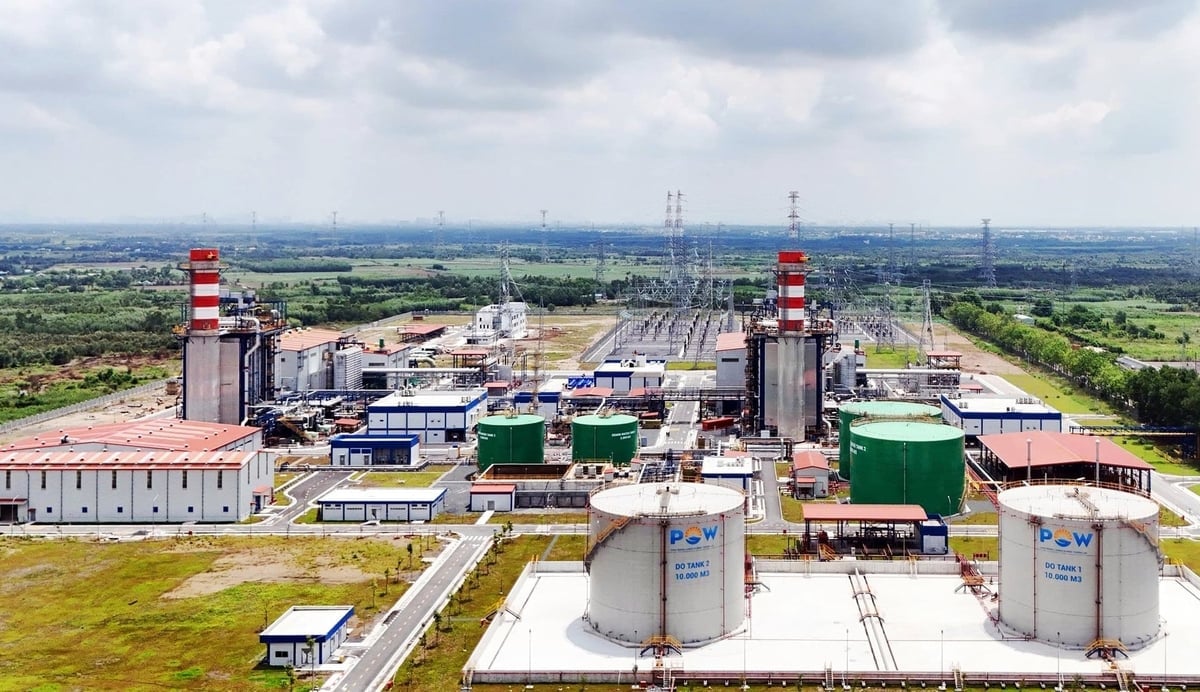
The Nhon Trach 3&4 LNG power plant acts as a crucial "pressure regulator" for the power system, with its rapid start-up capability, suitable for base or peak load operation depending on dispatching requirements. Photo: PV.
The pioneering role of Nhon Trach 3&4 is even more significant when considered in the context of the rapidly declining domestic natural gas reserves after many years of exploitation. Meanwhile, gas-fired power plants increasingly require a stable and long-term gas supply to maintain operation. When domestic gas supplies are no longer sufficient to meet demand, Vietnam is forced to consider using imported LNG.
This is not only a solution to compensate for the shortage, but also opens up more proactive opportunities thanks to the booming global LNG market, abundant and flexible supply, and the advantage of diverse partners. At the same time, importing LNG from major markets such as the United States also facilitates trade balance and the development of Vietnam's export industries.
But the choice of LNG has a much larger significance in creating a new component in Vietnam's energy security architecture. 2023 was a memorable lesson when electricity shortages occurred in many areas due to a sharp decline in hydropower during the dry season and the fluctuating nature of renewable energy. In the three-pillar energy structure, wind and solar power cannot guarantee stability, while hydropower is heavily affected by climate. It is in this context that LNG power becomes a crucial balancing factor for the national power system.
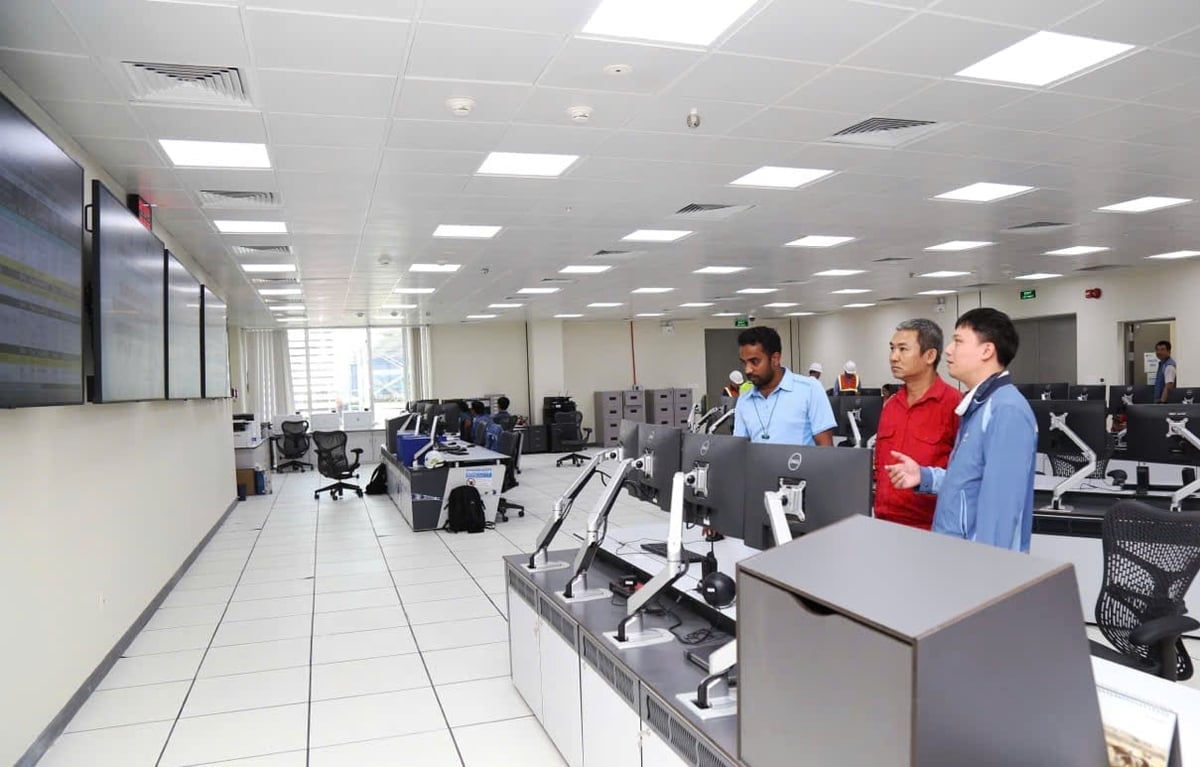
Experts inspect the system before the official inauguration of Nhon Trach 3&4. Photo: PV.
With their flexible operation, quick start-up, and suitability for base or peak operation depending on dispatching requirements, LNG power plants act as a "technical anchor" helping the power system maintain frequency and voltage and respond promptly when other energy sources decline. Therefore, Nhon Trach 3&4, once operational, will play a crucial role as a "pressure regulator" for the power system; especially in the context of renewable energy accounting for a large proportion, reaching approximately 30,000 MW out of the current installed capacity of about 93,000 MW. Only with LNG power plants with modern technology and high stability like Nhon Trach 3&4 can we bring more renewable energy sources into the grid without worrying about system imbalance. This reduces the risk of power shortages, strengthens stability in production and business, and builds confidence in the national economy and investment environment.
Given the projected surge in Vietnam's electricity demand in the coming years, the emergence of modern LNG power plants like Nhon Trach 3&4 is becoming increasingly necessary. This is a crucial condition for Vietnam to maintain its economic growth without sacrificing the environment, aligning with international commitments on climate change and the "zero net emissions" roadmap.
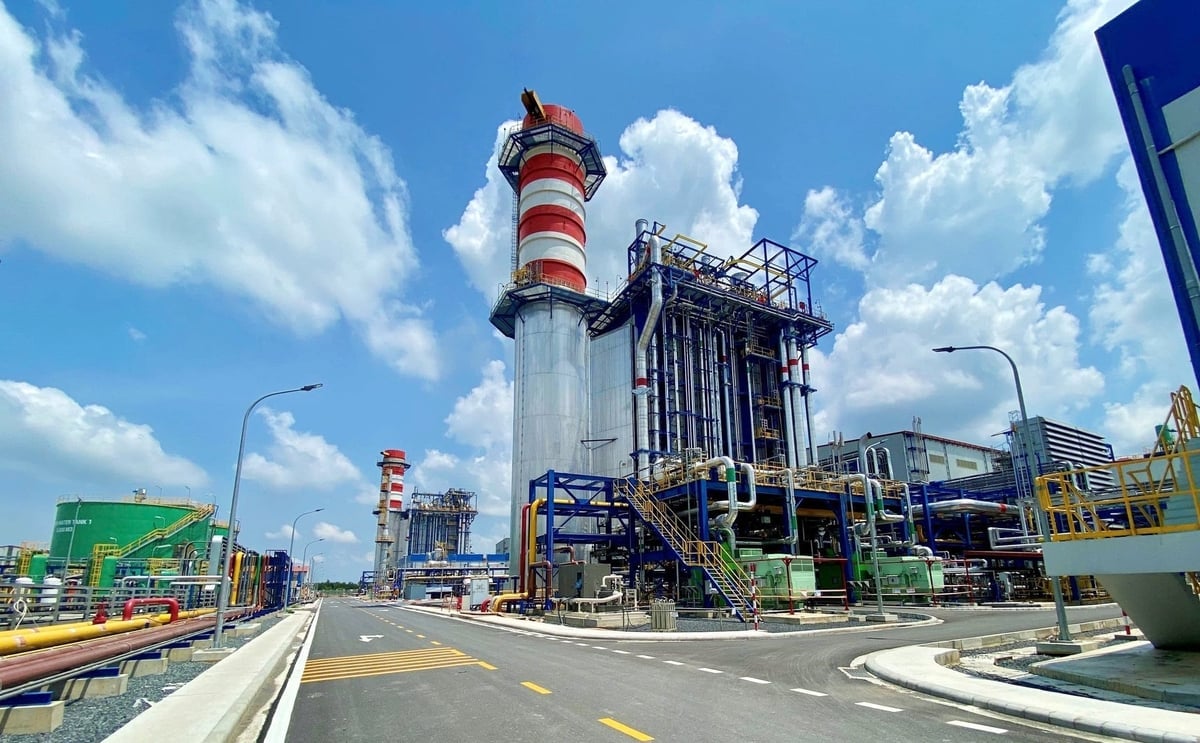
According to calculations, the emissions from Nhon Trach 3&4 are only about 30% of those from coal-fired power plants and 50% lower than the current regulations. Photo: PV.
Therefore, the significance of Nhon Trach 3&4 is clearly recognized in the journey to reduce emissions, aiming for net emissions of "zero" by 2050. LNG is a cleaner fuel than other fossil fuels, with much lower greenhouse gas emissions than coal. Calculations show that the emissions from Nhon Trach 3&4 are only about 30% of those from coal-fired power plants and 50% lower than the current regulatory threshold.
This is a significant improvement, making Nhon Trach 3&4 an ideal intermediate power source, not only reducing emissions at the plant itself but also supporting the absorption of more renewable energy into the system, thanks to its ability to "buffer" and quickly supplement capacity when solar and wind power declines. As more renewable energy is fed into the grid, the total emissions of the entire system also decrease, and Nhon Trach 3&4 is one of the factors creating that balance.
Upon completion and commissioning, Nhon Trach 3&4 also marks the first time Petrovietnam 's LNG industrial chain has been fully integrated, from import, storage, regasification to power generation. This is a significant step that helps the Group affirm its capacity to implement modern energy projects, while also paving the way for the development of subsequent LNG projects in line with the orientation of the Power Development Plan VIII. Therefore, the emergence of Nhon Trach 3&4 not only creates a new power source but also establishes a strategic component of national energy security, contributing to enhancing the self-reliance and sustainability of Vietnam's energy system in the long term.
Source: https://nongnghiepmoitruong.vn/nhon-trach-34-nguon-dien-lng-tien-phong-dam-bao-an-ninh-nang-luong-quoc-gia-d788941.html


![[Photo] Prime Minister Pham Minh Chinh holds a phone call with the CEO of Russia's Rosatom Corporation.](/_next/image?url=https%3A%2F%2Fvphoto.vietnam.vn%2Fthumb%2F1200x675%2Fvietnam%2Fresource%2FIMAGE%2F2025%2F12%2F11%2F1765464552365_dsc-5295-jpg.webp&w=3840&q=75)


































































Comment (0)