

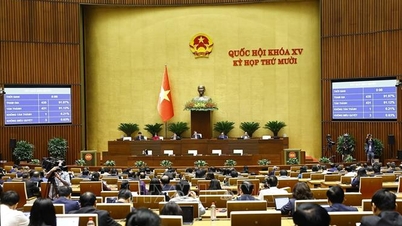
The Land Law is a major draft law, of special significance and importance in the political , economic, social, defense, security, and environmental protection life of the country; it has a profound impact on all levels of the population and the business community; at the same time, it is also a very difficult and complex draft law.
The amended Land Law contains hundreds of new provisions, which can be summarized into five groups: regulations aimed at better protecting the rights and interests of land users; regulations on land access for citizens and businesses; regulations on improving land use efficiency; regulations on land finance; and regulations on improving the effectiveness of state management of land use.
Accordingly, the 2024 Land Law specifically lists the cases in which the State reclaims land, diversifies compensation options, and provides detailed regulations on granting land use rights certificates for land without documents before July 1, 2014...
Relaxing regulations for issuing land ownership certificates for land without documentation.
According to the amended Land Law, land owned by households and individuals without land use documents before July 1, 2014, that is not subject to disputes and does not violate land laws, will be granted a land use certificate (red book).
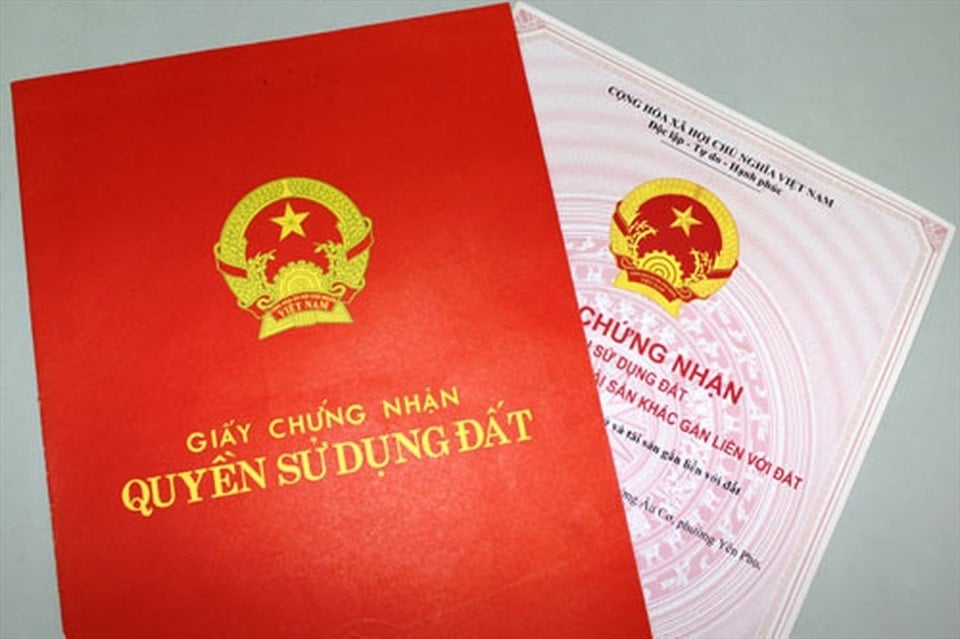
The amended Land Law expands the provisions for issuing land ownership certificates for land without documentation.
The law divides the cases eligible for land use certificates for land without documents into the following groups: Firstly, households and individuals who used the land before December 18, 1980, and whose land use is now confirmed by the People's Committee of the commune where the land is located as being free from disputes. Secondly, households and individuals who used the land from December 18, 1980, to before October 15, 1993, and whose land use is now confirmed by the People's Committee of the commune where the land is located as being free from disputes. Thirdly, households and individuals who used the land from October 15, 1993, to before July 1, 2014, and whose land use is now confirmed by the People's Committee of the commune where the land is located as being free from disputes.
In the above cases, the specific regulations regarding the issuance of land ownership certificates are implemented differently.
Reforming land use planning and plans.
Regarding land use planning, the regulations of the amended Land Law have been improved to innovate the process, content, and methods of land use planning. This includes increasing transparency and public participation in land use planning through the organization of consultations.
In addition, the Law supplements and refines regulations on the exercise of land users' rights in planned areas. Accordingly, if a land use plan has been announced but there is no annual land use plan at the district level, land users may continue to use the land and exercise their land use rights.
Innovations in land use planning regulations are expected to lay the foundation for utilizing land resources as an input for socio-economic development, enhancing the effectiveness and efficiency of land management and use, and creating momentum to transform Vietnam into a high-income developed country, as envisioned by the Party and the State.
Specific regulations regarding land expropriation cases.
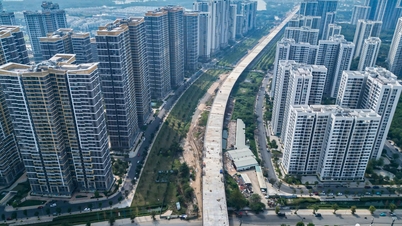
Regarding land acquisition, compensation, and resettlement support, the amended Land Law has specifically stipulated the cases in which the State acquires land for socio-economic development in the national and public interest.
The projects for which the State will reclaim land in this case must be: construction of public works; construction of headquarters of state agencies, public service facilities, and other cases.
With 31 specific cases of land reclamation by the State for socio-economic development in the national and public interest, the law has basically covered all aspects. In addition, the law also specifically regulates the procedures for land reclamation for socio-economic development in the national and public interest with many new points, ensuring democracy, objectivity, fairness, openness, transparency, timeliness, and compliance with the law; for the common good of the community and for the sustainable, civilized, and modern development of the community and the locality…
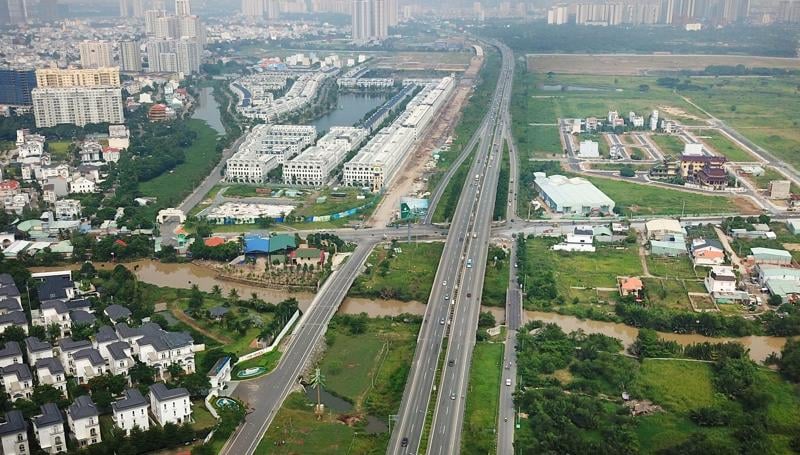
The State reclaimed land in 31 cases for socio-economic development in the national and public interest.
Land price lists are updated annually.
The amended Land Law stipulates the issuance of annual land price lists to ensure they closely reflect actual market developments and to broaden the scope of application of land price lists.
The amended law also stipulates that the Provincial People's Committee is responsible for submitting to the Provincial People's Council for decision on adjusting, amending, and supplementing the land price list to be published and applied from January 1st of the following year, or adjusting, amending, and supplementing it within the year, and assigns the Government to provide detailed regulations to ensure that the land price list will be updated to reflect reality.
Cases of land allocation without auction or bidding.
Regarding land allocation, land leasing, and permission for land use conversion, the amended Land Law specifically stipulates cases of land allocation without auction or bidding, and cases requiring auction of land use rights or bidding to select investors for projects using land. It also specifies cases of land leasing with a one-time payment for the entire lease period, in accordance with the spirit of Resolution No. 18 of the Central Committee.
The law specifies the conditions and authority for permitting land use conversion, decentralizing the entire authority to approve the conversion of land use from rice cultivation land, protective forest land, special-use forest land, and natural production forest land to the Provincial People's Council.
PV
Source

































































































Comment (0)