

 |
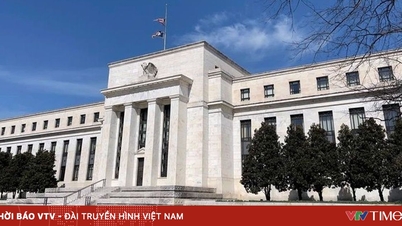
| The US public debt has risen to an all-time high. (Source: Getty Images) |
On January 2nd, the US Treasury Department released a report on the financial situation, including the issue of public debt – a source of tension in Washington. Specifically, the total federal government debt exceeded $34 trillion. With this debt, each citizen has to bear approximately $100,000 and each household nearly $260,000.
Maya MacGuineas, chair of the Committee on Responsible Federal Budgeting (CRFB - an independent, non-profit financial watchdog), called the record figure "a truly sad achievement."
She said, "Although our debt levels are dangerous for both the economy and national security, America cannot stop borrowing."
Another cause for concern is the rising national debt at a time when the economy is relatively strong and unemployment is low. This is seen as a good time to curb the federal deficit.
In June 2023, the Congressional Budget Office estimated that public debt would reach a record high, equivalent to 181% of the U.S. Gross Domestic Product (GDP) by 2053.
The International Monetary Fund (IMF) estimates that China's government debt as of the end of last year was around $14 trillion, less than half of the US public debt. In terms of percentage of GDP, the US public debt stands at over 123%, while China's figure is only 83%.
"The US public debt is equivalent to the combined debt of five countries: China, Japan, the UK, France, and Italy," experts estimate.
The U.S. national debt has skyrocketed in recent years. Republicans argue that federal spending programs supported by President Joe Biden's administration are too expensive. Meanwhile, Democrats argue that the Republican-backed tax cuts of 2017 have reduced revenue.
Covid-19 relief packages have also contributed to the increase in debt. The government borrowed heavily under former President Donald Trump and current President Joe Biden to stabilize the economy and support recovery. But the recovery, coupled with rising inflation, has pushed interest rates higher and made it more expensive for the government to repay its debt.
White House spokesman Michael Kikukawa said the rising debt “was driven primarily by repeated Republican gift-giving to large corporations and the wealthy,” leading to social security cuts that harmed the American people.
According to ABC News, the current national debt level does not appear to be a burden on the US economy because investors remain willing to lend money to the federal government. These loans allow Washington to continue spending without having to raise taxes.
Nevertheless, the Associated Press noted that the path of debt in the coming decades could endanger national security and major programs of the world's largest economy. For example, it could impact social security and Medicare – which have become prominent drivers in government spending forecasts.
Countries that are creditors of the United States – such as China, Japan, South Korea, and European nations – have also reduced their holdings of U.S. Treasury bonds.
Michael Peterson, CEO of the Peterson Foundation, stated: “In the future, debt will continue to skyrocket as the U.S. Treasury is projected to borrow nearly $1 trillion more by the end of March. Adding trillions of dollars in debt year after year would be a red flag for any policymakers concerned about the future of the world’s largest economy.”
Currently, both the Democratic and Republican parties are calling for debt reduction. However, neither party has yet offered a suitable method for achieving this.
For example, the Biden administration and the Democratic Party are pushing for tax increases on the wealthy and corporations to reduce the budget deficit, in addition to funding their domestic agenda.
Meanwhile, Republican lawmakers have called for massive cuts to the government's non-defense programs and the repeal of clean energy credits and tax spending passed in the Inflation Reduction Act.
Source









































































































Comment (0)