

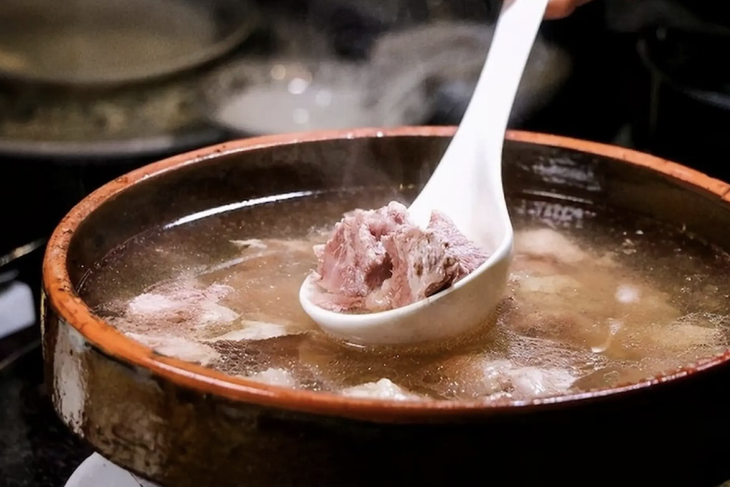
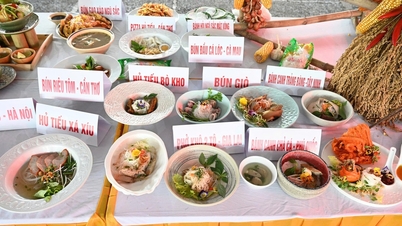
Bone broth is a familiar dish in many Vietnamese families - Illustration photo
Is bone broth good for you?
Sharing her thoughts on this issue, Dr. Le Thi Huong Giang, Head of the Nutrition and Dietetics Department at Hospital 19-8, said that many people believe bone broth is beneficial for bones, joints, and overall health, and some even spread the information that this type of broth contains collagen that helps improve skin.
However, from a clinical nutritional science perspective, improper use of bone broth can lead to misunderstandings, nutritional imbalances, and even affect patients with underlying conditions such as gout, cardiovascular disease, kidney disease, osteoporosis, and high cholesterol.
Dr. Giang cited reputable studies published in Mayo Clinic, Harvard Health, and USDA, which show that:
The calcium, magnesium, zinc, and other mineral content in bone broth is very low. Typically, there are only about 5-10mg of calcium in a 250ml bowl of bone broth. Meanwhile, the daily calcium requirement for adults is around 1,000-1,200mg, depending on the individual.
The collagen or gelatin content is low and unstable when ingested. Collagen from food is broken down into smaller amino acids, rather than being directly converted into collagen under the skin or in joint cartilage as advertised.
Saturated fats and cholesterol from bone marrow fat can be high, especially if simmered for a long time with beef bones. This can negatively affect cardiovascular health, lead to fatty liver disease, and cause high blood lipid levels if consumed daily.
Purines in bone marrow can increase blood uric acid levels, posing a risk of gout if consumed excessively.
"Therefore, harmful misconceptions are spreading, such as the idea that bone broth is richer in calcium than milk. This is completely false information. Cow's milk or formula contains 240-300mg of calcium per cup. This is equivalent to 30-60 times more calcium than bone broth."
Drinking bone broth to supplement collagen is also incorrect. You can get collagen more effectively from quality animal protein and vitamin C from fruits and vegetables.
In addition, many parents give their children bone broth instead of meat. This practice is very dangerous for children's health. Is bone broth good for babies? Children need protein, iron, and zinc from meat, fish, eggs, and milk, and bone broth cannot replace these nutrients," Dr. Giang clarified.
What is the correct way to use bone broth?
According to Dr. Giang, bone broth should only be used as a side dish, adding natural sweetness to soups/stews. It should not be used as a substitute for water or as a main dish. Here are some things to keep in mind when using bone broth:
When simmering bones, the maximum cooking time should be 90-120 minutes. During simmering, remove the layer of fat that forms on top. Avoid simmering for too long, as this increases purine levels and heavy metals such as lead and cadmium from the animal bones that accumulate over time.
It's best to combine broth with vegetables, legumes, and lean meat to increase micronutrient diversity and avoid eating only bone broth as a monotonous meal.
Individuals with gout, high cholesterol, kidney disease, or metabolic disorders should not use this product regularly and should consult a nutritionist.
For older adults, calcium and other nutrients should be supplemented from: low-fat milk/yogurt; small fish that can be eaten whole, such as anchovies and gobies; dark green leafy vegetables such as kale and spinach; legumes, nuts, and proper sun exposure, or supplements as prescribed.
"Bone broth isn't bad, but it's not a food that should be consumed daily to supplement collagen or calcium as rumored. Proper nutrition is about variety, balance, and suitability for age, physical condition, and health issues; it shouldn't be simplified to just one dish," Dr. Giang emphasized.
Source: https://tuoitre.vn/nuoc-ham-xuong-co-giup-bo-xuong-khop-bo-sung-collagen-dep-da-20251210193716176.htm


























![[Video] The craft of making Dong Ho folk paintings has been inscribed by UNESCO on the List of Crafts in Need of Urgent Safeguarding.](https://vphoto.vietnam.vn/thumb/402x226/vietnam/resource/IMAGE/2025/12/10/1765350246533_tranh-dong-ho-734-jpg.webp)




























































Comment (0)