

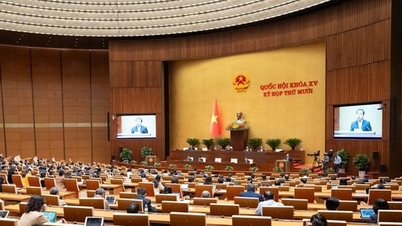
Continuing the program of the 10th Session of the 15th National Assembly, under the chairmanship of National Assembly Chairman Tran Thanh Man and the direction of National Assembly Vice Chairman Vu Hong Thanh, the National Assembly devoted the discussion session in the hall to discuss the investment policy of the National Target Program on new rural construction, sustainable poverty reduction and socio -economic development in ethnic minority and mountainous areas until 2035.
Many delegates said that merging the three current National Target Programs into a unified program would help concentrate resources, overcome fragmentation and be consistent with the two-tier local government model. This would also be an important step to promote new rural development in a modern, substantial, sustainable and climate-resilient direction.
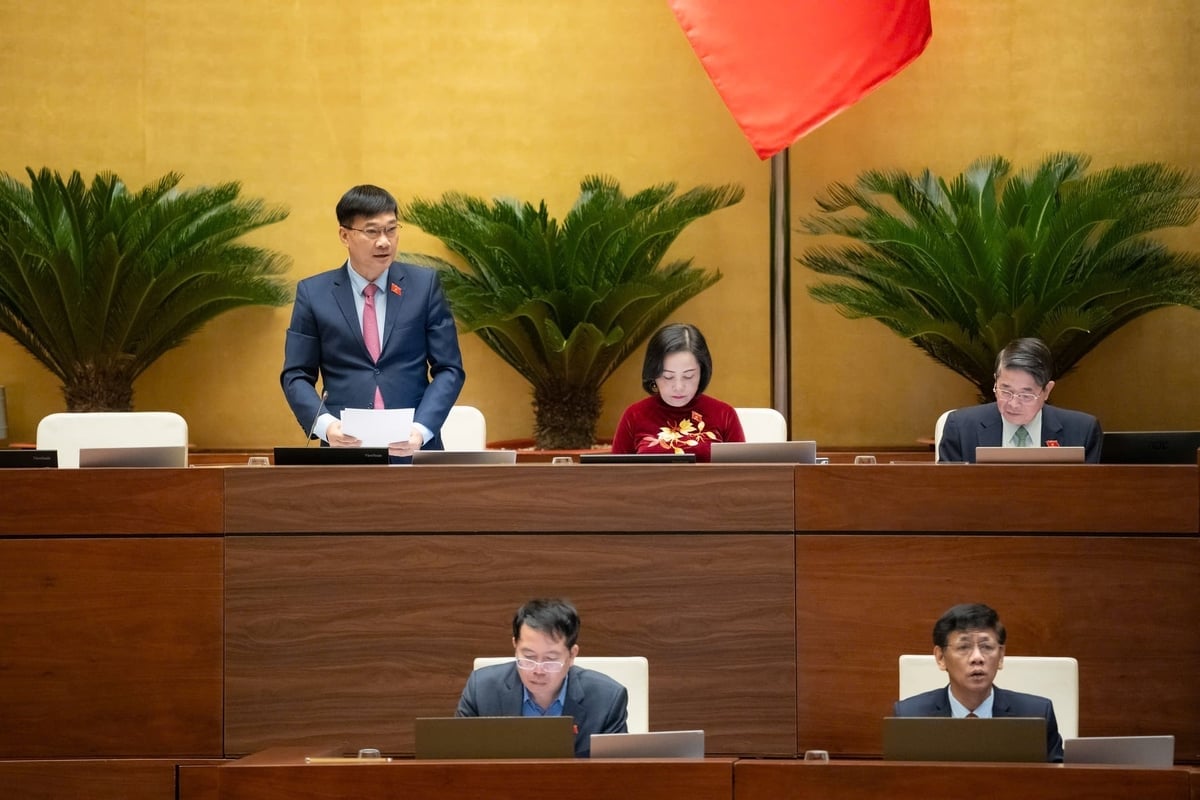
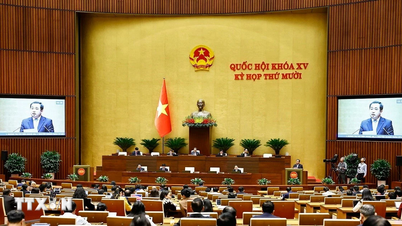
Vice Chairman of the National Assembly Vu Hong Thanh chaired the meeting. Photo: Quochoi.vn.
For mountainous provinces and ethnic minority areas, the program has special significance as it acts as a leading resource to develop essential infrastructure, create livelihoods, sustainably reduce poverty and narrow the development gap with more favorable areas, while contributing to maintaining security, defense and stability in border areas.
"Local decision, local action, local responsibility"
Discussing the management model, delegate Ha Sy Dong ( Quang Tri ) said that the problems of the 2021-2025 period have been fully identified: complicated procedures, many levels, slow guidance and unclear decentralization. He suggested that this draft Resolution must completely remove the above bottlenecks.
The delegate emphasized: the program's host agency needs to unify a focal point; the second component should be assigned to the Ministry of Ethnic Minorities and Mountainous Areas, the agency specializing in ethnic minority affairs, instead of assigning a common focal point which can easily lead to overlapping management.
Mr. Dong proposed stronger decentralization to localities in selecting project portfolios, especially small projects with simple techniques; at the same time, simplifying the investment process, clearly defining personal responsibilities, heads and delay handling mechanisms. "There needs to be a legal safety zone for officials to dare to think and dare to do," the delegate emphasized.
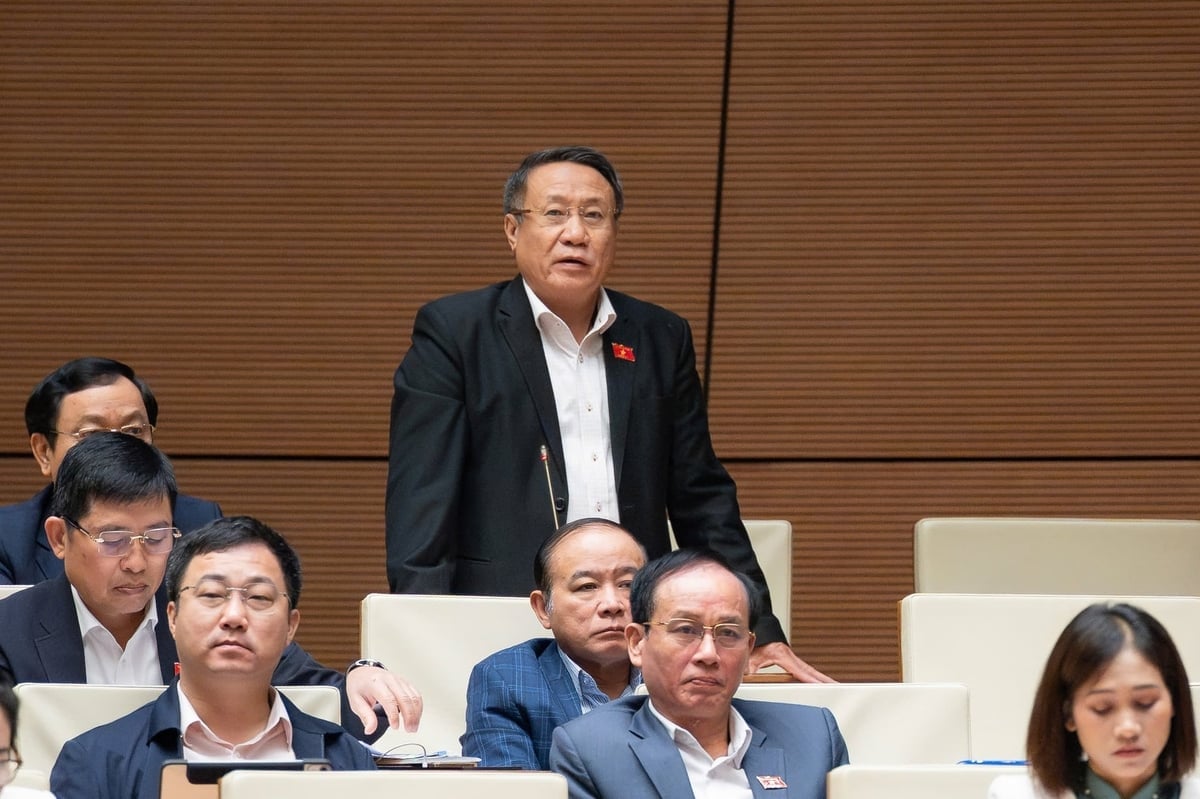
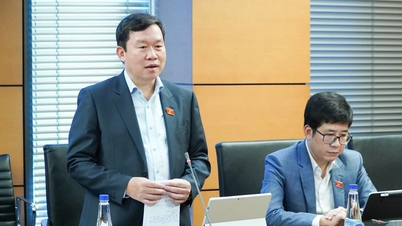
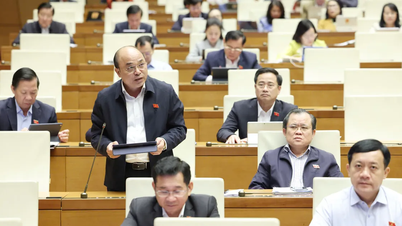
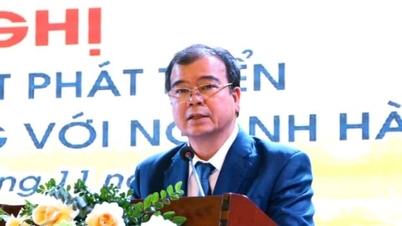
Delegate Ha Sy Dong (Quang Tri). Photo: Quochoi.vn.
Sharing the same view, delegate Ha Sy Huan (Thai Nguyen) highly appreciated the model of "Central management in general, locality decides on implementation", but said that it is necessary to clarify the decentralization mechanism to avoid cumbersome procedures like in the previous period.
According to him, the decision to allocate resources to the provincial People's Council still takes a lot of time and creates passivity at the grassroots level. Meanwhile, the commune government, which is the level directly managing the area, has a clear understanding of the subjects, culture, terrain, and livelihoods, and needs to be given more power.
He proposed strong decentralization to the commune level to decide on the organization and implementation of the program; the province plays the role of guiding, inspecting, supervising and providing technical support. Localities need to decide on the list, plan and model in order of priority for each stage, and at the same time integrate and coordinate funding sources to avoid duplication and dispersion.
Worry about natural disasters, propose special mechanisms
Concerned about the increasingly severe natural disasters, delegate Ho Thi Minh (Quang Tri) said that the 2026-2035 program needs to clarify sub-projects related to resettlement, sedentarization, livelihoods and disaster response in ethnic minority and vulnerable areas.
She proposed that the Government study a special mechanism allowing local People's Committee Chairmen to decide on urgent issues to overcome the consequences of natural disasters without having to wait for procedures under the Law on Public Investment as at present.
Delegate Vu Xuan Hung (Thanh Hoa) emphasized the need for a close coordination mechanism between ministries, branches and local authorities so that the program can operate smoothly and effectively.
From the reality of projects implemented in sensitive areas of national defense and security, ethnic and religious areas, he warned that if coordination is not good, it will create gaps for bad forces to exploit and incite.
Also from Thanh Hoa, delegate Mai Van Hai said that the program management and operation mechanism is the key to overcoming previous shortcomings. He proposed to clearly stipulate the coordination principles between ministries, branches and localities; at the same time, assign the Government to specify the management mechanism in detail.
He agreed to assign the Ministry of Agriculture and Environment as the governing body for the entire program; for the second component, related to socio-economic development in ethnic minority and mountainous areas, the Committee for Ethnic Minorities and Mountainous Areas should be assigned to preside. The commune level needs to have clearly defined implementation responsibilities in the context of a two-level local government organization.
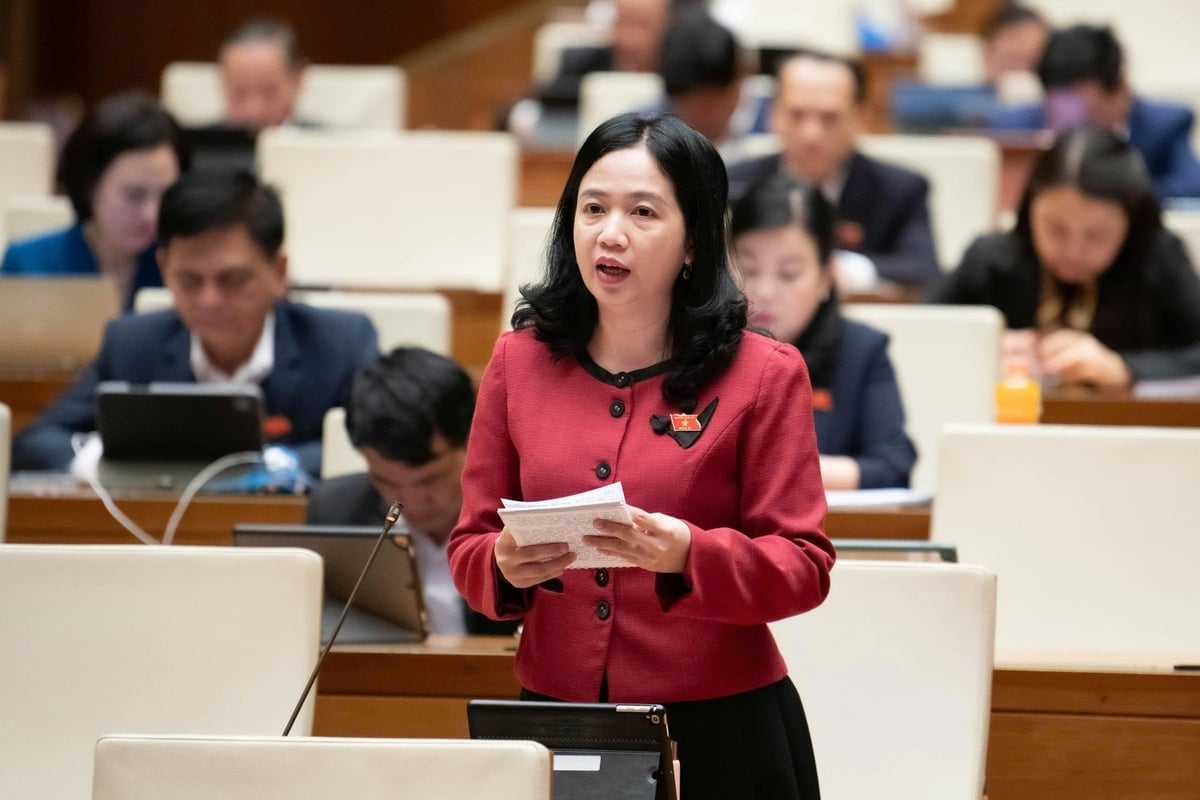
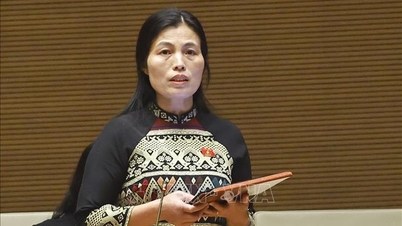
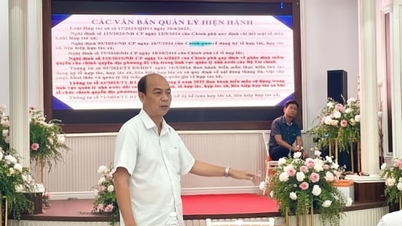
Delegate Dieu Huynh Sang (Dong Nai) speaks. Photo: Quochoi.vn.
Meanwhile, delegate Dieu Huynh Sang (Dong Nai) suggested that the drafting committee review to avoid duplication between components; at the same time clearly define the responsibilities of the presiding agency and the coordinating agency.
According to the delegate, the National Target Program for Socio-Economic Development of Ethnic Minority Areas has integrated 118 ethnic policies, so it is even more necessary to specifically define the responsibilities of the presiding agency according to the practical situation of each locality. In addition, there should be a monitoring mechanism to control risks and prevent the situation of scattered investment.
Source: https://nongnghiepmoitruong.vn/phan-quyen-co-so-trong-thuc-hien-chuong-trinh-muc-tieu-quoc-gia-2026-2035-d787976.html


![[Photo] Cat Ba - Green island paradise](/_next/image?url=https%3A%2F%2Fvphoto.vietnam.vn%2Fthumb%2F1200x675%2Fvietnam%2Fresource%2FIMAGE%2F2025%2F12%2F04%2F1764821844074_ndo_br_1-dcbthienduongxanh638-jpg.webp&w=3840&q=75)


























































Comment (0)