

On December 5, the Ministry of Agriculture and Environment chaired the workshop "Promoting science and technology to serve sustainable agricultural development in the Northern Midlands and Mountains in the new era" at the Northern Mountainous Agriculture and Forestry Science Institute (Phu Ho commune, Phu Tho province).
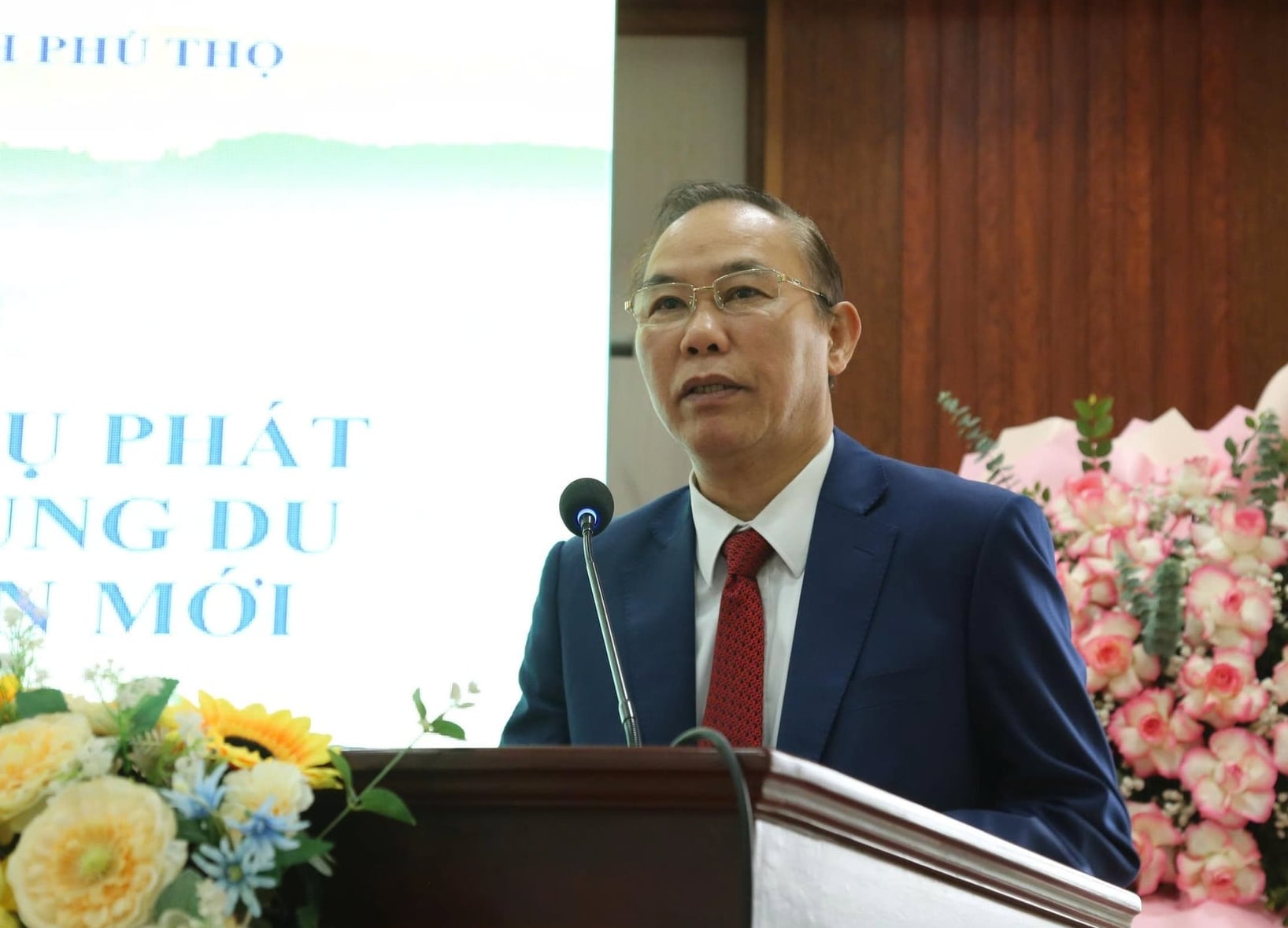
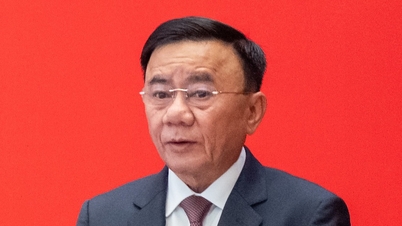
Deputy Minister of Agriculture and Environment Phung Duc Tien said that science and technology play a core role in ensuring food security, increasing forest cover, developing aquaculture and supporting natural disaster prevention. Photo: Hong Duc.
The workshop brought together scientists , businesses and representatives from 14 provinces in the region. The event is considered a strategic forum to identify bottlenecks and propose breakthrough solutions to bring northern mountainous agriculture into a new stage of development, based on science, technology and digital transformation.
Golden time of the farming industry
In the context of the country's agriculture entering a new restructuring phase, the Northern Midlands and Mountains are facing the need for strong transformation to effectively exploit its potential. In which, the most important driving force today is science and technology, especially when climate change and market demands set unprecedented standards.
In his opening speech, Deputy Minister of Agriculture and Environment Phung Duc Tien acknowledged the outstanding achievements of the Northern Mountainous Agriculture and Forestry Science Institute over the past 20 years, from the creation of 36 new plant varieties, 14 ministerial-level technical advances to more than 50 technological processes that have been transferred into practice. These results, he said, are an important foundation for addressing production development requirements in the new context.
The Deputy Minister assessed that despite possessing great advantages, Northern mountainous agriculture is still fragmented and its efficiency is not commensurate with its natural potential and human resources. In the era of digital transformation, recently issued policies such as Resolution 57-NQ/TW on scientific and technological breakthroughs and Conclusion 219-KL/TW on continuing to implement Resolution 19-NQ/TW are opening up great opportunities to promote multi-sectoral cooperation, restructure production in a market-friendly direction and develop a multi-value agricultural ecosystem.
“This is a golden time for the region’s crop production sector to make a breakthrough, especially when the connection between businesses, cooperatives, farmers and institutes is strengthened,” Deputy Minister Tien emphasized, suggesting focusing on prioritizing research related to climate change, digital transformation and product commercialization; at the same time, reviewing standards and regulations to meet new market requirements.
Vice Chairman of Phu Tho Provincial People's Committee Dinh Cong Su said that the province currently has a population of more than 4 million people, a natural area of 9,361 km², of which nearly 83% is agricultural land. The differentiation of terrain creates many different ecological sub-regions, allowing the development of a diverse cropping system. In recent years, Phu Tho agriculture has formed a large-scale production platform, linked raw material areas, and converted to organic and circular agricultural models. Many key products such as Doan Hung grapefruit, Phu Tho tea, Cao Phong oranges, or Hoa Binh purple sugarcane have contributed to positioning the brand of safe and friendly agricultural products. However, the region's production still faces many challenges, from small scale, limited infrastructure to climate change and increasing demands of domestic and international markets.
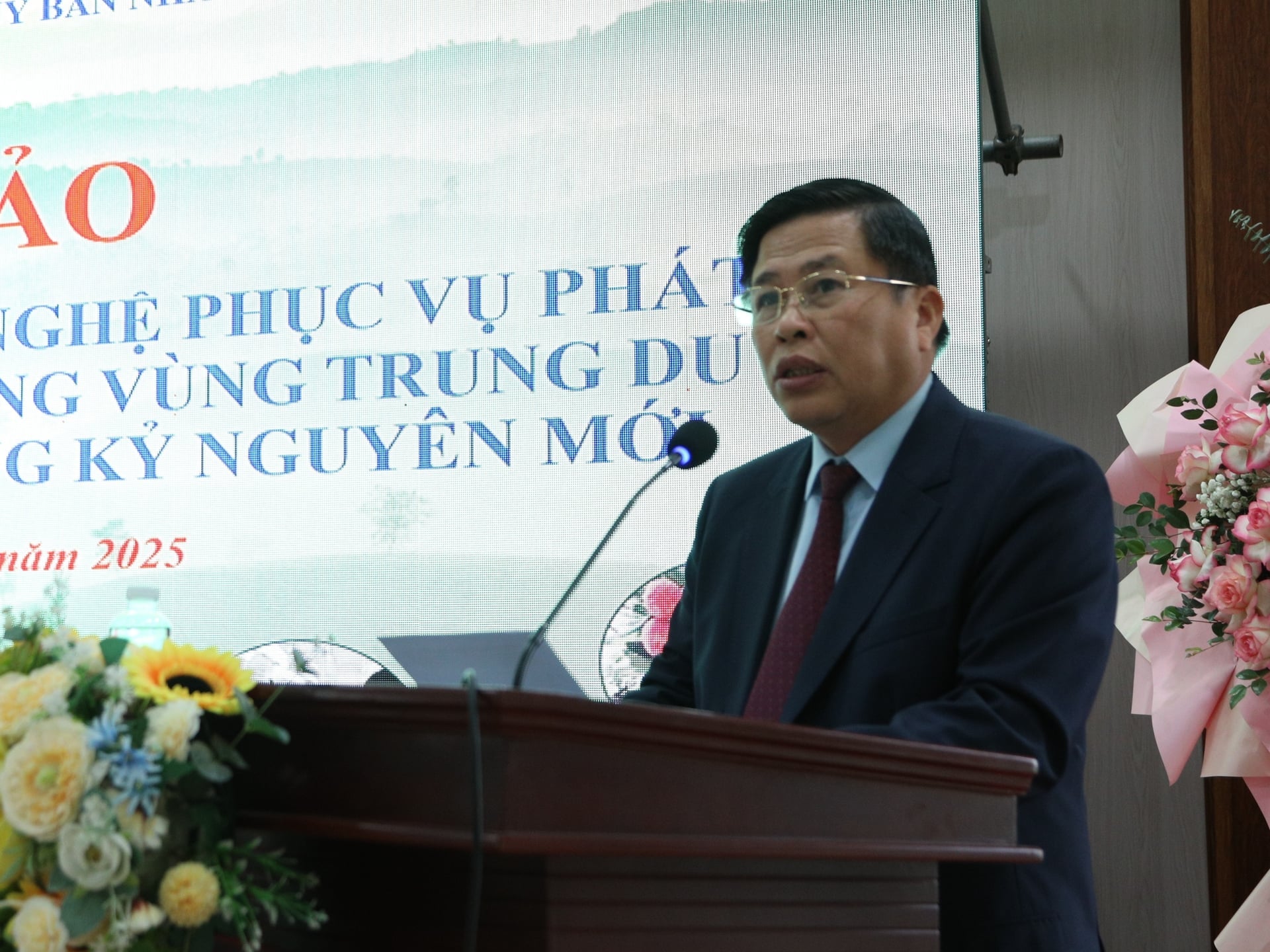
Vice Chairman of Phu Tho Provincial People's Committee Dinh Cong Su said that the locality needs close cooperation from ministries, institutes and businesses to realize the green development goal. Photo: Hong Duc.
By 2030, Phu Tho aims to develop ecological agriculture, green agriculture, organic agriculture and circular agriculture; form concentrated commodity production areas according to three ecological sub-regions; promote mechanization, automation and digital transformation throughout the value chain. The province also builds a digital database on land, crops, varieties, raw material areas and markets to serve management and support farmers, cooperatives and businesses.
Mr. Dinh Cong Su emphasized that the locality needs close cooperation from ministries, institutes, schools and businesses to realize the goal of green, sustainable and comprehensive development in terms of economy, culture, society and environment.
The door to agricultural development
Presenting a report on solutions to protect and improve soil health for sustainable production, MSc. Le Thi My Hao, Institute of Soil and Fertilizers, pointed out that soil degradation is occurring in all three regions in the form of erosion, leaching, organic matter reduction, acidification, salinization and pollution. An integrated digital mapping system (WebGIS) is proposed to monitor soil indicators such as pH, N, P, K, erosion, land cover, greenhouse gas emissions, SDG 2.4.1. Digitizing soil and crop data for 10-20 years will help localities choose suitable crops, plan production areas and build early warning systems. According to Ms. Hao, open databases also allow institutes and businesses to develop AI applications, forecasting models or fertilizer recommendation maps. She also mentioned soil monitoring solutions using remote sensing, UAVs and smart sensors to improve management efficiency.
In the field of agricultural extension, Dr. Hoang Van Hong, National Agricultural Extension Center, emphasized the role of innovation and digital transformation models in improving production quality. Demonstration models help increase efficiency by 10-30%, contributing to changing production habits, increasing productivity and reducing post-harvest losses. With rice, productivity in the model increased by 30-35%, people's income increased by 20-25% and input costs decreased by 5-10%. In fruit trees, productivity increased by 10-15%, economic efficiency increased by more than 15%, all products were traceable and some areas achieved VietGAP. Raw material areas were more clearly formed, leading to the development of production and consumption organization models associated with community agricultural extension teams.
From the perspective of someone who has been following the development of the region for many years, former Deputy Minister of Agriculture and Rural Development Le Quoc Doanh commented that the transformation of agriculture in the Northern mountainous region is very large. Many specialty agricultural products are welcomed by the market, the terraced field system is exploited effectively and rice productivity increases the fastest in the country.
The conversion from corn to fruit trees in Son La or the improvement of tea productivity shows that science and technology are the key to change. Forest cover increased by 18% in two years, according to Mr. Doanh, is clear evidence of the adjustment of farming methods. He proposed to continue to develop in depth, build technical packages for each sub-region, and consider branding and production-tourism linkage as directions to increase value.
Concluding the workshop, Deputy Minister Phung Duc Tien once again emphasized the core role of science and technology in ensuring food security, increasing forest cover, developing fisheries and supporting natural disaster prevention. He assessed the workshop as highly scientific, with full and in-depth information, demonstrating the spirit of coordination between units in the industry. “In the near future, the Ministry will prioritize research on climate change, digital transformation, popularizing digital knowledge and strengthening product commercialization links. Science and technology must go deep, linking all fields to open new development doors for agriculture in the northern mountainous region,” the Deputy Minister affirmed.
Source: https://nongnghiepmoitruong.vn/chuyen-doi-so-mo-huong-phat-trien-nong-nghiep-ben-vung-d787971.html

![[Photo] National Assembly Chairman Tran Thanh Man attends the VinFuture 2025 Award Ceremony](/_next/image?url=https%3A%2F%2Fvphoto.vietnam.vn%2Fthumb%2F1200x675%2Fvietnam%2Fresource%2FIMAGE%2F2025%2F12%2F05%2F1764951162416_2628509768338816493-6995-jpg.webp&w=3840&q=75)
![[Photo] 60th Anniversary of the Founding of the Vietnam Association of Photographic Artists](/_next/image?url=https%3A%2F%2Fvphoto.vietnam.vn%2Fthumb%2F1200x675%2Fvietnam%2Fresource%2FIMAGE%2F2025%2F12%2F05%2F1764935864512_a1-bnd-0841-9740-jpg.webp&w=3840&q=75)































































Comment (0)