

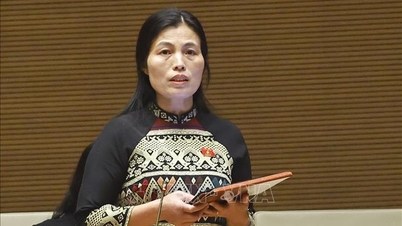
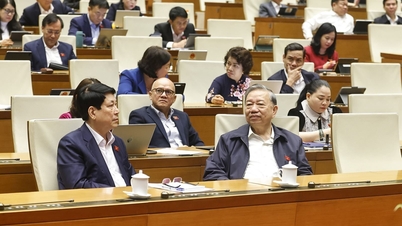
Discussing in the hall about the investment policy of the National Target Program on new rural areas, sustainable poverty reduction, and socio-economic development in ethnic minority and mountainous areas until 2035, delegate Vuong Thi Huong (Tuyen Quang) said that extending the implementation time and disbursement of capital for the National Target Program until the end of 2026 is a necessary solution for localities to complete their tasks and reduce disbursement pressure.
However, practical experience shows that simply extending the time is not enough to resolve the mechanism problems.
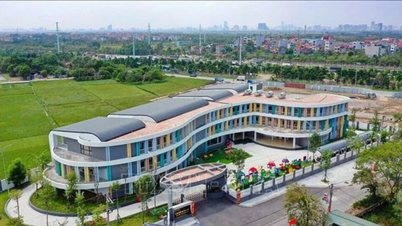
In the report proposing the current investment policy focusing on building new, upgrading and repairing commune, ward and town health stations; delegates said that investing in commune health stations alone is not enough to improve the quality of medical examination and treatment for people in disadvantaged areas because in reality, regional general hospitals are an important link between grassroots health care and provincial health care, determining the quality of medical examination and treatment in the whole region.
Emphasizing that many regional general hospitals in ethnic minority and mountainous areas are degraded, lack functional rooms, and lack equipment, but are not eligible for investment in the program, delegate Huong said that to ensure the consistency of the system and truly improve medical capacity, it is necessary to add the task of investing in upgrading, renovating, repairing, and equipping regional general hospitals in ethnic minority and mountainous areas to the policy content.
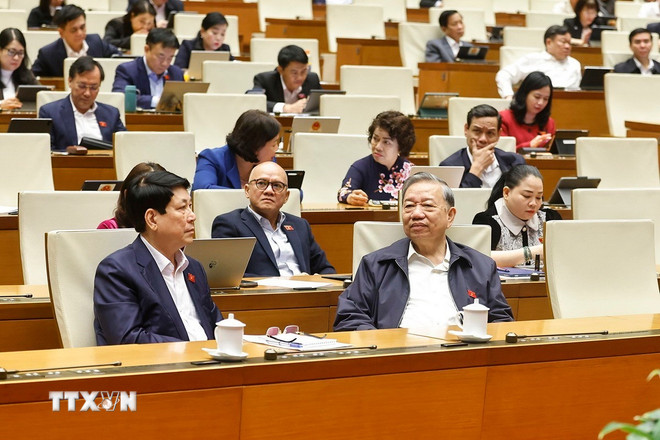
Delegate Nguyen Thi Thu Ha ( Quang Ninh ) said that in recent times, the Production Development Project of target programs has had many limitations and shortcomings. The reason for these limitations is partly due to the complicated and inadequate regulations on principles, criteria, procedures, conditions, and beneficiaries of policies to support production development, which require high management requirements, according to the regulations on financial management and public assets.
The delegate gave an example of supporting production development along the value chain: "The unit in charge of the association and the associated subjects must have contracts and minutes of cooperation on training, techniques, supply of input materials and harvesting, processing, consumption... requiring farmers to associate with enterprises in production development, must prepare project documents, through the appraisal council of the Ministry or the Provincial People's Council; during the implementation process, a budget plan must be prepared, invoices and documents for purchasing, including plant and animal varieties..."
According to delegates, the current regulations as above are not suitable to the characteristics, situation and needs of agricultural production development, especially in mountainous areas, ethnic minorities, and difficult socio-economic conditions, leading to low disbursement rates of production development support projects, affecting the effectiveness of program implementation.
Therefore, delegates proposed to have a more suitable specific mechanism for production development support projects, to simplify administrative procedures, reduce conditions and procedural processes; the Government should stipulate principles, criteria, support framework, and decentralize authority to the provincial and communal levels to decide on approval, acceptance, and production development support documents in accordance with regional characteristics and local production development situation.
In particular, there should be a policy of direct financial support for poor, near-poor, and newly escaped-poverty households through the form of registering for appropriate forest production development tasks.
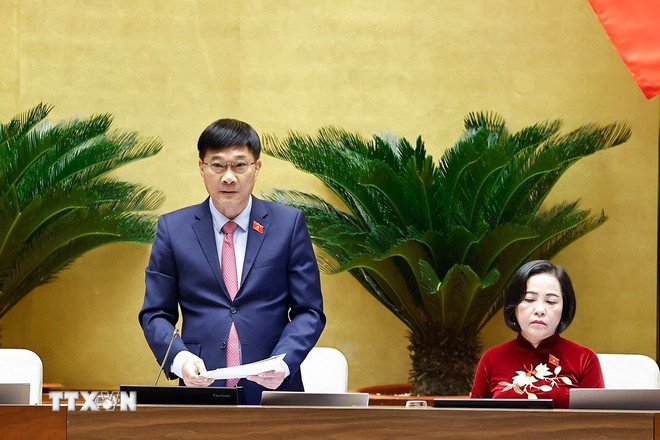
For example, forest planting, production time 2 to 3 years, household production is supported with money through registration and payment acceptance, suitable for mountainous areas and ethnic minorities.
Commenting on the Draft Resolution regulating the integration of resources between National Target Programs in the same locality, delegates said that it is necessary to stipulate a mechanism for integrating capital in target programs, especially in the condition that the budget capital allocated for the program is limited.
In fact, localities have integrated public investment capital from local budgets and integrated socialized capital for investment projects of the National Target Program.
Some localities have not yet integrated capital due to lack of other resources to integrate the implementation of the Program; current regulations on integrating capital between national target programs are still heavy on management principles, the scope of integrated capital, and integration methods are still not suitable, there are problems in implementation organization, and the efficiency is not high.
Therefore, delegates proposed to add to the draft Resolution regulations on integrating local budget capital, other legal capital sources, investment capital from other project programs to implement the Program and flexible and appropriate regulations on integration methods for effective implementation.
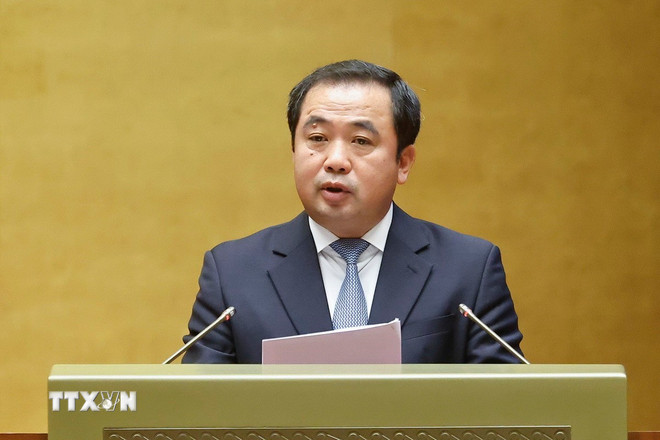
Explaining and clarifying a number of issues raised by National Assembly deputies regarding the policy of merging three national target programs into one, Minister of Agriculture and Environment Tran Duc Thang said that this is the Government's determination to implement the goals of the Party and State, making people have a prosperous and happy life, especially in ethnic minority and mountainous areas.
To achieve this goal, the Government has clearly stated in the report that in addition to the general goals, it is necessary to focus on prioritizing the construction of new rural areas, sustainable poverty reduction, and socio-economic development in ethnic minority and mountainous areas; at the same time, improve implementation efficiency, avoid policy overlap and duplication, thoroughly decentralize to localities, and extend the support period to 2035 instead of 2030 as in the current Program to concentrate long-term, synchronous, and more effective resources.
Minister Tran Duc Thang affirmed: The integration does not reduce policies or narrow the scope of support, but creates conditions for more concentration and priority for ethnic minority and mountainous areas, which are currently the core of poverty in the country.../.
Source: https://www.vietnamplus.vn/tich-hop-3-chuong-trinh-muc-tieu-de-uu-tien-ho-tro-vung-loi-ngheo-post1081210.vnp

![[Photo] National Assembly Chairman Tran Thanh Man attends the VinFuture 2025 Award Ceremony](/_next/image?url=https%3A%2F%2Fvphoto.vietnam.vn%2Fthumb%2F1200x675%2Fvietnam%2Fresource%2FIMAGE%2F2025%2F12%2F05%2F1764951162416_2628509768338816493-6995-jpg.webp&w=3840&q=75)
![[Photo] 60th Anniversary of the Founding of the Vietnam Association of Photographic Artists](/_next/image?url=https%3A%2F%2Fvphoto.vietnam.vn%2Fthumb%2F1200x675%2Fvietnam%2Fresource%2FIMAGE%2F2025%2F12%2F05%2F1764935864512_a1-bnd-0841-9740-jpg.webp&w=3840&q=75)




































































Comment (0)