

Significant change
According to the Ministry of Agriculture and Environment , Resolution No. 19-NQ/TW has been seriously and actively implemented by the entire political system, creating unity in awareness and action. Accordingly, many innovative mechanisms and policies have been issued, mobilizing resources for agricultural and rural development, and have received the support and positive response of the people. Agriculture has been restructured in a more substantive and effective way, positively transforming according to the strengths of each region and market demand, and proactively adapting to climate change. The entire sector has shifted its mindset from production to agricultural economics, from single-sector development to cooperation and multi-sector development, integrating multiple values; and from agricultural product supply chains to the development of commodity chains.
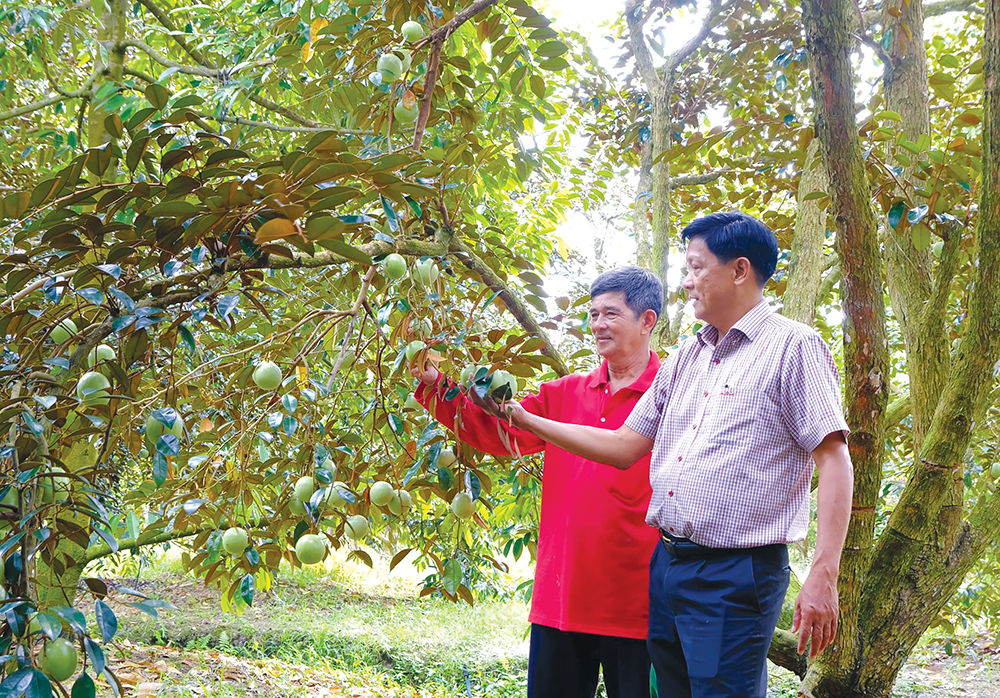
The star apple growing area in Truong Long commune, Can Tho city, has been granted a code for export purposes.
The face of rural areas is constantly changing, narrowing the gap with urban areas, comprehensively improving people's lives, and perfecting and gradually modernizing essential infrastructure in rural areas. Farmers are becoming increasingly educated and professionalized, clearly playing a leading role in rural development. Many synchronized tasks and solutions in managing and effectively utilizing resources, adapting to climate change, and reducing greenhouse gas emissions are being actively implemented…
After more than 3 years of implementing Resolution No. 19-NQ/TW, 14 out of 14 targets are on track to achieve the goals by 2030. Of these, 2 targets have been exceeded; 8 targets are likely to be met or exceeded; and 4 targets require further effort and breakthrough, effective solutions to achieve the goals by 2030. Notably, the GDP growth rate of the agricultural sector is estimated at 4% for the whole year of 2025, exceeding the 2030 target (3%/year). The growth rate of rural industry and services is estimated to average 7.5-8.5% per year during the 2022-2025 period and is expected to reach and exceed the target of over 10% by 2030. The percentage of communes meeting the new rural standards nationwide will reach 79.3% by the end of June 2025, closely following the 80% target for 2025. Of these, 42.2% of communes will meet the advanced new rural standards, exceeding the 2025 target of 40%; 51% of districts will meet the new rural standards, exceeding the 2025 target of 50%…
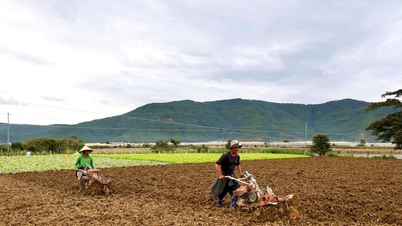
For Can Tho City, after three years of implementing Resolution No. 19-NQ/TW, the political system's awareness of the position and role of agriculture, farmers, and rural areas has been enhanced. Agricultural production has shifted positively from small-scale production to commodity production, focusing on the formation of raw material areas linked to processing. Scientific and technological advancements have been increasingly applied to production, contributing to improved productivity, quality, and added value of products. Rural infrastructure has been invested in and built comprehensively, the appearance of rural areas is increasingly improving, and the material and spiritual lives of rural people have been enhanced.
Can Tho City is developing key fruit production areas and forming distinctive branded products and concentrated production zones with an area of approximately 12,673 hectares; granting 199 planting area codes with a total area of 2,673 hectares for key crops. Livestock farming has seen significant changes in production organization, with currently 1,110 livestock and poultry farms and about 90,000 households raising livestock and poultry. There are 34 livestock facilities meeting VietGAHP standards; 33 livestock facilities/regions (at the commune level) have valid disease-free certification. The city has 59 out of 72 new rural communes, 13 out of 59 advanced new rural communes, and 2 out of 13 model new rural communes; there are 895 OCOP products, including 4 products that have achieved 5 stars…
Create a breakthrough
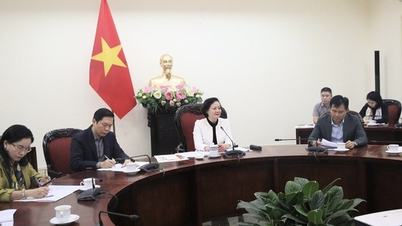
At a recent press conference reporting on the implementation of Resolution No. 19-NQ/TW, according to assessments from ministries, agencies, and localities, the implementation of Resolution No. 19-NQ/TW still has some shortcomings and limitations. For example, agricultural growth is not yet stable; the quality and competitiveness of some products are not high. Innovation, digital economic development, and the application of science and technology, especially high technology, are still limited; infrastructure for agricultural development does not meet requirements. The results of building new rural areas vary greatly among different regions and localities. Some of the targets for 2030 in Resolution No. 19-NQ/TW are no longer relevant to the current context and need to be adjusted accordingly... Based on this, many key recommendations and solutions have been proposed to effectively implement and contribute to the successful achievement and exceeding of the targets for 2030 and the vision for 2045 in Resolution No. 19-NQ/TW.
Ms. Nguyen Thi Minh Thuy, Vice Chairman of the People's Committee of An Giang province, proposed that the Government and central ministries and agencies prioritize allocating investment resources to agriculture, farmers, and rural areas; and prioritize resources for building new rural areas and sustainable poverty reduction. In addition, she requested the early issuance of specific criteria and adjustments to management methods suitable for the two-tiered local government model. She also called for flexible credit policies and preferential interest rate programs and products to enable farmers to borrow capital for production development. Furthermore, she emphasized the need for human resource training and the transfer of scientific and technological advancements to agriculture and rural areas.
To create room for breakthroughs in the agricultural economy, Mr. Nguyen Xuan Cuong, former Minister of Agriculture and Rural Development, believes that a deeper analysis of the potential of forestry, marine, national, and regional specialty products is needed to increase added value and leverage comparative advantages. Key requirements include removing bottlenecks in science and technology, promoting production linkages, and empowering domestic enterprises. For rural areas, it is necessary to review and update planning, finalize national target programs, and increase local autonomy. Furthermore, attention should be paid to training rural workers in line with the needs of industry, services, tourism, and labor export, creating a high-quality workforce.
According to Professor Tran Duc Vien, Chairman of the Science and Training Council of the Vietnam Academy of Agriculture, the State needs to prioritize investment in processing, digitalization, and the development of raw material areas, forming an agricultural-technology-finance ecosystem. Training human resources, especially farmers, should focus on practical skills, linking digital technology and the market, creating a generation of 4.0 farmers who master production. Private enterprises should be the driving force for agricultural innovation. Furthermore, a national program for land restoration linked to green production and carbon credits is needed.
Text and photos: L. MẪN
Source: https://baocantho.com.vn/phat-trien-nong-nghiep-nong-thon-toan-dien-ben-vung-a192322.html
















































































Comment (0)