

On the morning of December 5, the People's Council of Ho Chi Minh City coordinated with the National University of Ho Chi Minh City to organize a scientific workshop "Operating the 2-level local government model - current situation in Ho Chi Minh City and solutions".
Still difficult about human resources
At the workshop, leaders of localities and units shared the current status of operating the two-level local government model in their localities.
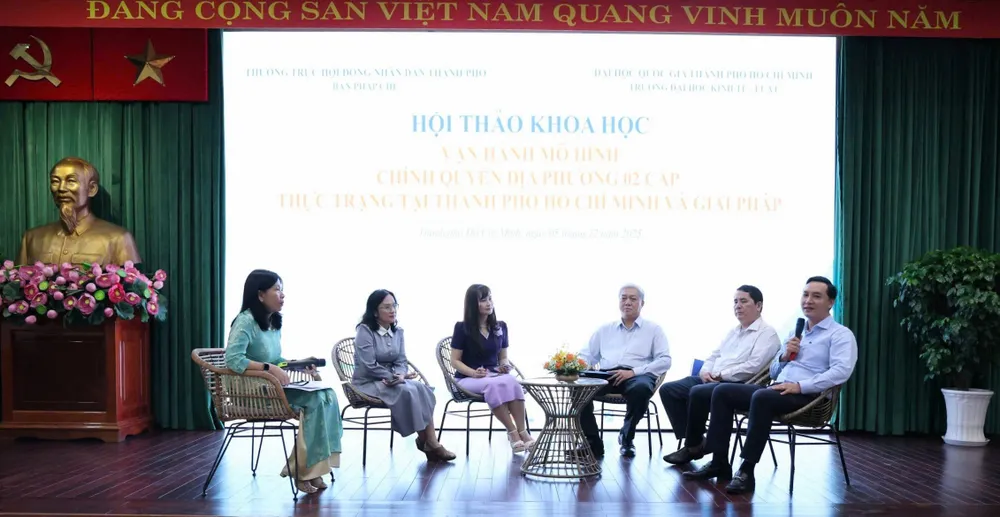
Secretary of the Thu Duc Ward Party Committee Mai Huu Quyet said that the work at the ward level is currently highly specialized, because it has to take on tasks that were previously assigned to the district level, and even some tasks delegated from the city.
The civil servants who used to work in Thu Duc City (before) are familiar with the intensity and nature of the work, but the ward officials have never been exposed to it, causing the quality of civil servants to be uneven.
Although they all have university degrees, experience and skills in handling documents and procedures are the big issues. According to the Secretary of the Thu Duc Ward Party Committee, to handle a document “completely”, officials need at least several months to half a year of experience.
When the law does not clearly regulate many arising situations, officials are forced to apply experience, research or learn how previous agencies handled the situation, creating great pressure on the quality of human resources.
The next difficulty is implementing administrative procedures in the digital environment according to Resolution 57. Although the procedures have been digitized, people are not familiar with the operations, forcing the ward to organize "digital education for the masses", set up digital community groups in each neighborhood to guide the use of online public services. This is both an effort and an additional burden for the grassroots.
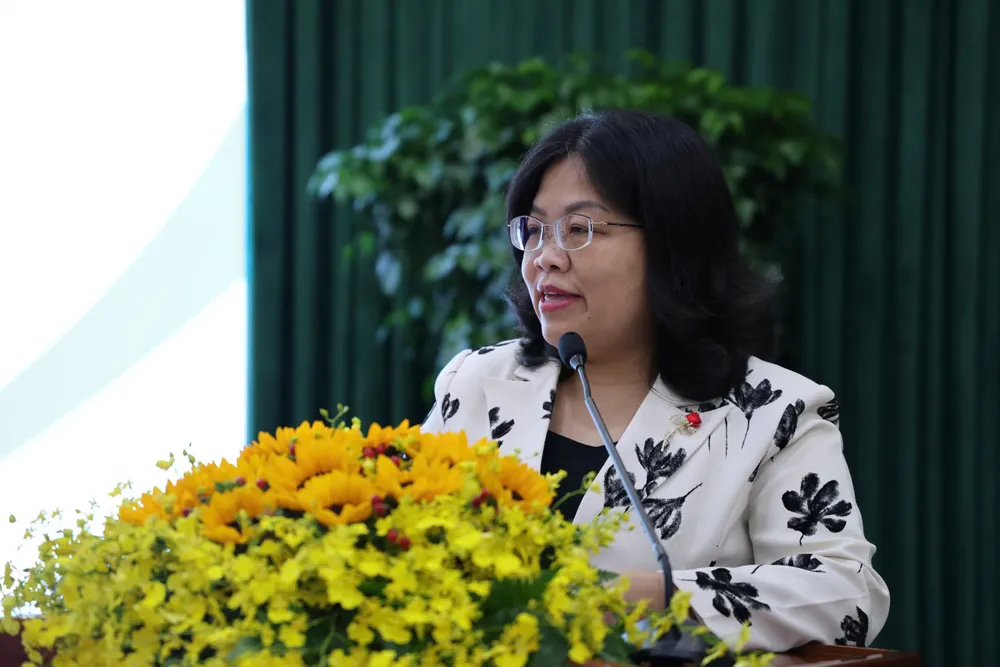
Ms. Pham Thi Tuyet Trinh, Chairwoman of Phuoc Hai Commune People's Committee, said that the locality was temporarily assigned 63 positions but currently only has 50 people working. The commune has not been proactive in recruiting additional staff because it has to wait for official assignment of positions.
Although Decree 173 allows for contracting out professional work, it has not yet been implemented due to a lack of guidance on funding and procedures. Hot areas such as land, planning, resources, etc. are seriously lacking in human resources.
Meanwhile, the workload in the land, natural resources and environment sector in the commune is huge. According to the guidelines, each job position is assigned 2 civil servants, but the cadres must simultaneously process documents, manage the area, coordinate verification of the current status, and participate in compensation and site clearance. When a project passes through the area, the pressure increases.
Although communes in many provinces have established public service units such as project management boards or compensation and site clearance units, Phuoc Hai commune has not been able to implement them due to lack of guidance.
Associate Professor, Dr. Cao Vu Minh, University of Economics and Law, said that after the merger, wards and communes were assigned more than 1,065 tasks, not including decentralization and authorization. On average, each specialized department had to undertake 95 tasks. Each civil servant had to shoulder about 10 tasks. This was a great pressure in the context of constantly changing legal regulations.
According to him, to attract high-quality human resources, it is impossible to rely solely on the payroll or ranks, because this group of human resources values creativity and real social impact. The law needs to become a “magnet” to attract and retain talented people in the public sector.
Perfecting institutions, enhancing capacity and synchronizing infrastructure
Ms. Nguyen Thi Tu Thanh, Deputy Director of the Department of Local Government ( Ministry of Home Affairs ), said that after 5 months of implementing the 2-level local government model, the whole country has completed its organizational structure and personnel, ensuring smoothness, without any legal or leadership gaps.
However, in practice, many difficulties still arise. Some regulations on decentralization and delegation of power are different between the law and the decree, causing confusion in implementation at the local level. This is an issue that needs to be reviewed and unified.

The country currently has 136,261 cadres and civil servants in 3,321 communes, wards and special zones, an average of 41 people/commune. Of these, 94.6% have appropriate qualifications, 5.4% are not. In reality, there is a situation of "both surplus and shortage", especially a lack of human resources with expertise in new fields such as information technology, finance, health care, construction and education.
This is a big challenge when local authorities have to take on a larger workload but the quality of human resources is uneven.
Technical infrastructure from the central to communal levels has not been connected synchronously, causing difficulties in data connection and providing online public services throughout the process.
Meanwhile, the digital transformation capacity of grassroots officials is still limited, while the workload and need to process administrative procedures at the commune level are increasing rapidly. These factors slow down the process of administrative modernization.
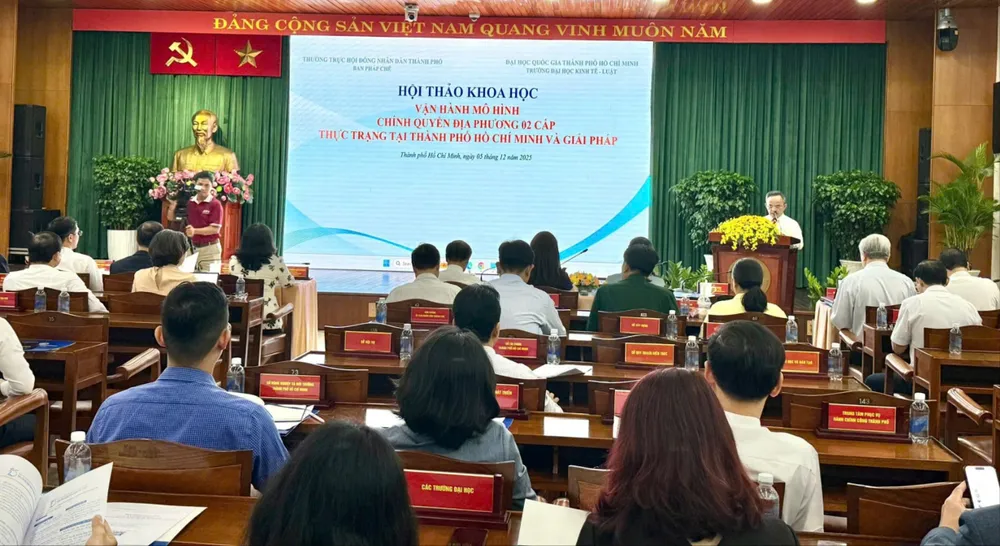
According to Ms. Tu Thanh, the main reasons are short preparation time, new model, large workload and requirement to continuously adjust legal documents, so delays are inevitable.
Therefore, it is necessary to urgently review and promulgate legal documents to handle conflicts and overlaps, and fill legal gaps in key areas.
Along with that, strengthen training and in-depth development of law, public administration, digital transformation; prioritize budget and mobilize social resources to upgrade headquarters, equipment, and information technology infrastructure.
5 solutions for staff coordination
According to Mr. Nguyen Tan Phong, Deputy Director of the Department of Home Affairs of Ho Chi Minh City, the total staff assigned to Ho Chi Minh City is nearly 12,000 people, but currently there are only about 9,500 people.
However, through review, the team has about 956 surplus people, mainly in positions under the Department of Culture and Society; there is a shortage of about 900 people in specialized positions such as health, urban environment, construction land, information technology... leading to passivity.
Therefore, the city implemented 5 solutions to coordinate cadres. These are arranging within the commune level; arranging from one commune to another; transferring from the Party, Fatherland Front and mass organizations; transferring from city departments and branches to wards, communes and special zones.
Source: https://www.sggp.org.vn/phep-giai-cho-bai-toan-nhan-su-thua-va-thieu-khi-van-hanh-chinh-quyen-dia-phuong-2-cap-post827068.html
![[Photo] Cat Ba - Green island paradise](/_next/image?url=https%3A%2F%2Fvphoto.vietnam.vn%2Fthumb%2F1200x675%2Fvietnam%2Fresource%2FIMAGE%2F2025%2F12%2F04%2F1764821844074_ndo_br_1-dcbthienduongxanh638-jpg.webp&w=3840&q=75)


![[Photo] 60th Anniversary of the Founding of the Vietnam Association of Photographic Artists](/_next/image?url=https%3A%2F%2Fvphoto.vietnam.vn%2Fthumb%2F1200x675%2Fvietnam%2Fresource%2FIMAGE%2F2025%2F12%2F05%2F1764935864512_a1-bnd-0841-9740-jpg.webp&w=3840&q=75)




















































































Comment (0)