

Over more than 74 years, amidst many unpredictable developments in the global context, the traditional friendship between Vietnam and the Russian Federation has demonstrated enduring vitality through close ties, understanding, and trust; mutual assistance and cooperation throughout the years of Vietnam's struggle for national independence, economic recovery after national reunification, as well as in the current process of construction and development.
At the invitation of General Secretary Nguyen Phu Trong, President of the Russian Federation Vladimir Putin will pay a State visit to Vietnam from June 19 to 20, 2024. During the visit, the leaders of the two countries will discuss and outline the direction of the comprehensive strategic partnership between Vietnam and the Russian Federation until 2030, clearly defining key areas of cooperation, from economics, trade, defense and security, energy, science and technology to education, culture, and people-to-people diplomacy . Long-term goals and specific action plans will be set forth to ensure the sustainable and effective development of bilateral relations in the future.
Continuing the tradition of friendship
On January 30, 1950, the Soviet Union became one of the first countries to recognize and establish official diplomatic relations with the Democratic Republic of Vietnam, demonstrating the strong solidarity of the Soviet Union with the just cause of the Vietnamese people's struggle for national independence. In fact, the special bond between the two nations had been laid three decades earlier, when President Ho Chi Minh , the leader of the Vietnamese nation, first set foot in Soviet Russia in 1923 to seek a path to national liberation from colonial and feudal oppression.
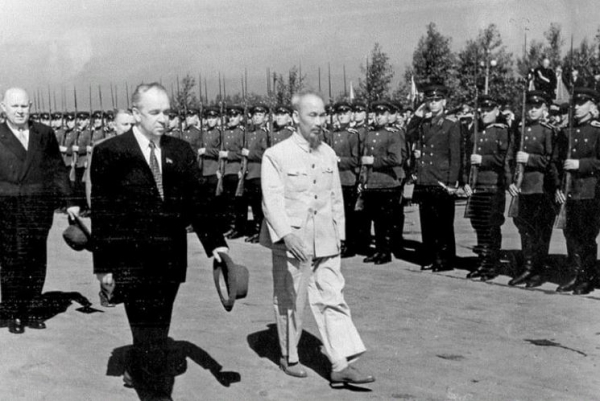
After establishing official diplomatic relations, Vietnam and the Soviet Union developed bilateral cooperation, primarily through the signing of several agreements, treaties, and cooperation agreements. In July 1955, following the victory in the resistance war against French colonialism, President Ho Chi Minh made his first official visit to the Soviet Union and achieved practical results in many areas. On July 18, 1955, speaking at the airport before leaving Moscow, he said in Russian: “We return to our homeland carrying with us the affection and fraternal friendship of the Soviet people. Although Vietnam and the Soviet Union are thousands of miles apart, our hearts are always together and beat as one.” On the Soviet side, in February 1965, Chairman of the Council of Ministers of the Soviet Union Alexei Kosygin paid an official visit to Vietnam, making a practical contribution to consolidating the close friendship and cooperation between the two countries.
Throughout the struggle for national independence and nation-building, the Party, State, and people of Vietnam received the heartfelt and sincere support and assistance of the Party, State, and people of the Soviet Union. This comprehensive, immense, and invaluable support and assistance over many decades was a crucial factor contributing to the success of the Vietnamese people's national liberation, reunification, and nation-building. Conversely, the Russian people have never forgotten the outstanding sons and daughters of Vietnam who fell defending Moscow from Nazi Germany during the fierce Second World War.
Following the collapse of the Soviet Union, cooperation between Vietnam and the Russian Federation (the successor state) continued. To create a new legal framework for bilateral relations, in 1994 the two countries signed the Treaty on the Basic Principles of Friendly Relations, built on the principles of respect for independence and sovereignty, territorial integrity, non-interference in each other's internal affairs, equality, and mutual benefit based on international law. Since this historic moment, Vietnam-Russia relations have made new progress, reaching a qualitatively higher level.
In 2001, during President Vladimir Putin's official visit to Vietnam, the two countries signed a Joint Declaration on the Vietnam-Russia Strategic Partnership, making Russia the first country in the world to have a Strategic Partnership framework with Vietnam, laying the foundation for Vietnam-Russia cooperation in the 21st century. Overcoming the changes in the global context, the two countries continued to maintain their relationship and developed it into a Comprehensive Strategic Partnership in 2012.
Outlining a new direction for the development of Vietnam-Russia relations.
Three decades of implementing the Treaty on the Basic Principles of Friendly and Multifaceted Cooperation between Vietnam and the Russian Federation have yielded many positive results. Political and diplomatic cooperation is a highlight, characterized by high levels of trust and strengthened through high-level visits and contacts, as well as through regular strategic consultation and dialogue mechanisms. Over the years, Vietnam and the Russian Federation have developed relations through multiple channels, from Party, Government, and Parliament channels to cooperation between localities and people-to-people diplomacy. Furthermore, leaders of both countries regularly discuss many international political and security issues of mutual concern through official meetings in each country and on the sidelines of international conferences and forums, fostering a high degree of consensus on many international issues.
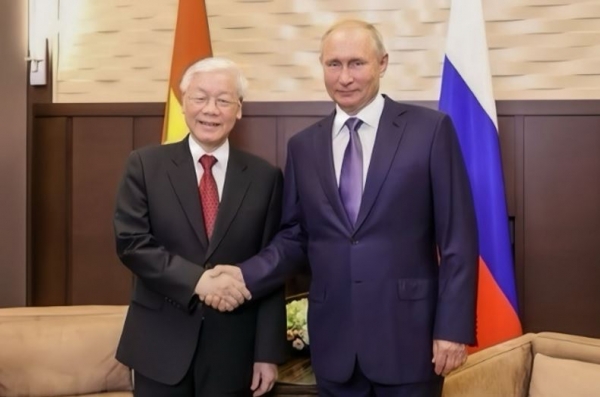
At a recent briefing on the situation in the Russian Federation, the Russian Ambassador to Vietnam, Genady Bezdetko, affirmed that Russia prioritizes promoting cooperation with ASEAN, and in particular, always values and wishes to strengthen the close friendship with Vietnam, one of Russia's key partners in Southeast Asia.
Thanks to the impetus of high political trust, both sides have actively improved cooperation in various fields. Cooperation in defense, security, and military technology is highly valued. Energy cooperation continues to be effective, generating significant revenue for both countries' budgets and is currently a strategically important area for both Vietnam and the Russian Federation. Notably, Vietnam-Russia oil and gas cooperation has seen breakthrough development in scale, scope, and geographical areas of operation. According to Vyacheslav Kharinov, the Russian Trade Representative in Vietnam, both countries are striving to effectively implement the Vietnam-Eurasian Economic Union Free Trade Agreement (of which Russia is a key member), aiming to increase bilateral trade to US$10 billion by 2025. Mr. Kharinov noted that Vietnam and Russia have significant potential for cooperation in the automotive, pharmaceutical, healthcare, and information technology industries.
In the fields of science and technology, culture and education, the two countries continue to achieve many successes. Vladimir Murashkin, Director of the Russian Science and Culture Center in Hanoi, reported that since 2019, Russia has granted 1,000 scholarships annually to Vietnamese students to study at nearly 200 Russian universities, more than during the Soviet era. Cultural and academic exchanges are organized regularly, leaving very positive impressions and lasting memories in the hearts of the people of both countries.
It can be affirmed that, in the context of complex and challenging global and regional developments, the comprehensive strategic partnership between Vietnam and the Russian Federation is of great importance to the cause of protecting the independence, sovereignty, and socio-economic development of each country, in line with the aspirations of the people of both countries, and contributing to maintaining peace and stability in the region and the world. In the future, the two countries will continue to honor past achievements, seize present opportunities, and chart a broad path towards a bright future of close and loyal friendship and a comprehensive strategic partnership in the new era.
Source

















![[Video] The craft of making Dong Ho folk paintings has been inscribed by UNESCO on the List of Crafts in Need of Urgent Safeguarding.](https://vphoto.vietnam.vn/thumb/402x226/vietnam/resource/IMAGE/2025/12/10/1765350246533_tranh-dong-ho-734-jpg.webp)













































Comment (0)