

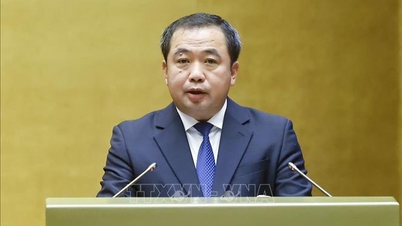
Authorized by the Government , Minister of Industry and Trade Nguyen Hong Dien presented a report addressing, explaining, and clarifying key issues of concern to the public and delegates.
One of the notable highlights of the recently passed E-commerce Law is the specific regulation of e-commerce activities on social media and livestreaming sales methods. Responding to feedback from many delegates, the law clearly defines the responsibilities of each entity involved in livestreaming, including sellers, livestreamers, and platform owners. This regulation aims to enhance transparency, improve legal accountability, and create a solid legal basis for inspection, supervision, and handling of violations.
For social networks that integrate e-commerce activities, the law defines them as a distinct type of platform. Therefore, the system of obligations is designed to suit the specific characteristics of their operations, avoiding the mechanical application of regulations for typical e-commerce platforms, while still ensuring that there are no "gaps" in management, especially in controlling business content and protecting consumer rights.

Furthermore, the issue of identifying sellers on e-commerce platforms has been strictly codified into law. This regulation is based on leveraging the national electronic identification and authentication system (VNeID). The goal is to clean up the market, limit counterfeit goods, pirated goods, and goods infringing intellectual property rights through the ability to trace sellers. Simultaneously, identification also provides strong support for tax management and combating revenue loss. The government affirms the principle of maximizing the use of existing digital infrastructure and avoiding the creation of additional burdensome administrative procedures for citizens and businesses.
The law also pays special attention to the responsibilities of foreign platform operators operating in Vietnam. Based on feedback from delegates, regulations on appointing authorized representatives or establishing legal entities will be applied flexibly, based on the model and functions of each platform. This ensures compliance with Vietnam's international commitments while enhancing the effectiveness of state management and protecting the rights of domestic consumers.

To ensure the law is implemented effectively, immediately after its passage, the Government will issue an Implementation Plan, requiring that guiding documents be clear, feasible, consistent, and not create new burdens for society. Post-implementation review based on data and risk management will be strengthened, along with clearly defining the responsibilities of each entity.
The detailed suggestions from delegates regarding transaction thresholds, margin mechanisms, reporting requirements, administrative procedures, etc., have also been incorporated and will be specified in the guiding decrees, ensuring the spirit of streamlining procedures and creating maximum convenience for production and business activities.
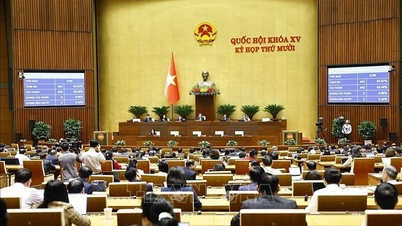
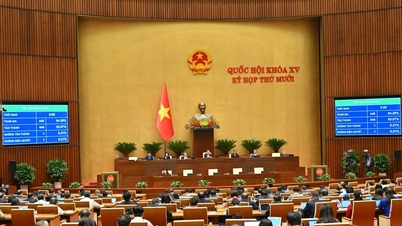
Minister Nguyen Hong Dien affirmed that the draft Law on E-commerce, which has been passed, is complete in a rigorous and synchronized manner, accurately reflecting the policies of the Party and the State, meeting management requirements in the new context, while better protecting consumer rights and creating a fair and transparent business environment.
The Law on E-commerce comprises 7 chapters and 41 articles, comprehensively regulating issues ranging from development policies and responsibilities of stakeholders to foreign elements and the application of technology in management. The law applies to all domestic and foreign organizations and individuals participating in e-commerce activities in Vietnam and will officially come into effect on July 1, 2026.
Source: https://doanhnghiepvn.vn/chuyen-doi-so/quoc-hoi-thong-qua-luat-thuong-mai-dien-tu-siet-quan-ly-livestream-dinh-danh-nguoi-ban-hang/20251210113333230

![[Photo] Prime Minister Pham Minh Chinh holds a phone call with the CEO of Russia's Rosatom Corporation.](/_next/image?url=https%3A%2F%2Fvphoto.vietnam.vn%2Fthumb%2F1200x675%2Fvietnam%2Fresource%2FIMAGE%2F2025%2F12%2F11%2F1765464552365_dsc-5295-jpg.webp&w=3840&q=75)



![[Photo] Closing Ceremony of the 10th Session of the 15th National Assembly](/_next/image?url=https%3A%2F%2Fvphoto.vietnam.vn%2Fthumb%2F1200x675%2Fvietnam%2Fresource%2FIMAGE%2F2025%2F12%2F11%2F1765448959967_image-1437-jpg.webp&w=3840&q=75)





































![[OFFICIAL] MISA GROUP ANNOUNCES ITS PIONEERING BRAND POSITIONING IN BUILDING AGENTIC AI FOR BUSINESSES, HOUSEHOLDS, AND THE GOVERNMENT](https://vphoto.vietnam.vn/thumb/402x226/vietnam/resource/IMAGE/2025/12/11/1765444754256_agentic-ai_postfb-scaled.png)







































Comment (0)