

The National Assembly deputies all agreed on the need to merge the three National Target Programs (NTPs) into one Program to overcome the situation of resource dispersion, policy overlap, multiple management agencies, and many regulations and guidelines; at the same time, overcome a number of shortcomings and limitations that have been assessed and summarized in the 2021 - 2025 period.
Need to complete the work of demarcating ethnic minority and mountainous areas
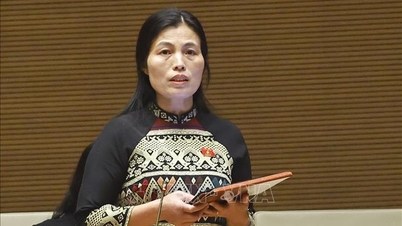
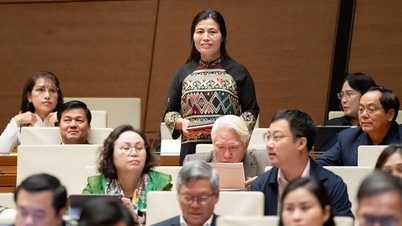
Delegate Dang Thi Bao Trinh - National Assembly Delegation of Da Nang City agreed with the view of the Ethnic Council that: Decree 272/2025/ND-CP has just completed the development of a set of criteria for delimiting ethnic minority and mountainous areas but has not yet had actual delimitation results; meanwhile, the set of criteria for new rural areas and sustainable poverty reduction is still in the drafting process. This means that we do not have a complete legal basis to accurately determine the area and beneficiaries of the Program.
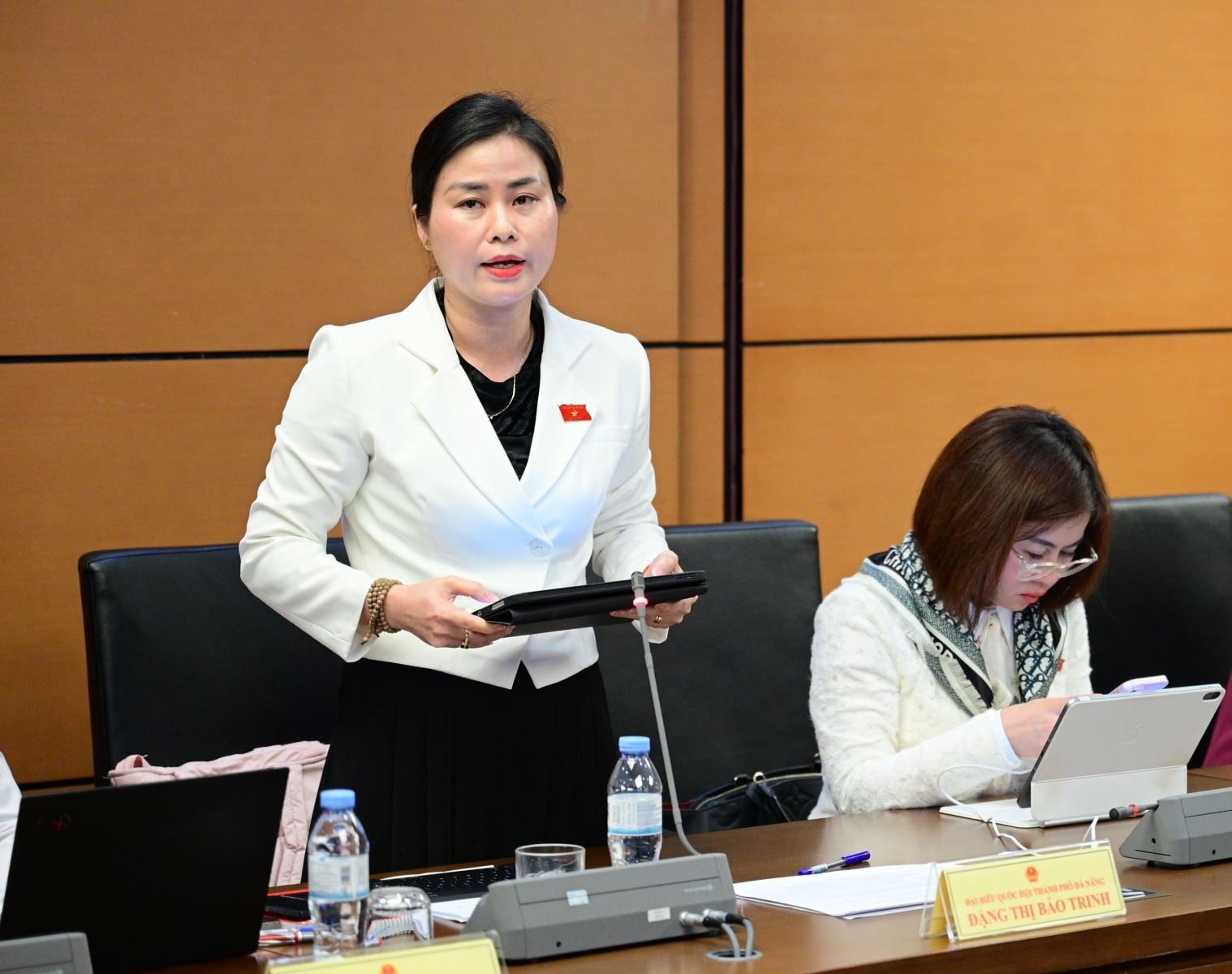
“Therefore, if the National Assembly approves the investment policy when these criteria are not yet complete, we will face three major risks: duplication between national target programs; omission of the most difficult areas; legal conflicts when the same area may or may not be identified as an ethnic minority area, a poor area or a new rural area according to different sets of criteria,” said delegate Dang Thi Bao Trinh.
Therefore, delegate Dang Thi Bao Trinh suggested that before allocating capital, the Government should complete the work of demarcating ethnic minority and mountainous areas, and at the same time issue a set of new rural criteria suitable to the characteristics of mountainous areas and ethnic minority areas, in accordance with the spirit of Conclusion 65-KL/TW of the Politburo . Along with that, review overlapping investment portfolios and regular tasks of ministries and branches.
Regarding components and policies, delegates suggested that it is necessary to respect the specific characteristics of each locality, because economic, social, cultural conditions and the level of difficulty between ethnic minority and mountainous regions are very different. Delegate Dang Thi Bao Trinh said that delegating the right to choose specific models and activities helps ensure investment in the "right place, right need"; increasing accountability of local authorities.
“Because when localities have the right to decide, they will certainly be responsible for explaining the effectiveness, transparency and implementation results. This creates motivation to innovate governance and improve the efficiency of capital use, avoid spreading and optimize resources,” delegate Dang Thi Bao Trinh analyzed.
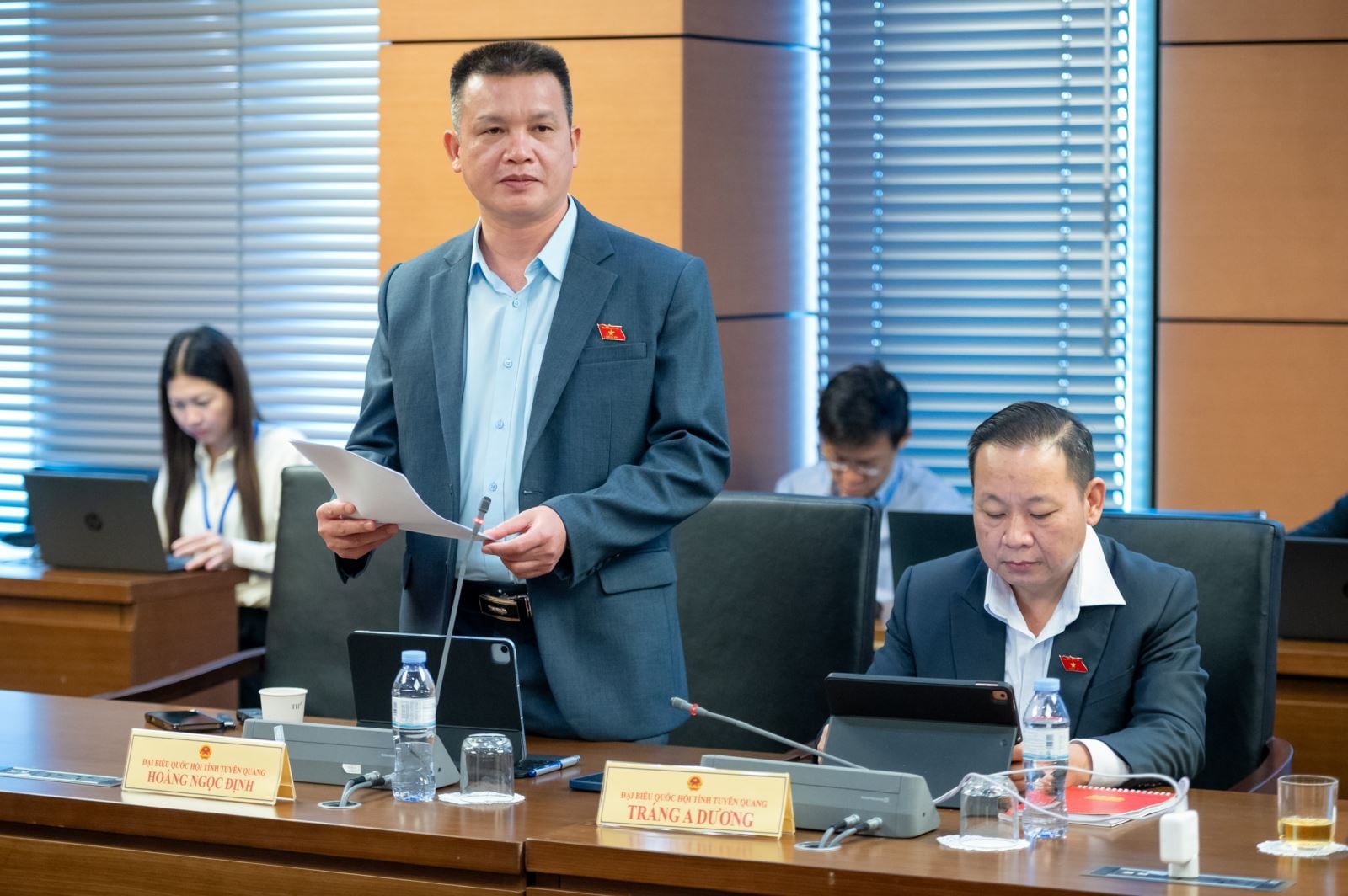
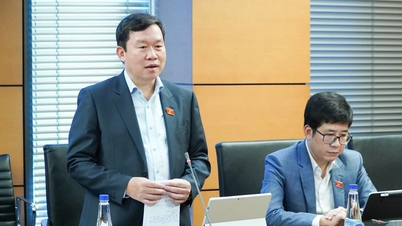
Sharing the same view, delegate Hoang Ngoc Dinh - National Assembly Delegation of Tuyen Quang province said that the management mechanism of the Integrated Program needs to be unified and streamlined, avoiding the situation of many management agencies implementing similar and overlapping contents and tasks. The Program profile is designed with 2 components, clearly defining the general implementation content and specific content is necessary, but it is recommended to soon issue a unified legal framework (principles, criteria, capital allocation norms) to ensure consistency, avoid overlapping tasks and facilitate local implementation; clearly stipulate principles, contents, processes and coordination mechanisms when integrating national target programs.
In addition, delegate Hoang Ngoc Dinh suggested that the Government pay attention to allocating stable, highly flexible medium-term capital sources for localities. In particular, it is necessary to increase the rate of support capital from the central budget for poor communes, especially disadvantaged communes, border communes, and communes in ethnic minority areas. At the same time, it is necessary to strengthen decentralization and authorization for localities, especially at the commune level, in formulating, appraising, approving and adjusting plans and projects under the Program to suit the practical conditions of each region and each mountainous commune.
Sustainable rural development must originate from people.
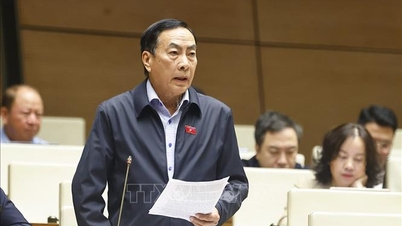
Prof. Dr. Nguyen Thi Lan, National Assembly Delegate of Hanoi City, assessed that the National Target Program for the period 2026-2035 closely followed the current requirements for agricultural and rural development. Emphasizing that for sustainable rural development, it must start with people, the delegate suggested adding regulations on the training program for "new generation rural human resources".
Prof. Dr. Nguyen Thi Lan emphasized three highlights of the draft: integrating three programs into a common framework, helping to reduce duplication and improve investment efficiency; orienting the development of modern new rural areas, focusing on digital transformation, green economy, circular economy and application of science and technology; the goals in the program are very clear and well-founded, especially the goal of increasing income 2.5 - 3 times and improving the quality of life in rural areas. This is a good foundation for the transition from "meeting standards" to "sustainable - inclusive - modern development".
Delegate Nguyen Thi Lan proposed to clearly define policies and goals for rural human resources, mentioning vocational training but still general. Meanwhile, agriculture today requires new skills: from digitalization, automation to production management. Therefore, it is necessary to supplement the training program "new generation rural human resources", focusing on digital skills, modern machinery operation skills and agricultural business management skills. At the same time, promote the role of universities and research institutes to transfer technology directly to farmers. Delegate Nguyen Thi Lan shared that the reality shows that places that do well such as Lam Dong, Dong Thap, Son La all have outstanding productivity and quality of agricultural products. Besides, international experience such as Korea, Japan, and the Netherlands all affirm: if we want sustainable rural development, we must start with people.
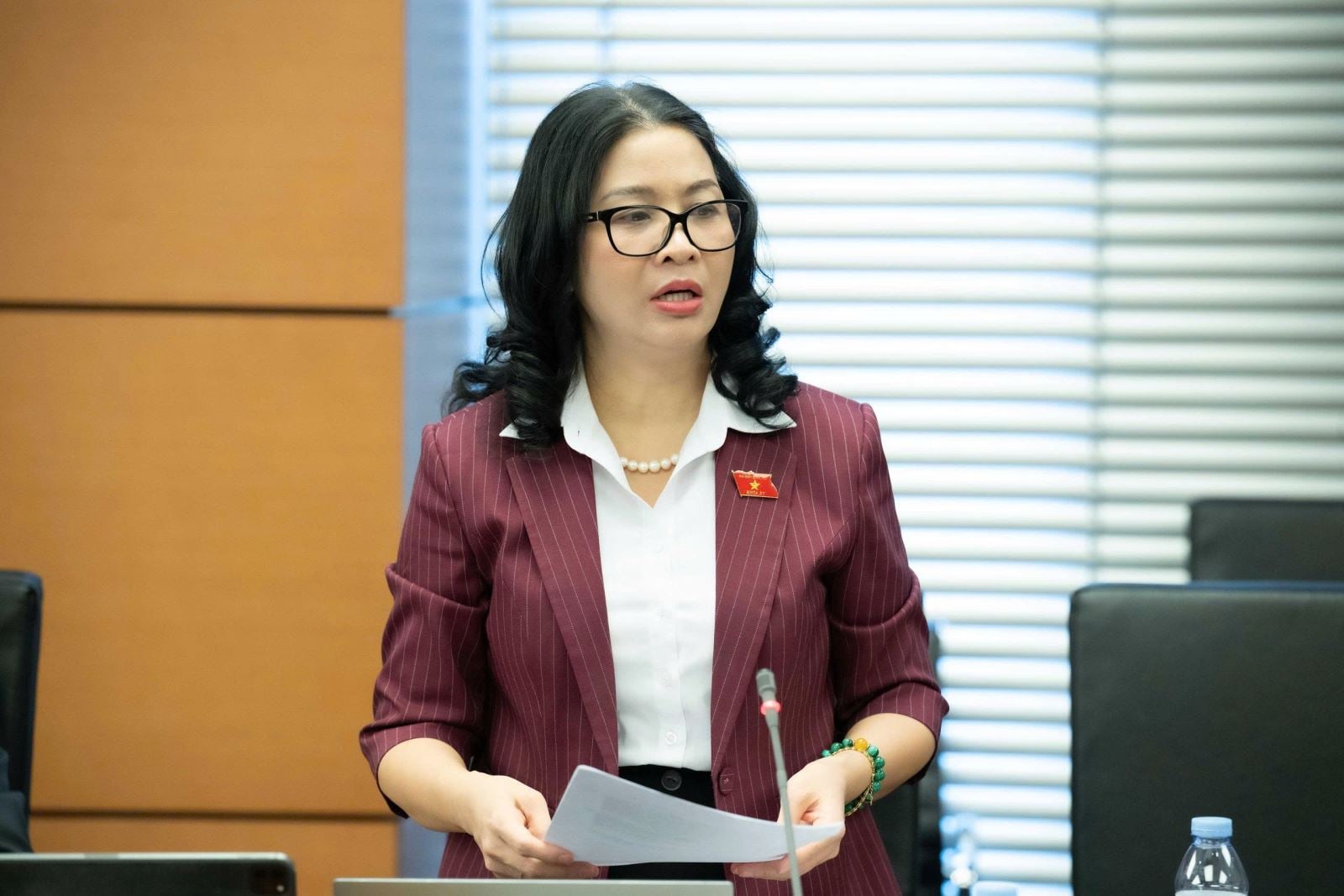
Regarding science, technology and innovation, delegates said that the program has not yet specified the budget rate for science and technology, and there is no mechanism for ordering research or attracting technology enterprises. Therefore, it is necessary to have a Rural Innovation Fund; deploy research orders according to local needs; prioritize biotechnology, seeds, digital transformation, IoT, AI; and especially increase the connection between institutes - schools - enterprises - localities. Places strong in innovation such as Lam Dong and An Giang have clearly demonstrated their effectiveness. Lessons from Israel, the Netherlands or South Korea also show that to overcome resource limitations and increase the value of agricultural products, one must rely on science and innovation.
Delegate Nguyen Thi Lan also pointed out that the draft does not have a set of soil and water health indexes, nor does it fully mention the low-carbon agriculture model or regional climate solutions. While reality shows that 40-50% of agricultural land has degraded, water shortages, and extreme climate changes. The delegate suggested adding a set of soil and water assessment indexes for new rural communes; developing regenerative agriculture, low-carbon agriculture; integrating regional climate solutions; and adding environmental economic and waste recycling criteria.
The National Assembly deputies affirmed that the added and clearly defined contents will help the Program go into depth, be more effective, more transparent and bring real benefits to people in rural and mountainous areas.
Source: https://baotintuc.vn/thoi-su/quy-dinh-ro-co-che-phoi-hop-khi-tich-hop-cac-chuong-trinh-muc-tieu-quoc-gia-de-tranh-chong-cheo-20251205090258204.htm



![[Photo] National Assembly Chairman Tran Thanh Man attends the VinFuture 2025 Award Ceremony](/_next/image?url=https%3A%2F%2Fvphoto.vietnam.vn%2Fthumb%2F1200x675%2Fvietnam%2Fresource%2FIMAGE%2F2025%2F12%2F05%2F1764951162416_2628509768338816493-6995-jpg.webp&w=3840&q=75)
![[Photo] 60th Anniversary of the Founding of the Vietnam Association of Photographic Artists](/_next/image?url=https%3A%2F%2Fvphoto.vietnam.vn%2Fthumb%2F1200x675%2Fvietnam%2Fresource%2FIMAGE%2F2025%2F12%2F05%2F1764935864512_a1-bnd-0841-9740-jpg.webp&w=3840&q=75)






































































Comment (0)