

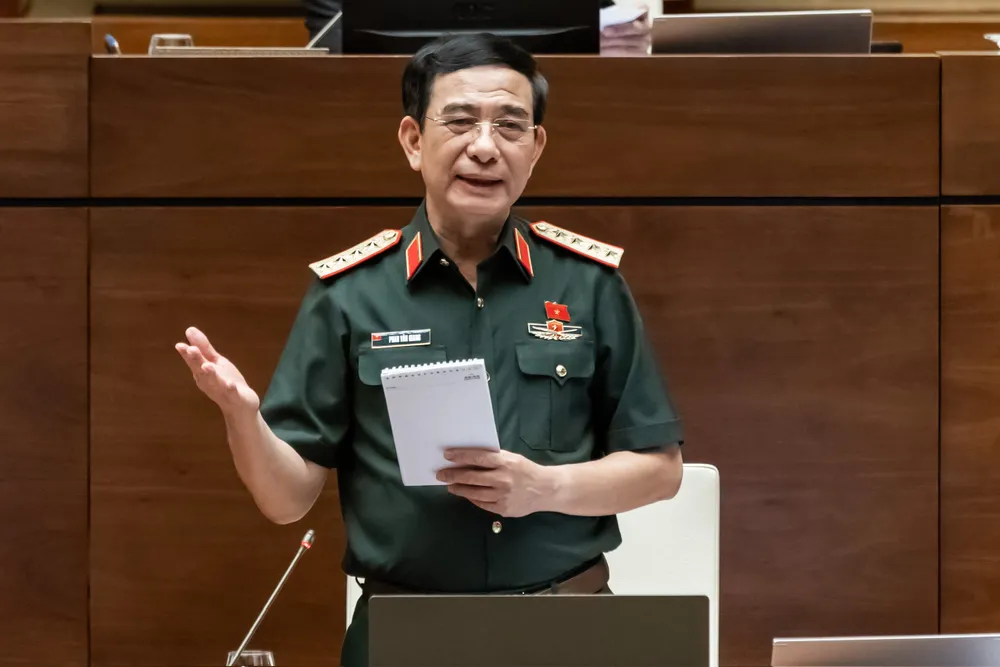
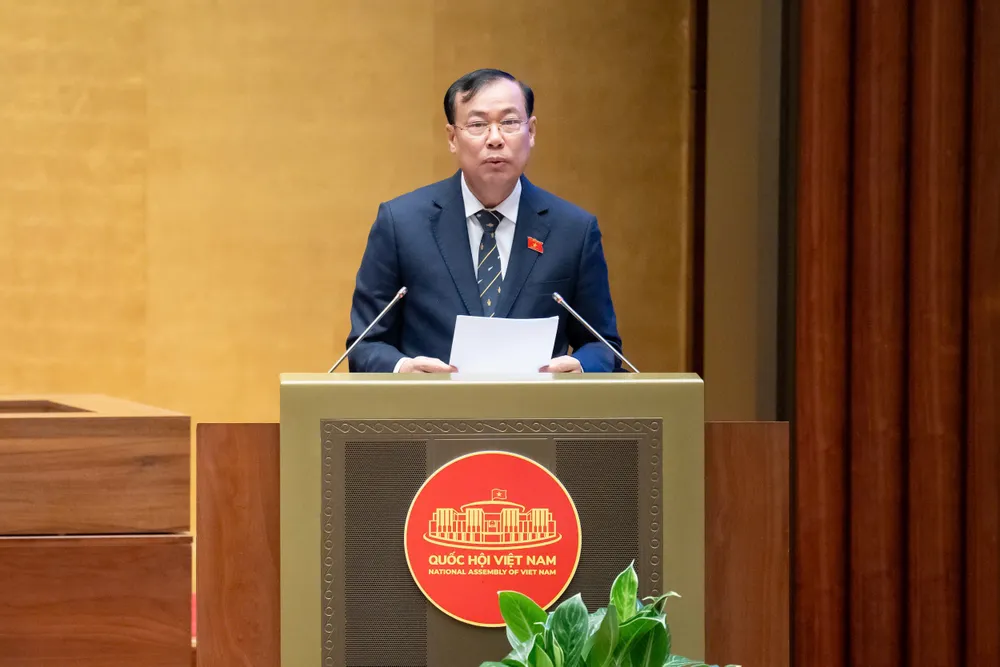
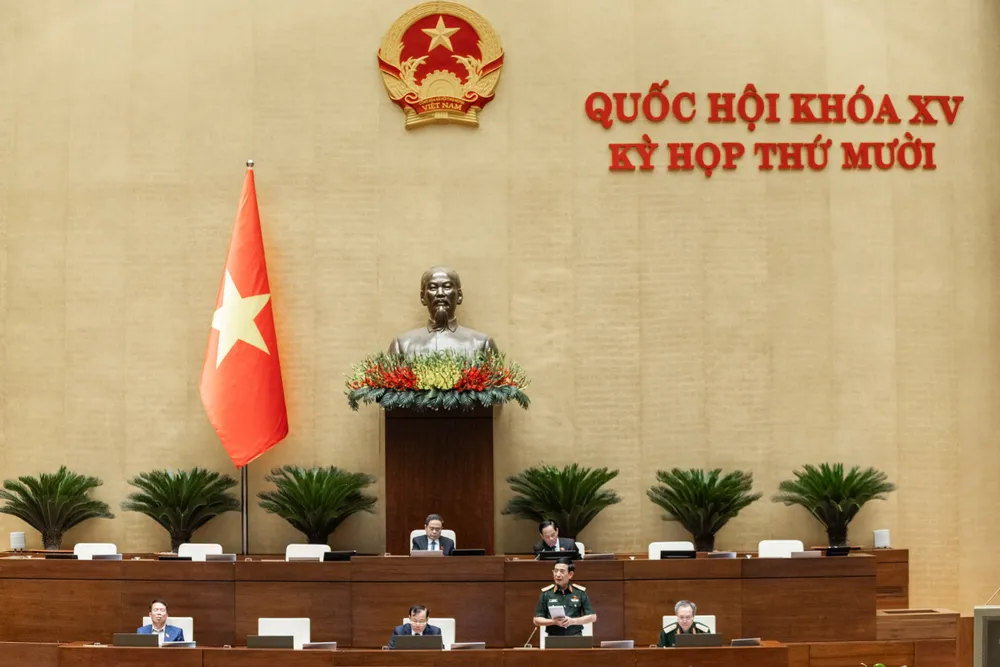
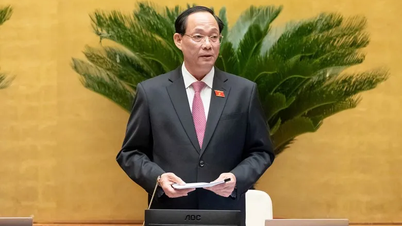
Presenting a summary report explaining, receiving feedback, and revising the draft law, Lieutenant General Le Tan Toi, Chairman of the National Assembly's Committee on National Defense, Security and Foreign Affairs, stated that regarding the measures applied in emergency response, the Standing Committee of the National Assembly has directed research and revision of regulations on measures applied in emergency response corresponding to three types of emergency response, specifying only three types: emergency response in the event of a disaster; emergency response concerning national security and social order; and emergency response concerning national defense, with appropriate measures applied accordingly.
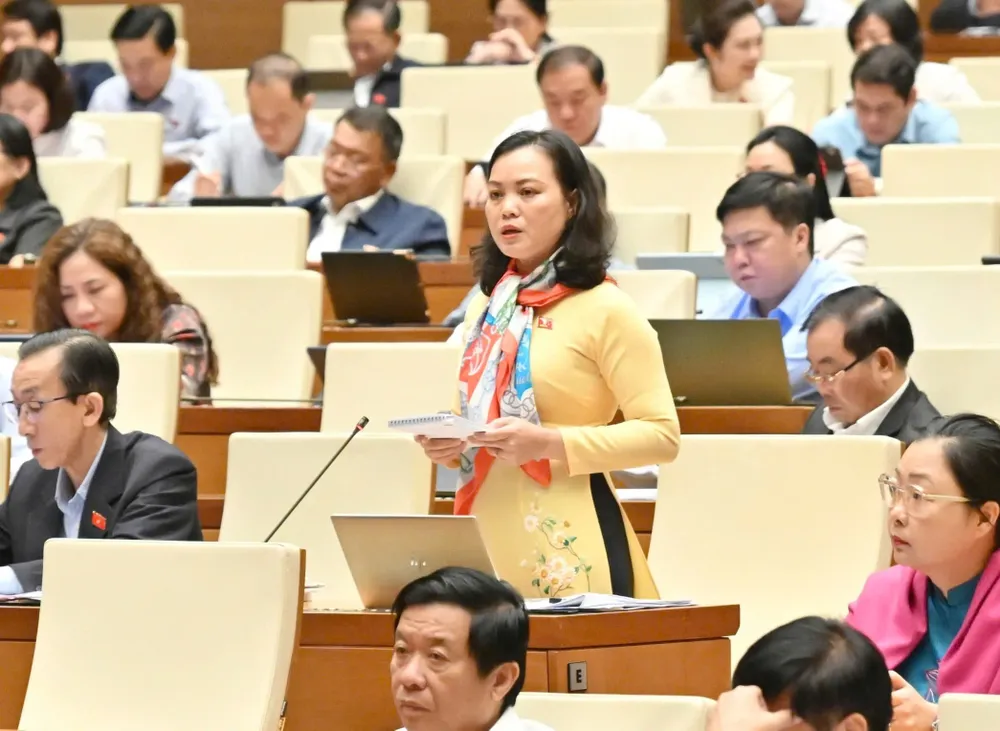
Discussing the draft law, Representative Huynh Thi Phuc, Deputy Head of the Ho Chi Minh City National Assembly Delegation, stated that the current Criminal Procedure Code is designed based on the principle that the People's Procuracy supervises investigation activities; the People's Court checks the legality of procedural measures; and the investigating agency is responsible for applying preventive measures. Regarding the content of procedural activities in the process of adjudication, the draft Law on Adjudication stipulates that three entities—the investigating agency, the Procuracy, and the Court—all have the right to shorten or lengthen the process. “However, it does not specify which agency supervises which. The hypothesis is that if all three entities are given more flexibility in their procedures, the entire cross-checking mechanism could be rendered ineffective, creating risks because the process is made more flexible without limitations,” Representative Huynh Thi Phuc pointed out.
Therefore, Representative Huynh Thi Phuc suggested that consideration should be given to establishing a special supervisory mechanism for the Supreme People's Procuracy . Accordingly, the Supreme People's Procuracy should be empowered to conduct surprise inspections, request the suspension of special procedural measures if signs of violations are detected; and periodically report publicly to the National Assembly on the application of procedures in special proceedings.
Representative Duong Khac Mai (Lam Dong) suggested that the draft should include specific quantitative and qualitative criteria or entrust the Government with the authority to regulate in detail the thresholds for activating emergency response levels, such as the scope of impact (geographic area, scale), the percentage of the population affected, economic losses, and the level of threat to national defense and security.
Notably, the draft regulations stipulate that decision-makers in emergency situations are not held responsible if those decisions are based on information available at the time of decision-making, have a legitimate purpose, and are not motivated by personal gain. Representative Duong Khac Mai suggested that the draft regulations should specify that this exemption only applies if the decision-maker has the proper authority, is based on objective and verifiable information, and does not exceed necessary limits. Furthermore, the decision-maker must have the obligation to report and provide a detailed explanation to the competent authority immediately after the emergency situation concludes. Such regulations would be transparent and clear, helping to distinguish objective errors in emergency situations from violations due to negligence or exploitation for personal gain. This would also protect officials who dare to act.
Source: https://www.sggp.org.vn/ro-rang-minh-bach-trong-ap-dung-tinh-trang-khan-cap-post820259.html



![[Photo] Closing Ceremony of the 10th Session of the 15th National Assembly](/_next/image?url=https%3A%2F%2Fvphoto.vietnam.vn%2Fthumb%2F1200x675%2Fvietnam%2Fresource%2FIMAGE%2F2025%2F12%2F11%2F1765448959967_image-1437-jpg.webp&w=3840&q=75)

![[Photo] Prime Minister Pham Minh Chinh holds a phone call with the CEO of Russia's Rosatom Corporation.](/_next/image?url=https%3A%2F%2Fvphoto.vietnam.vn%2Fthumb%2F1200x675%2Fvietnam%2Fresource%2FIMAGE%2F2025%2F12%2F11%2F1765464552365_dsc-5295-jpg.webp&w=3840&q=75)



































![[OFFICIAL] MISA GROUP ANNOUNCES ITS PIONEERING BRAND POSITIONING IN BUILDING AGENTIC AI FOR BUSINESSES, HOUSEHOLDS, AND THE GOVERNMENT](https://vphoto.vietnam.vn/thumb/402x226/vietnam/resource/IMAGE/2025/12/11/1765444754256_agentic-ai_postfb-scaled.png)









































Comment (0)