

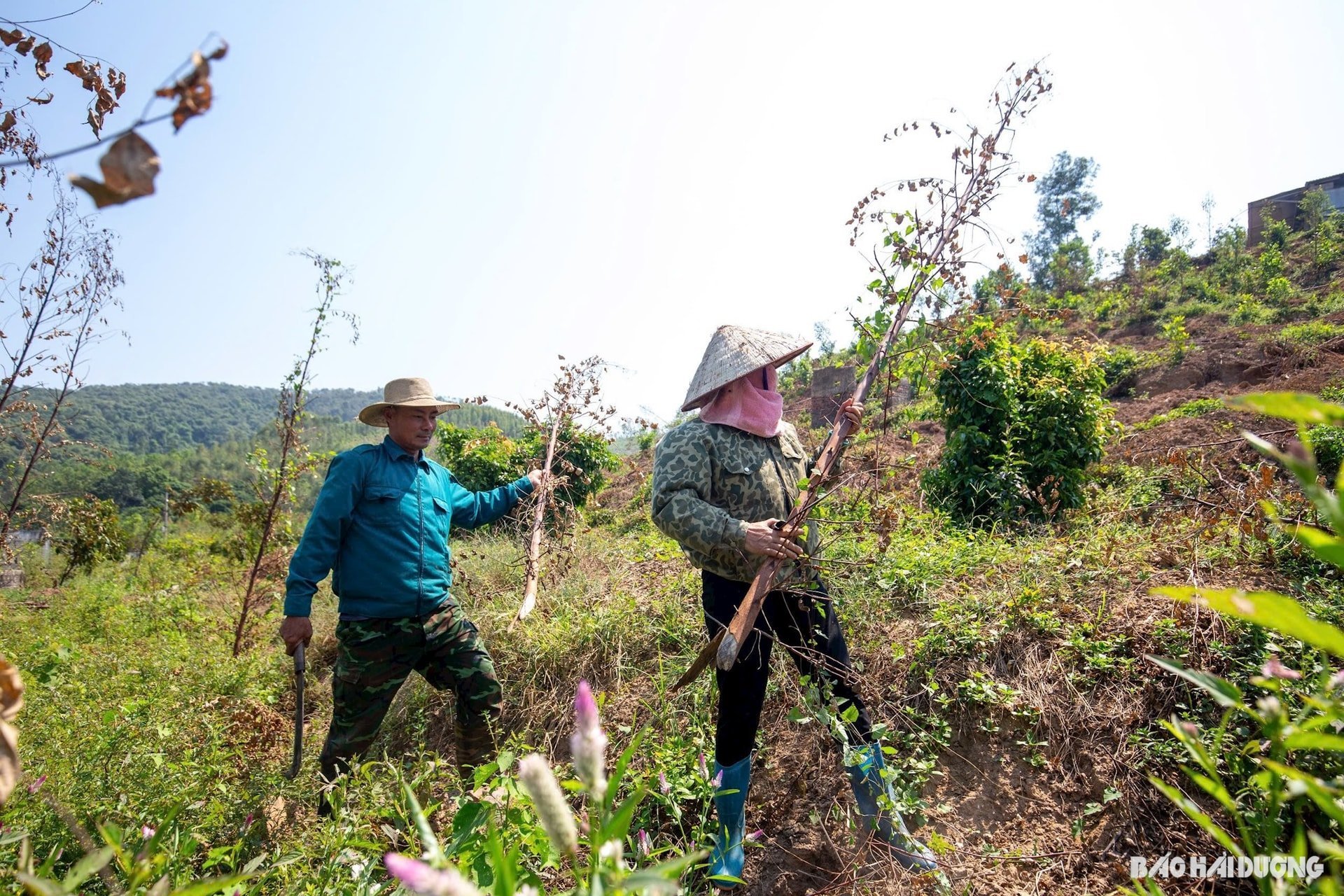
Exhausted
Nearly two months have passed since Typhoon No. 3 (Typhoon Yagi ) made landfall, yet the damage it caused is still evident in the forests of Chi Linh City, including thousands of hectares of production forests leased by the State to households. Trees on the mountains have been felled, and many areas have dried up, with no possibility of recovery.
The historic storm caused damage to the production forests of households in Bac An commune to varying degrees. The family of Ms. Hoang Thi Nga in Vanh Lieng village was one of the households that suffered the most damage.
Ms. Nga said that 10 days before Typhoon No. 3 hit, her family had just applied 2.5 tons of compound fertilizer to nearly 2.8 hectares of eucalyptus and acacia trees that had been planted for 4 years. This was the first batch of trees her family had planted on this land after many years of cultivating bamboo for shoots. The eucalyptus and acacia forest was growing well and would be ready for harvest in about a year. She and her husband estimated that each hectare would yield between 100 and 130 million VND. Yet, after just one typhoon, everything is now just a pile of ruins.
The damage suffered by Ms. Nga's family did not stop there. In another production forest, 2.7 hectares of acacia and eucalyptus trees, planted by her family only 1-3 years old, were also destroyed after the storm. After the historic storm, it is estimated that Ms. Nga's family suffered billions of dong in losses. "For many years, my family's economy has depended entirely on the forest. The forest provided us with food and clothing, but now it has also taken away our money, sweat, and tears. My family is now burdened with bank debt," Ms. Nga shared sadly.
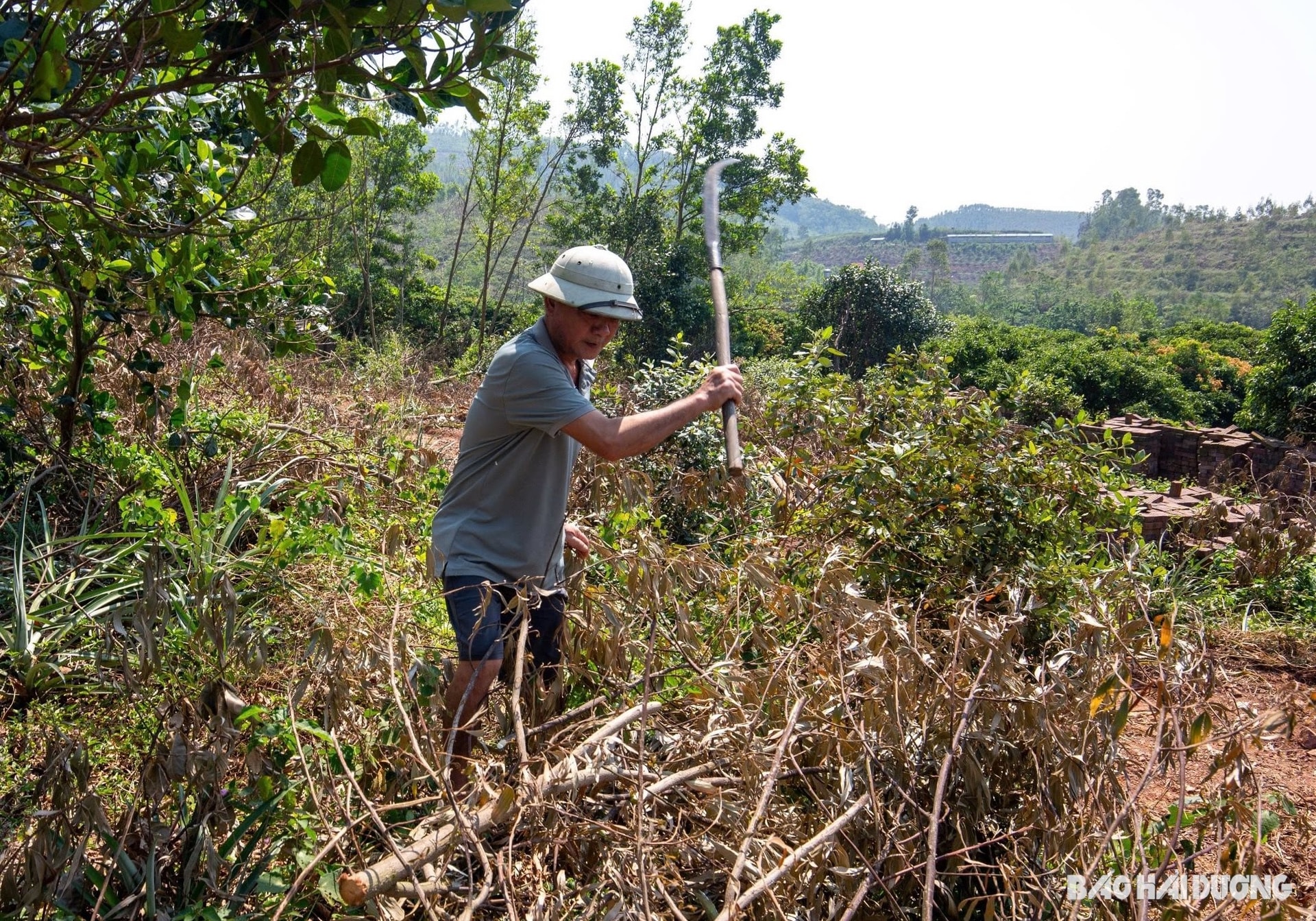
A few kilometers from Ms. Nga's house, the family of Mr. Dang Van Tam (also from Bac An commune) had a nearly 5-hectare production forest planted with pine, acacia, and eucalyptus trees, which was also almost half destroyed after typhoon number 3.
Previously, on the same plot of land, Mr. Tam invested in reforestation, earning a profit of 60 million VND per hectare. Seeing the effectiveness, at the beginning of this year, he continued to plant 3,000 acacia and eucalyptus trees. The trees grew and developed well, but after the storm, most of them were broken or uprooted...
Mr. Tam calculated: "Not including the labor for tending the plants and renting excavators, just the seeds and fertilizer alone cost about 100 million dong. Now, hiring people to clear the fallen trees is also very expensive, with labor costs reaching 500,000 dong per person per day."
Many families in Ben Tam ward are facing a similar situation with their acacia and eucalyptus plantations. Mr. Pham Huu Sau's family in Trai Gao residential area has 3.15 hectares of acacia trees planted in 2020, almost completely destroyed after the storm. "The investment cost for this forest was about 150 million VND. Four years of hard work, countless hours of effort, and now it's all for nothing," Mr. Sau said sadly.
We would appreciate assistance with seedlings.
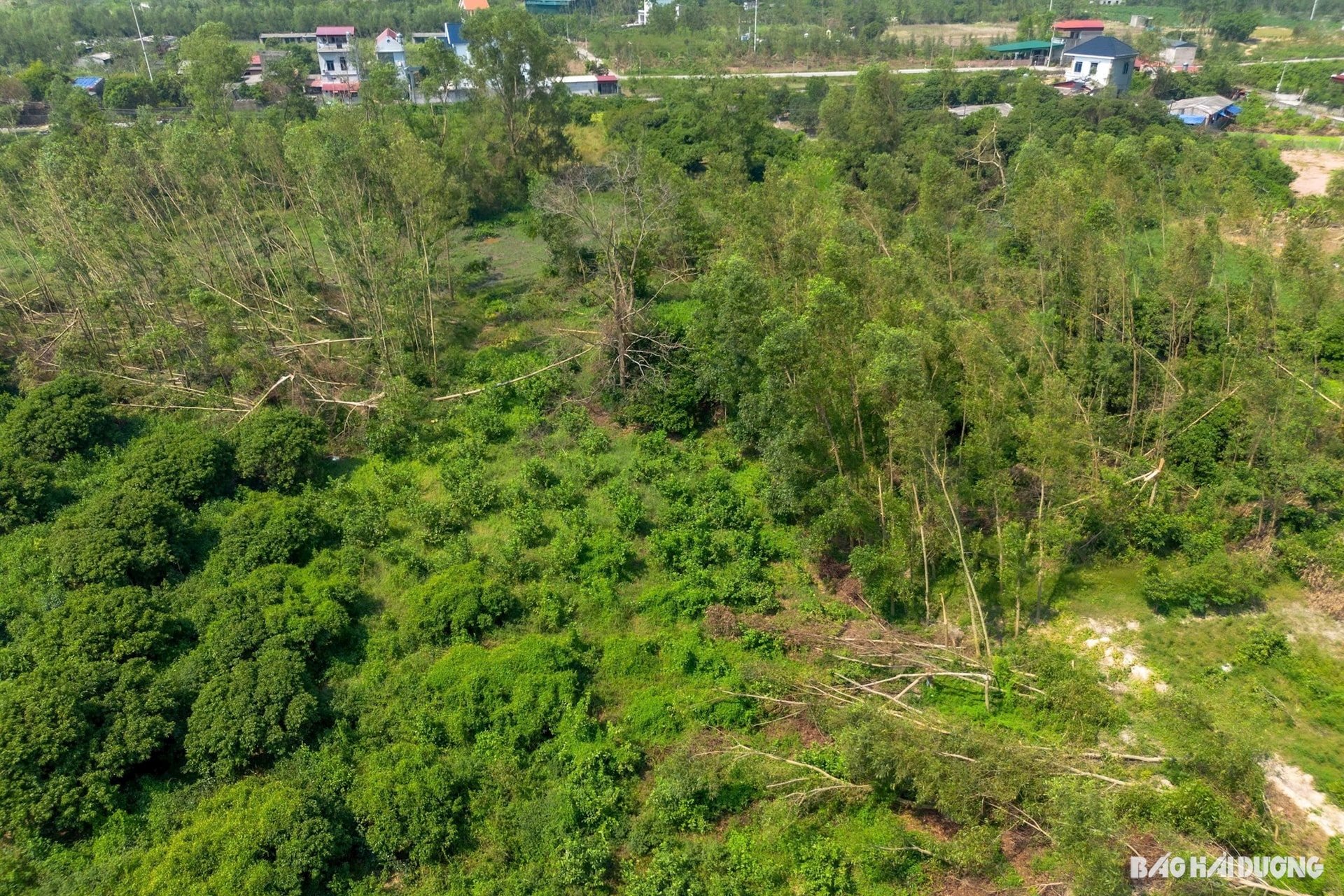
The area of production forest leased to people in Hai Duong province is mainly located in Chi Linh City, with approximately 4,556 hectares. After typhoon No. 3, specialized agencies and local authorities have been coordinating to assess the damage and propose support for households according to regulations. It is estimated that many households with leased production forest areas suffered damage ranging from 30-70%, with some families experiencing damage exceeding 70%.
According to Clause 2, Article 5 of Government Decree No. 02/2017/ND-CP on "mechanisms and policies to support agricultural production to restore production in areas damaged by natural disasters and epidemics", for areas of forest trees and non-timber forest products planted on forest land, seed orchards, and seed forests that suffer more than 70% damage, the State will provide support of 4 million VND/ha; for areas with 30-70% damage, the support will be 2 million VND/ha.
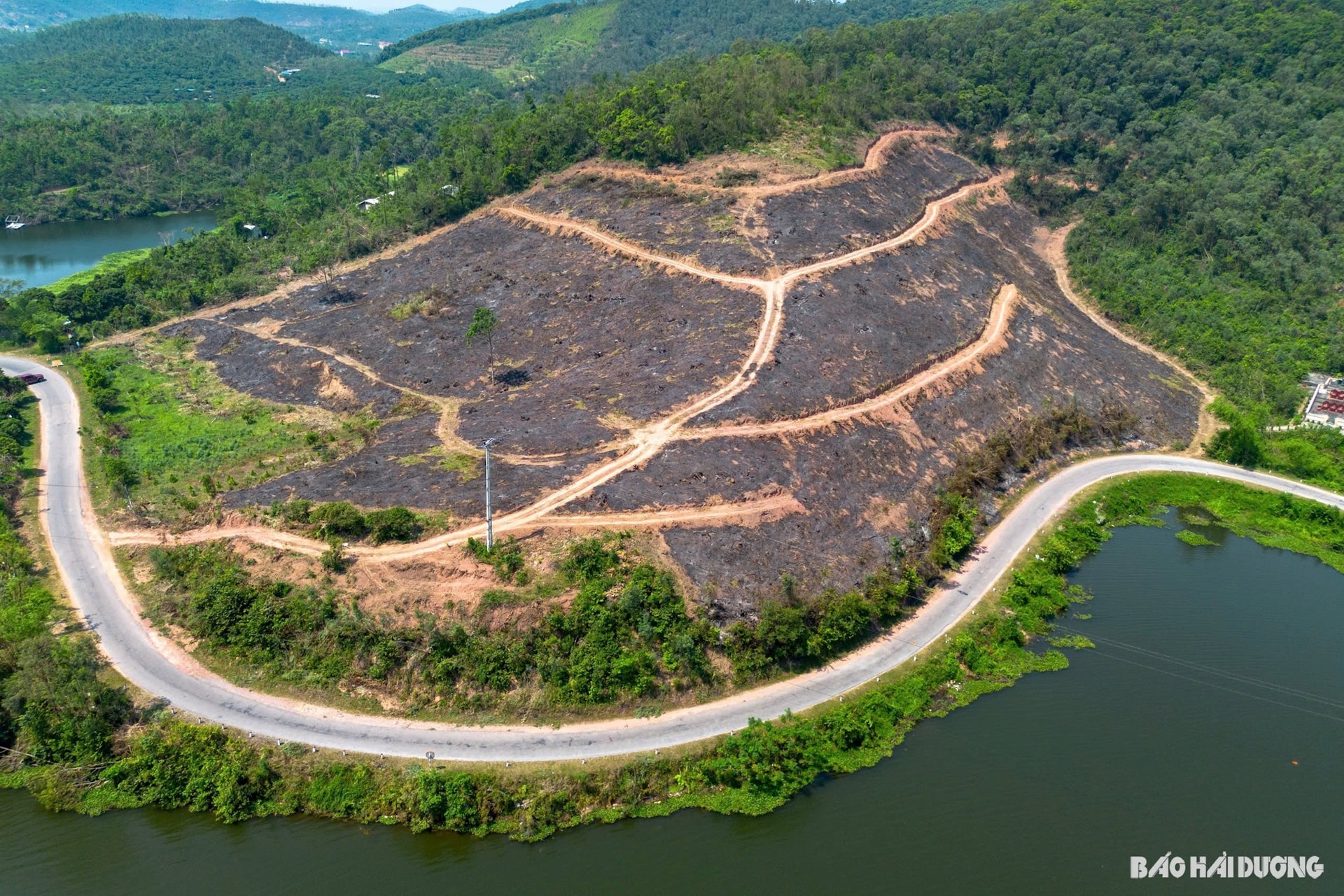
Many households contracted to manage production forests believe that the financial support is very helpful during the current difficult times, but it is still insufficient. "I still owe money to the bank and my relatives, so I don't know how I will manage to get the money to reinvest in production. I sincerely hope the government will consider providing additional support in terms of seedlings and preferential loans from banks to restore forest planting," Mr. Dang Van Tam requested.
Some households with production forest land also have similar wishes. To restore production, in addition to seedlings, people also have to invest a considerable amount of money in hiring people to clear fallen trees, excavators, buying fertilizers, etc.
Currently, some households in Chi Linh City have finished clearing fallen trees from the leased production forest areas, and are waiting for favorable weather conditions to begin preparing the land and planting a new crop.
However, a considerable area of production forest damaged by the storm remains uncleared and is in a dry, parched state. The Chi Linh Forest Ranger Station and the Forest Management Board are actively disseminating information and urging households to expedite the clearing process to prevent forest fires, which are currently at an extremely dangerous level. They regularly send officers to inspect, monitor, and guide people to strictly follow the instructions and recommendations of specialized agencies regarding forest fire prevention and control.
DAWNSource: https://baohaiduong.vn/rung-rung-nuoc-mat-tu-rung-396868.html
![[Photo] Prime Minister Pham Minh Chinh receives the Chinese Ambassador to Vietnam](https://vphoto.vietnam.vn/thumb/1200x675/vietnam/resource/IMAGE/2026/04/05/1775397481797_ndo_br_dsc-5512-jpg.webp)




















































































Comment (0)