

 |
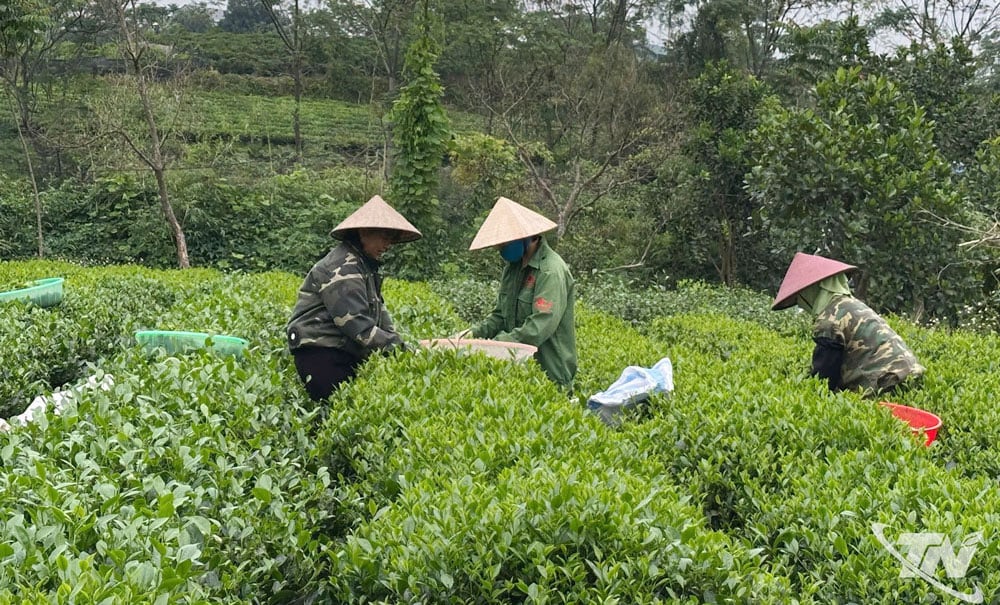
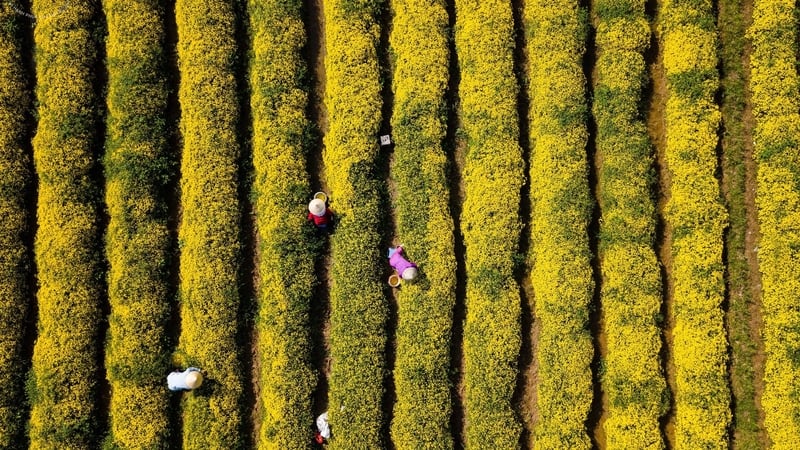
| Currently, Thai Nguyen has over 6,000 hectares of tea plantations that meet VietGAP standards. |
In order to encourage tea growers to invest in "clean" production, the province has implemented many policies in recent years, yielding practical results.
Mr. Nguyen Ta, Head of the Provincial Department of Crop Production and Plant Protection, said: Support policies on training, dissemination of information, new tea varieties; organic and biological fertilizers; VietGAP and organic certification; support for mechanization, application of water-saving irrigation systems in production and equipment for preliminary processing and processing of tea… have helped raise awareness of the importance of safe production among tea growers. As a result, Thai Nguyen now has over 6,000 hectares of tea certified to meet VietGAP and organic standards.
In reality, tea products meeting VietGAP and organic standards are selling quite well. Mr. Nguyen Thanh Nam, one of the households producing tea according to VietGAP standards in Tien Phong tea village, Van Han commune, shared: "Since 2014, my family has started producing nearly one acre of tea according to VietGAP standards; thanks to this, the selling price has doubled compared to before. Currently, tea is sold at 250-300 thousand VND/kg of dried tea buds."
It can be affirmed that "clean" production not only brings economic benefits but also contributes to protecting the environment and the health of both producers and consumers. However, the area of tea plantations in Thai Nguyen certified under VietGAP and organic standards is still quite small. In the last three years, Thai Nguyen has had around 500 hectares of tea newly certified as meeting VietGAP standards each year.
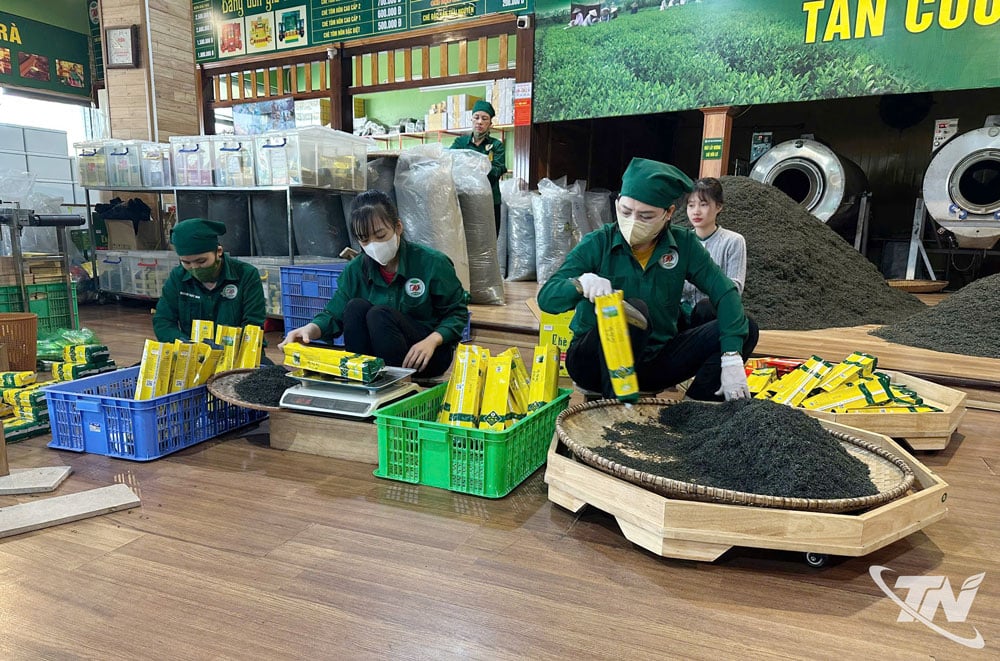 |
| Producing safe tea will help ensure that the product meets quality standards and OCOP criteria. Thai Nguyen currently has 195 tea products that meet OCOP standards, ranging from 3 to 5 stars. |
Currently, only 120 hectares in the entire province meet organic standards. Meanwhile, not only domestic consumers but also the global market have very strict requirements regarding the safety of tea products.
Therefore, promoting tea production that meets VietGAP, organic, and international safety standards needs to be implemented more decisively by relevant authorities, sectors, and the people.
The immediate goal is to improve the quality of concentrated tea production areas by promoting safe tea production using VietGAP and organic standards, and applying proactive and water-saving irrigation technologies to enhance product quality and value.
To achieve this, the province should continue to review land resources, manage and protect land areas designated for tea cultivation, and plan safe tea production zones in particular.
Along with that, the plan is to build a model for safe tea production according to VietGAP, organic, and other international safety standards on a larger scale. This includes focusing on establishing safe tea raw material production areas that meet organic standards, limiting the use of inorganic fertilizers and pesticides, and applying GAP procedures from production to final product processing…
In particular, the province needs mechanisms and policies to attract more capable businesses to invest in production, processing, and consumption to expand scale and create a large quantity of safe tea products, meeting the export demands of discerning markets around the world…
Source: https://baothainguyen.vn/kinh-te/202507/san-xuat-che-an-toan-va-nhung-doi-hoi-tu-thuc-tien-e542408/


















































































Comment (0)