

Sarah Jividen, a nutritionist in the US, said that regular use of rice milk can bring certain benefits but also creates some risks.
Understanding the characteristics of rice milk helps users consider appropriate consumption, avoid over-dependence and ensure the body still receives enough nutrition from many other food sources, according to the health website Verywell Health.

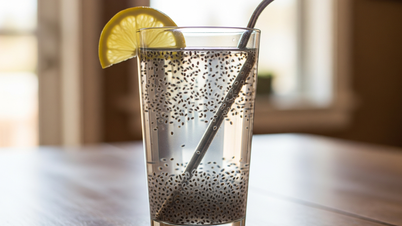
Regular consumption of rice milk has certain benefits but also poses some risks.
Photo: AI
Hypoallergenic
Rice milk is free of lactose and other allergenic proteins, making it a suitable choice for people with cow's milk allergies or lactose intolerance.
People who are lactose intolerant may experience less bloating and digestive discomfort by replacing cow's milk with rice milk.
Good for the heart
Rice milk is naturally very low in saturated fat and has no cholesterol, which is an advantage when compared to some high-fat animal milks.
Using rice milk helps reduce the amount of saturated fat entering the body and contributes to supporting cardiovascular health.
Notes when consuming rice milk
There are about 23 grams of carbohydrates in about 240 ml of rice milk, including added sugars.
The carbohydrate and sugar content of rice milk causes blood sugar to rise more rapidly than low-carbohydrate milks. People with diabetes or monitoring their blood sugar should be aware of this.
A 240 ml serving of fortified rice milk can be high in calcium, vitamin D, vitamin A and vitamin B12.
However, the protein content in rice milk is very low. People who drink rice milk instead of cow's milk without supplementing other protein sources are likely to have nutritional deficiencies.
Experts recommend not to rely entirely on a single type of plant milk but to diversify nutritional sources.
Source: https://thanhnien.vn/sua-gao-loi-ich-va-nhung-luu-y-quan-trong-khi-dung-185251209233042015.htm


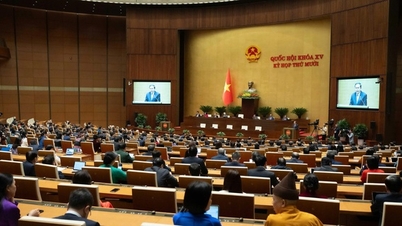
![[Photo] Closing Ceremony of the 10th Session of the 15th National Assembly](/_next/image?url=https%3A%2F%2Fvphoto.vietnam.vn%2Fthumb%2F1200x675%2Fvietnam%2Fresource%2FIMAGE%2F2025%2F12%2F11%2F1765448959967_image-1437-jpg.webp&w=3840&q=75)
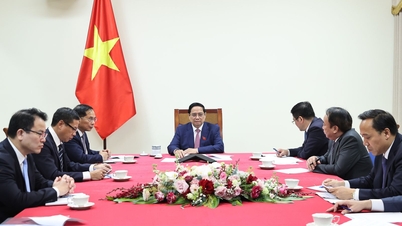
![[Photo] Prime Minister Pham Minh Chinh holds a phone call with the CEO of Russia's Rosatom Corporation.](/_next/image?url=https%3A%2F%2Fvphoto.vietnam.vn%2Fthumb%2F1200x675%2Fvietnam%2Fresource%2FIMAGE%2F2025%2F12%2F11%2F1765464552365_dsc-5295-jpg.webp&w=3840&q=75)








































![[OFFICIAL] MISA GROUP ANNOUNCES ITS PIONEERING BRAND POSITIONING IN BUILDING AGENTIC AI FOR BUSINESSES, HOUSEHOLDS, AND THE GOVERNMENT](https://vphoto.vietnam.vn/thumb/402x226/vietnam/resource/IMAGE/2025/12/11/1765444754256_agentic-ai_postfb-scaled.png)




































Comment (0)