

Only "ups," not "downs."
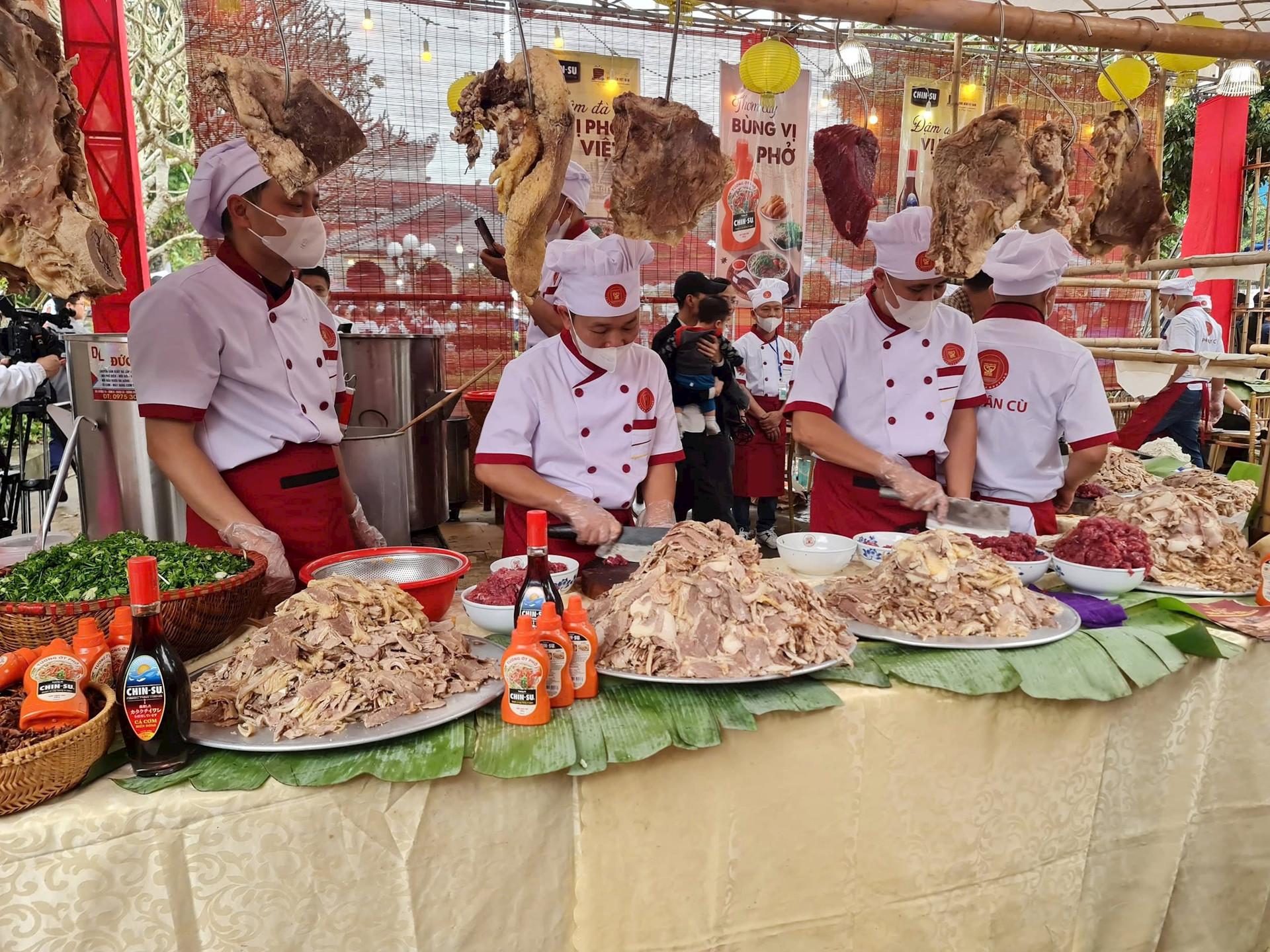
Located in the heart of the southern Red River Delta, Nam Dinh province boasts numerous traditional craft villages. Many of these villages continue to thrive and develop, while others face difficulties and ups and downs. Among them, there is one craft village whose development, from its inception to the present day, has only seen "rise," never "decline": the Van Cu pho village (Dong Son commune, Nam Truc district), and now many other villages in the district.
According to the elders of Van Cu village, from the early 20th century, the first people from the village went to Nam Dinh City (about 15km away) to cook and sell pho to French owners and workers at the Nam Dinh Textile Factory. They later traveled to Hanoi and Hai Phong to continue their business, using only a pair of carrying poles. Even in the 1930s and 40s, people in Hanoi knew and enjoyed the pho branded "Pho Co," made by people with the surname Co from Nam Dinh.
To this day, the people of Van Cu village still remember and honor the first villagers who practiced the art of selling pho from a carrying pole, starting in the 1900s, namely Mr. Pho Huyen, Mr. Pho Tac, Mr. Ly Thu… Following Mr. Huyen, Mr. Tac, and Mr. Thu were the generations of Mr. Co Ba Kham, Mr. Co Nhu Than, Mr. Co Huu Tang, Mr. Co Huu Vang, Mr. Co Nhu Hy… From 1920 onwards, in Hanoi, there were two people from the Co family in Van Cu village who became famous for their pho throughout the capital city: Mr. Co Nhu Than and Mr. Co Huu Vang.
In the 1930s, Mr. Co Huu Vang opened noodle-making workshops in Hanoi, creating jobs for many relatives and neighbors from Van Cu (Nam Dinh) who came to work there. Here, Mr. Co Huu Vang had five children, all named after streets where he had lived and earned his living selling pho: Co Thi Noi, Co Thi Khanh, Co Thi Hanh, Co Thi Non, and Co Thi Hin.
However, even in the following decades, pho making remained only a secondary occupation for the people of Van Cu, with only a few people involved and forced to leave their hometowns to make a living; it was not strong enough to "lead" the socio -economic life of the village, either in terms of job creation or income. During these decades, the majority of villagers still relied primarily on agriculture for their livelihood.
This is understandable, because throughout these decades, the country was at war and operating under a centrally planned economy, and the lives of the majority of people were difficult, making it hard for them to afford to go to a pho restaurant and order a bowl every day. Therefore, the pho business in Van Cu did not have the conditions to develop.
As socio-economic conditions developed, the life of pho also changed. According to Mr. Vu Ngoc Vuong, a fourth-generation pho maker from Van Cu village currently working in Hanoi, over 30 years ago, when the country's economy began to flourish, many young people in Van Cu chose to follow in the footsteps of their ancestors. They went to Nam Dinh City, to many other large cities, and even to towns throughout the country to rent locations and open pho restaurants or produce pho noodles. Not only did they earn a good income from this work, but they also created jobs and income for many others. With income and savings, many later bought houses in the city, sometimes even buying back the very houses they had previously rented. By the 2000s, the pho business gradually spread from Van Cu village to other villages in Dong Son commune, and then to neighboring communes.
Adherence to "professional ethics"
To this day, following the example of the people of Vân Cù, the people of Tây Lạc, Bẩy Trại, Sa Lung, Rương Độ villages (all in Đồng Sơn commune) and many people in the villages of Nam Thái, Nam Tiến, Bình Minh communes… in the same district have also taken up this profession as a means of livelihood.
According to the Van Cu Pho Club, currently 70% of the village's workforce is engaged in the pho-making profession. They operate over 100 pho restaurants and more than 20 pho noodle production facilities, producing and selling approximately 30 tons of pho noodles daily. 80% of the pho noodles consumed in the Hanoi market are produced by people from Van Cu.
The fact that people in many other villages near Van Cu village have learned and followed the pho-making profession, earning a good income from it, is the most vivid evidence of the vitality and development of this profession in Nam Dinh. Moreover, they have contributed to transforming pho from a luxury dish into a common, universal dish, imbued with stories of history and culture.
Not only in Vietnam, Vietnamese pho, including Nam Dinh pho, is now widely known throughout the world, loved by many people from different countries, cultures, and eating habits.
If you have the chance to visit the villages in Dong Son commune and neighboring communes, you will see that the appearance of the countryside here has completely changed. The houses are all multi-story buildings and villas, and many of the owners of these houses are also owners of "Van Cu Pho" and "Nam Dinh Pho" restaurants all over the country.
So, what makes the process of making a bowl of Van Cu pho, and Nam Dinh pho in general, so different that it is now considered folk knowledge and a cultural heritage that needs to be protected and promoted?
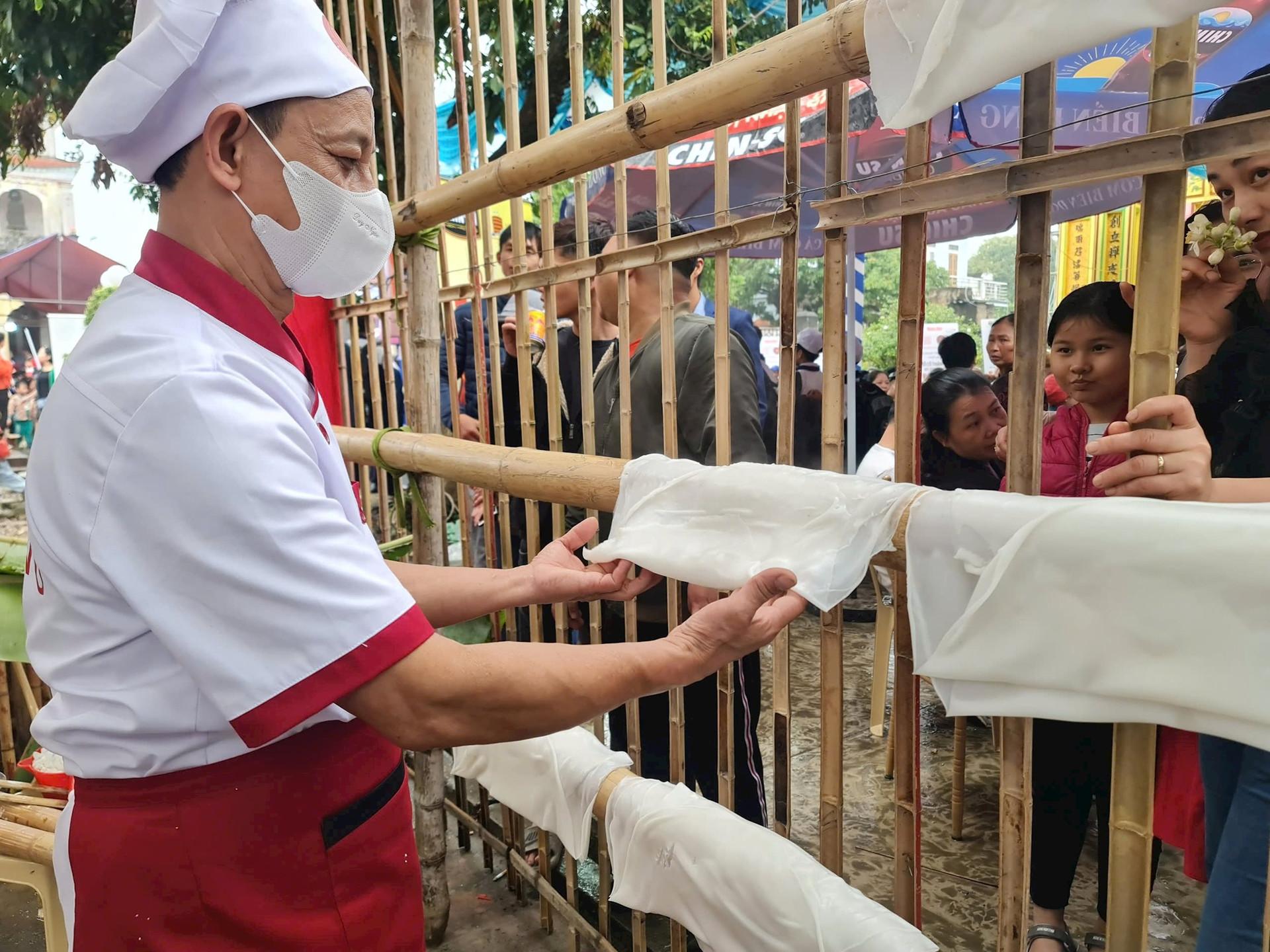
According to Mr. Co Viet Hung, Mr. Co Nhu Chem, and Mr. Co Nhu Cai (senior pho chefs in Van Cu), since the beginning of their business, the ancestors of the village have had a "craftsmanship method," which has been preserved and followed by successive generations. This involves being meticulous in every step, avoiding carelessness and cutting corners.
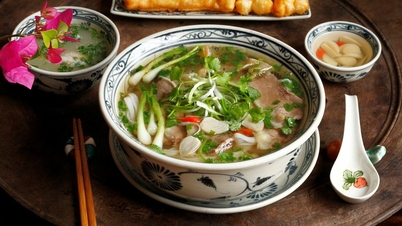
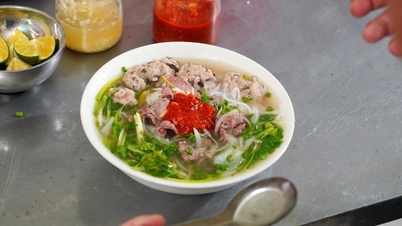
Accordingly, one must select high-quality rice for milling, use clean broth, and ensure the correct and sufficient time for preparing the noodles, soaking, and simmering the bones. The use and combination of spices (star anise, cardamom, dried onions, cinnamon bark, aged ginger, fish sauce, coarse salt, etc.) must be meticulously calculated and rational; no leftover or stale ingredients should be used. Only then can the elements of a delicious bowl of pho be guaranteed: soft, chewy noodles; and a sweet, clear, and flavorful broth.
"By adhering to this traditional method, we don't add MSG to the broth, and it's still sweet," Mr. Chem proudly stated, while Mr. Cai asserted, "No matter what improvements are made, to have a delicious, authentic bowl of Van Cu pho, we must maintain the traditional methods and follow the traditional steps."
Immediately after "Nam Dinh Pho Folk Knowledge" was included in the National List of Intangible Cultural Heritage, information from the Department of Culture, Sports and Tourism of Nam Dinh province indicated that, following the direction of the Provincial People's Committee, the Department will coordinate with relevant agencies to develop a project to protect and promote the value of the heritage. This includes strengthening promotional and introductory activities about the heritage; conducting research, collecting and documenting the heritage; organizing heritage transmission activities within the communities where it is practiced; organizing heritage education activities outside the communities where it is practiced; and researching and planning cultural spaces for enjoying pho in Nam Dinh...
Source


















![[Photo] Prime Minister Pham Minh Chinh holds a phone call with the CEO of Russia's Rosatom Corporation.](/_next/image?url=https%3A%2F%2Fvphoto.vietnam.vn%2Fthumb%2F1200x675%2Fvietnam%2Fresource%2FIMAGE%2F2025%2F12%2F11%2F1765464552365_dsc-5295-jpg.webp&w=3840&q=75)









































Comment (0)